ExperiencesSafari experience
Calving Season
February at Ndutu: a calf on its feet within minutes, and every predator watching.
- From
- $1,030 per person
- Per person sharing. Lodging + park fees at low-season rates across a core itinerary, plus baseline drive transport. Excludes international flights and activities.
- Best months
- Jan, Feb, Mar

About
About this experience.
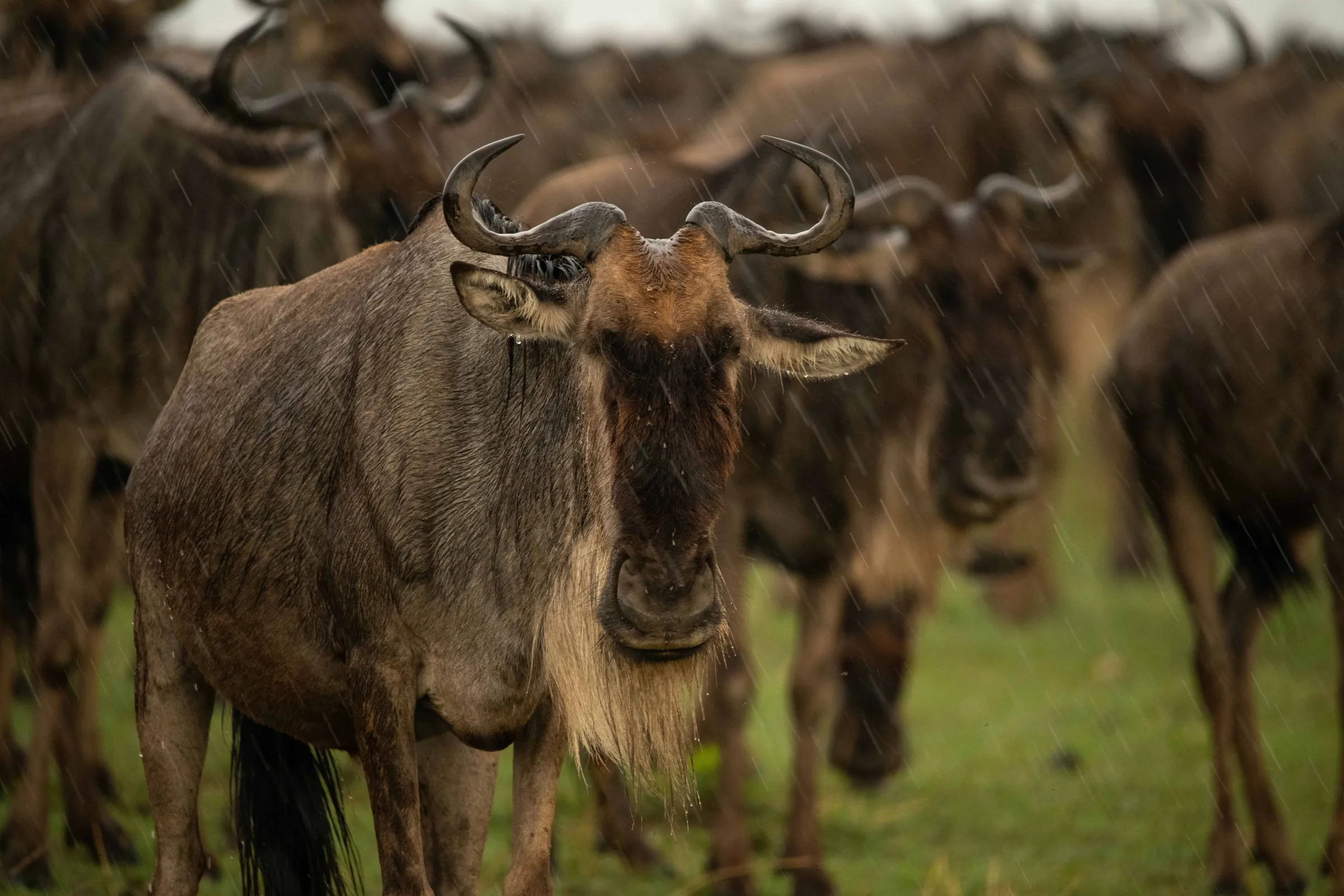
Watch a wildebeest give birth on the plains around Lake Ndutu and you understand the whole migration in one go. The mother drops, the calf arrives, and within a few minutes it is wobbling upright and trying to keep pace. A calf weighs around 19 kilograms at birth and has very little time to learn to run, because somewhere nearby there is almost always a hyena clan or a cheetah watching the same scene.
This is the southern end of the Serengeti ecosystem, where the national park runs into the Ngorongoro Conservation Area. Between January and March, peaking in February, the herds spread across the short grass plains around the seasonal soda lakes of Ndutu and Masek. Roughly half a million calves are born, with most arriving inside the same three weeks, a strategy that swamps the predators simply by numbers. The reason they come here is underfoot: the plains are built on volcanic ash blown from the Ngorongoro highlands, and the grass that grows on it is short, rich and, in a good rain year, endless.
What it is really like is a concentration of drama in a small space. The Serengeti Cheetah Project has been following individual cheetahs on these southern plains since the 1970s, and the open, treeless ground makes this one of the best places in Africa to watch one hunt. Spotted hyenas are everywhere; researchers from the Leibniz Institute, who have studied Serengeti hyenas since 1987, have shown that clans commute as far as 70 kilometres to reach the migratory herds. Lions use the marsh edges and the woodland around the lakes. You also get the gentler side: herds of zebra mixed in, gazelles, and the green that only comes with the short rains.
The honest caveats. Ndutu lies inside the Ngorongoro Conservation Area, and the authority's visitor rules say vehicles must stay on designated roads and tracks unless authorised, so do not expect a free-for-all across the grass. The herds follow local rainfall, and in a dry year they can spread west or pull back into the Serengeti proper, which is why your guide's morning radio calls matter. Some showers are likely. And this is predation at its most visible, including calves taken; it is honest wildlife, not a nursery.
We base guests at camps that sit on the plains for the season, such as Masek Tented Lodge on the edge of Lake Masek, Heritage Ndutu Migration Camp, which opens from mid December, or one of the Malaika Ndutu camps. Olduvai Camp, built around a granite kopje not far from Olduvai Gorge, works well if you want history alongside the herds. Balloon flights operate over Ndutu between December and March. Your quote shows the Ngorongoro Conservation Area entry fee per person per 24 hours, each camp's nightly rate, and transport as separate lines, so the cost of being in the right place is clear.
It suits wildlife enthusiasts, photographers who want predator action on open ground, and anyone who finds the idea of the river crossings too harrowing. It is also excellent value compared with peak season in the north, and it pairs beautifully with a February beach stay on Zanzibar, which is one of the island's drier months.
How to structure it
Building it into your trip.
Give Ndutu three or four nights between mid January and early March, with February the most dependable. Fly into the Ndutu or southern Serengeti airstrips, or drive from Arusha via the Ngorongoro Crater, spending one night on the crater rim on the way. If you have time, add two nights at Seronera in the central Serengeti for leopard and resident lions. A sunrise balloon over Ndutu fits on any morning. Finish with four or five nights on Zanzibar, where January and February are usually dry and warm.
Best time to go
When to go.
- January: best
- February: best
- March: best
- April: not a best month
- May: not a best month
- June: not a best month
- July: not a best month
- August: not a best month
- September: not a best month
- October: not a best month
- November: not a best month
- December: not a best month
Best months: January to March.
Gallery
A closer look.
Photo credits
- 03Photo: Christoph Strässler from Oberdorf BL, Schweiz, CC BY-SA 2.0, via Wikimedia Commons
- 04Photo: Christoph Strässler from Oberdorf BL, Schweiz, CC BY-SA 2.0, via Wikimedia Commons
- 05Photo: Christoph Strässler from Oberdorf BL, Schweiz, CC BY-SA 2.0, via Wikimedia Commons
- 06Photo: Christoph Strässler from Oberdorf BL, Schweiz, CC BY-SA 2.0, via Wikimedia Commons

Common questions
Questions, answered.
When exactly is the calving season?
Most calves are born between late January and early March, and February is the peak, when the bulk of births happen inside about three weeks. The Ngorongoro Conservation Area authority describes late December to April as the best time to visit Ndutu. We usually plan the core of a calving safari for February, with January and early March as strong alternatives.
Where does the calving happen?
On the short grass plains of the southern Serengeti ecosystem, centred on Lakes Ndutu and Masek inside the Ngorongoro Conservation Area, where it meets Serengeti National Park. The exact spread depends on where rain has fallen. Your guide follows the herds each morning, which is one reason we prefer camps that sit on the plains for the season.
Which predators am I likely to see?
Cheetah, spotted hyena and lion are typically seen often, with jackals and vultures around every kill. The southern plains have one of the longest-running cheetah studies anywhere, and hyena clans commute long distances to the herds. Leopards stay in the woodland around the lakes and are harder to find. Sightings are always a matter of chance and good guiding.
Can we drive off-road at Ndutu?
Not freely. Ndutu is in the Ngorongoro Conservation Area, whose visitor rules require vehicles to keep to designated roads and tracks unless the Conservation Commissioner authorises otherwise. In practice there are many tracks across the plains and guides use them well, but you should not expect unrestricted off-road driving.
How much does a calving safari cost compared with the migration in the north?
Usually less. January to March is outside the peak July to October rates in the north, and many camps price accordingly. The Ngorongoro Conservation Area entry fee is charged per person for each 24 hours you spend there. On our quotes the conservation fees, lodging and transport are separate lines so you can compare Ndutu with other areas directly.
Is it rainy during calving season?
This is the green season, so short showers are likely, usually in the afternoon. They are the reason the grass is there. Roads can be muddy after heavy rain, but downpours rarely last long. Pack a light waterproof and a warm layer for early mornings.
Build your trip
Plan a calving season trip.
Tell us when you can travel and what you most want to see. We'll build a custom itinerary around Calving Season with transparent pricing throughout.
Build & price your trip