ExperiencesBeach experience
Culture & Heritage
Every carved door in Stone Town is a page of the island's story.
- Best months
- Year-round

About
About this experience.
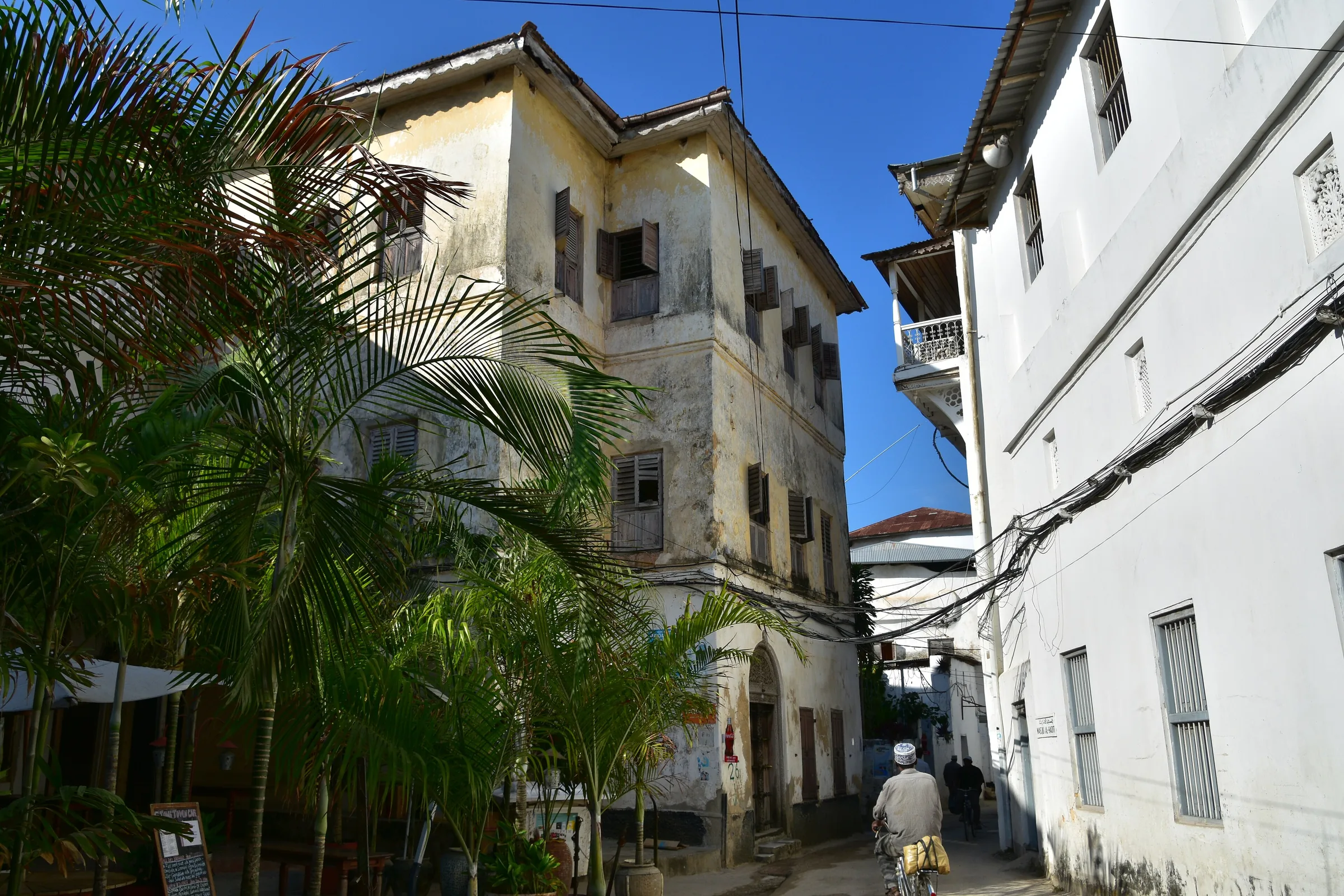
Walk Stone Town early, before the heat, and the old town reveals itself in layers. A narrow lane opens onto a heavy carved wooden door studded with brass, then another, each telling you something about the family who built the house. The call to prayer rises from one mosque and then another. By evening the seafront at Forodhani Gardens fills with food stalls as the sun goes down over the water.
Stone Town, the old heart of Zanzibar City, was inscribed by UNESCO in 2000 as an outstanding example of a Swahili trading town, where African, Arab, Indian and European influences met through centuries of Indian Ocean trade. In 1840 Sayyid Said moved the capital of the Omani sultanate from Muscat to Zanzibar, and the island became the centre of a trading empire built on cloves, ivory and, darkly, enslaved people. The Old Fort, completed by the Omanis in 1699 on the site of a Portuguese church, still stands on the waterfront. Nearby, the House of Wonders, built in 1883 for Sultan Barghash, was the first building in Zanzibar with electricity and the first in East Africa with a lift; part of it collapsed in December 2020.
What it is really like: atmospheric, crowded in places, and rewarding with a good local guide. The carved doors alone tell a story, as the rounded Indian-style doors and rectangular Omani-style doors reveal who built each house. Darajani Market is noisy and mostly about food. The site of the last open slave market, closed in 1873 when Sultan Barghash signed a treaty under British pressure, is now home to Christ Church Cathedral; it is a sobering and essential visit. A morning at a spice farm inland shows how cloves and other spices are grown. Sayyid Said expanded clove planting in the early nineteenth century, and records show 4,000 clove trees at Kizimbani by 1834; Pemba, to the north, still holds the greatest concentration of the island group's clove trees.
The honest caveats. Stone Town's lanes are narrow, hot and easy to get lost in, and touts can be persistent. Some historic buildings are under restoration or closed. Zanzibar is around 99 percent Muslim, so dress modestly in town, covering shoulders and knees, and take extra care during Ramadan, when the island is quieter by day. Many guests find that respecting these rhythms is part of the experience.
Festivals add another layer. Sauti za Busara brings East African music to Stone Town each February, and the Zanzibar International Film Festival runs in late June. Beyond town, Jozani Chwaka Bay National Park protects the endemic Zanzibar red colobus. On your quote, guided walks, spice farm visits, entrance fees and each night's stay are listed separately, so you can choose the depth you want.
It suits curious travellers who want context alongside the beach, families with older children, and anyone interested in the Swahili coast and its Islamic heritage. Two nights in Stone Town before or after a beach stay is usually enough to understand the island far better.
How to structure it
Building it into your trip.
Spend two nights in Stone Town, at the start or end of your Zanzibar stay. Take a guided walking tour on the first morning, before the heat, including the Old Fort, the carved doors and the former slave market site. Visit a spice farm the next morning, and spend an evening at Forodhani Gardens. Then move to the north or east coast for four or five beach nights. If your dates allow, time the visit for Sauti za Busara in February.
Best time to go
When to go.
- January: best
- February: best
- March: best
- April: best
- May: best
- June: best
- July: best
- August: best
- September: best
- October: best
- November: best
- December: best
Best months: All year.
Gallery
A closer look.
Photo credits
- 02Photo: Richard Mortel from Riyadh, Saudi Arabia, CC BY 2.0, via Wikimedia Commons
- 03Photo: Yann Macherez, CC BY-SA 4.0, via Wikimedia Commons
- 04Photo: Diego Delso, CC BY-SA 4.0, via Wikimedia Commons
- 05Photo: Richard Mortel from Riyadh, Saudi Arabia, CC BY 2.0, via Wikimedia Commons
- 06Photo: Richard Mortel from Riyadh, Saudi Arabia, CC BY 2.0, via Wikimedia Commons
- 07Photo: Bärbel Miemietz, CC BY-SA 4.0, via Wikimedia Commons
- 08Photo: Eric Kilby, CC BY-SA 2.0, via Wikimedia Commons
- 09Photo: Rod Waddington, CC BY-SA 2.0, via Wikimedia Commons

Common questions
Questions, answered.
What is there to see in Stone Town?
The UNESCO listed old town with its carved doors, the Old Fort completed in 1699, the House of Wonders built for Sultan Barghash, Christ Church Cathedral on the site of the last slave market, Darajani Market and the evening food stalls at Forodhani Gardens. A local guide brings the layered Swahili, Arab, Indian and African history to life.
Is a spice farm visit worthwhile?
Yes, especially for families and anyone who cooks. Zanzibar's wealth was built on cloves, which the Omani sultans planted widely in the early nineteenth century. On a guided farm walk you see, smell and taste cloves and other spices as they grow. Allow a morning, and choose a farm where the guide is from the community.
How should visitors dress in Stone Town?
Around 99 percent of Zanzibaris are Muslim, so modest dress is appreciated in town: shoulders and knees covered for both men and women. Swimwear belongs on the beach. During Ramadan, avoid eating or drinking in public during daylight in town. Respecting these customs makes for warmer encounters everywhere.
How many days do I need for culture and heritage?
Two nights in Stone Town is enough for a guided walk, a spice farm and an evening at Forodhani. Add a half day at Jozani Chwaka Bay National Park for the red colobus. If you are especially interested in history, Pemba's quieter towns and clove plantations make a rewarding extra few days.
Are there festivals worth timing a trip around?
Sauti za Busara, an East African music festival held in Stone Town each February, and the Zanzibar International Film Festival, which in recent years has run in late June. Both are busy, so book early. Religious holidays such as Eid are also memorable times to be on the island.
Build your trip
Plan a culture & heritage trip.
Tell us when you can travel and what you most want to see. We'll build a custom itinerary around Culture & Heritage with transparent pricing throughout.
Build & price your trip