ExperiencesSafari experience
Maasai Cultural Experience
Cattle, beadwork and a story far older than the parks around it.
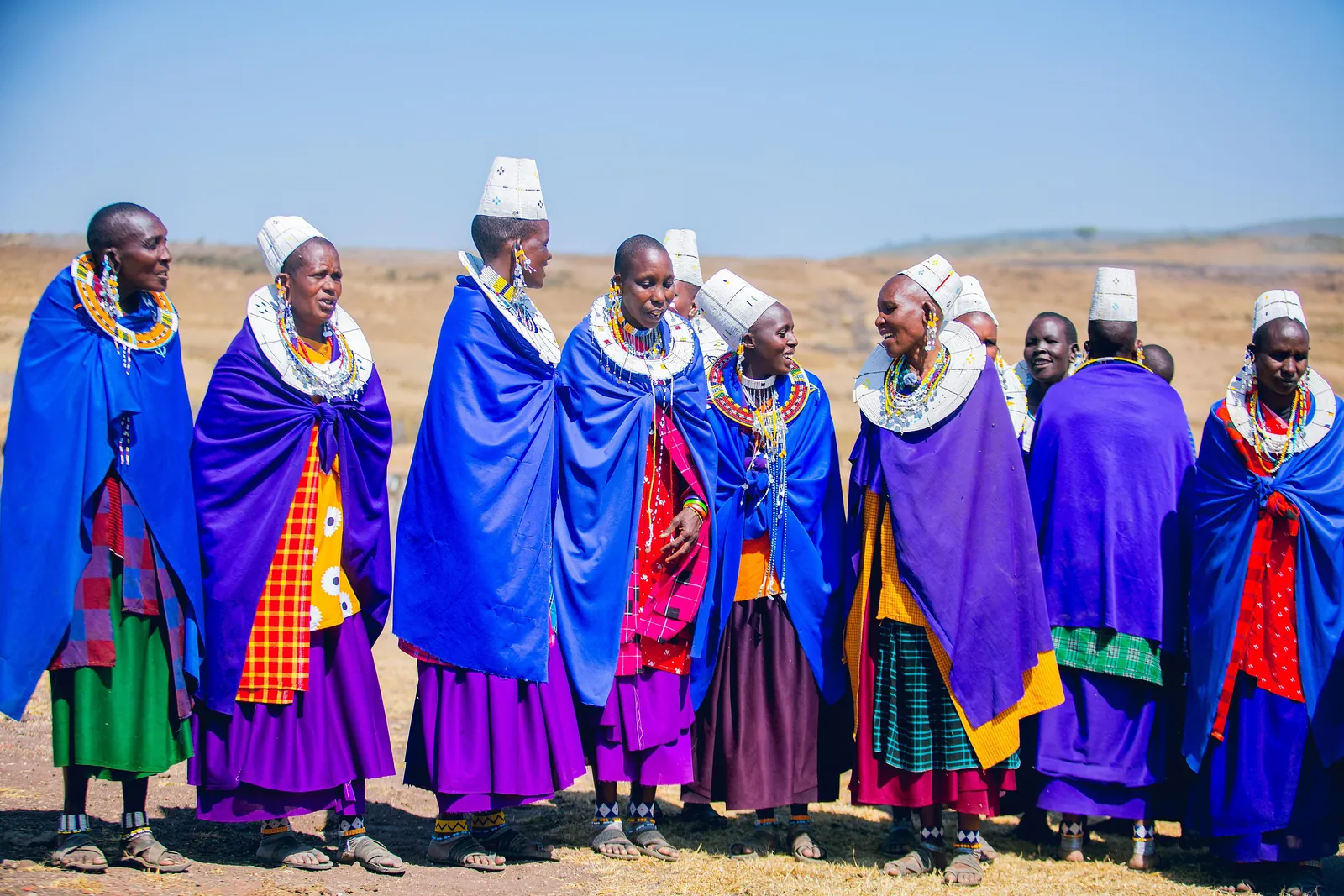
Photo: Rwebogora, CC BY-SA 4.0, via Wikimedia Commons
- From
- $20 per person
- Per person, with most of it going to the community. Its own line on your quote.
- Best months
- Year-round

About
About this experience.
You hear the herds before you see the homestead: cowbells, whistles, and the low calls of young men moving cattle along the slopes of the Ngorongoro highlands. Inside the homestead, women sit in the shade threading beadwork in red, blue, white and green. Later the young warriors gather for the adumu, the jumping dance, rising straight into the air one after another while the others sing. It is a performance, and it is also a culture that has lived alongside wildlife in this landscape for generations.
The Ngorongoro Conservation Area was created in 1959 as a multiple land use area, and it remains the only conservation area in Tanzania where people live permanently alongside wildlife. The Maasai speak Maa, and cattle sit at the centre of their communal life; the authority's own cultural notes describe the belief that Engai, God, created cattle for them. The authority charges an entry fee of 20 US dollars per vehicle at its designated cultural bomas along the crater road. Outside the conservation area, communities in the Randilen wildlife management area beside Tarangire, which is run by an association of Maasai villages, also host visitors.
What it is really like depends on how it is arranged. A good visit is unhurried, led by someone from the community, and focused on daily life: how a homestead is organised, how cattle are herded, what the beadwork colours mean, which vary from village to village. A poor one can feel like a sales stop. We choose visits where the community is clearly in control and the fee reaches the village. You are welcome to ask questions, and you should always ask before photographing anyone.
The honest caveats. Any short visit is an introduction, not an immersion, and some souvenir selling is normal. The wider context matters too. Since 2022 the government has run a programme to relocate Maasai households from the Ngorongoro area to Msomera, which it describes as voluntary; human rights organisations have strongly criticised it, and in December 2024 the president announced committees to review it. We think travellers should know this, and we keep the money from our cultural visits flowing to communities directly.
Two nearby experiences deepen the picture. Olduvai Gorge, named after the Maasai word for the wild sisal that grows there, is where Mary Leakey found the skull now called Paranthropus boisei in 1959, and its museum stands on the gorge rim; entry is 35.40 US dollars per adult. Further south, around Lake Eyasi, live the Hadzabe, one of the last communities in Africa who still forage, with a click language, Hadzane, unrelated to any other. Research has shown that honeyguide birds respond to the Hadza's own whistles when leading them to bees' nests. Visits to Hadza camps raise real ethical questions, as studies note much tourism income has not reached the Hadza themselves, so we only arrange them carefully, with community-approved guides, and we will tell you honestly if we think a visit is not right.
On your quote, every cultural fee is a separate line so you can see what reaches the community. It suits travellers who want context for the landscape and are comfortable with an honest, sometimes complicated picture.
How to structure it
Building it into your trip.
Allow a morning or a couple of hours rather than squeezing a visit between drives. The easiest fit is the Ngorongoro highlands, combining a boma visit with Olduvai Gorge on the way to or from the Serengeti; Olduvai Camp sits close to the gorge. Near Tarangire, a visit in the Randilen area pairs with a lodge such as Nimali Tarangire. For the Hadzabe, add a night near Lake Eyasi; Bashay Rift Lodge near Karatu is about 30 kilometres away, and the visit is best made early in the morning.
Gallery
A closer look.
Photo credits
- 01Photo: Rwebogora, CC BY-SA 4.0, via Wikimedia Commons
- 02Photo: Arnold Tibaijuka, CC BY-SA 4.0, via Wikimedia Commons
- 03Photo: Arnold Tibaijuka, CC BY-SA 4.0, via Wikimedia Commons
- 04Photo: Rwebogora, CC BY-SA 4.0, via Wikimedia Commons
- 05Photo: Nevit Dilmen, CC BY-SA 3.0, via Wikimedia Commons
- 06Photo: Vince Smith, CC BY-SA 2.0, via Wikimedia Commons
- 07Photo: Arnold Tibaijuka, CC BY-SA 4.0, via Wikimedia Commons
- 08Photo: Rwebogora, CC BY-SA 4.0, via Wikimedia Commons

Common questions
Questions, answered.
How much does a Maasai village visit cost in Tanzania?
At the Ngorongoro Conservation Area's designated cultural bomas the authority charges 20 US dollars per vehicle to enter, and communities may also ask for a visit fee. Elsewhere costs vary by community and arrangement. On Savannah & Sands every cultural fee is its own line on your quote, so you can see what you are paying and who it goes to.
Is a Maasai village visit authentic or staged?
It varies. Some visits are hurried and commercial; others are led by community members and focus on real daily life. We choose visits where the community controls the experience and the fee reaches them. Even the best short visit is an introduction rather than an immersion, and some craft selling is normal and welcome.
Can I take photographs?
Ask first, every time, and respect a refusal. Many people are happy to be photographed during a hosted visit, but it should never be assumed. Avoid photographing children without their parents' clear agreement. Your guide can help with the right phrases in Maa or Swahili.
What is happening with the Maasai in Ngorongoro?
Since 2022 the government has run a programme moving Maasai households from the conservation area to Msomera, which it describes as voluntary. Human rights groups have criticised it as forced eviction, and in December 2024 the president announced committees to review the process. We think travellers should understand the context, and we keep our cultural fees going to communities directly.
Can we visit the Hadzabe at Lake Eyasi?
It is possible, but we approach it carefully. The Hadzabe are a small foraging community, and research shows much tourism money has not reached them. We only arrange visits with community-approved guides, keep groups small and explain the ethics before you decide. For many guests, Olduvai Gorge and a Maasai visit are the better fit.
What should I wear and bring?
Modest, comfortable clothes and closed shoes, as homesteads are dusty and there may be livestock. Bring small notes in Tanzanian shillings or US dollars if you want to buy beadwork directly from the women who made it. Curiosity and good questions are the most valued things you can bring.
Build your trip
Plan a maasai cultural experience trip.
Tell us when you can travel and what you most want to see. We'll build a custom itinerary around Maasai Cultural Experience with transparent pricing throughout.
Build & price your trip