ExperiencesSafari experience
Walking Safari
On foot, the bush stops being a view and starts being a place.
- From
- $135 per person
- Per person for a guided morning walk, area-dependent. Shown as its own line on your quote, never hidden inside a lodge rate.
- Best months
- Jun, Jul, Aug, Sep, Oct

About
About this experience.
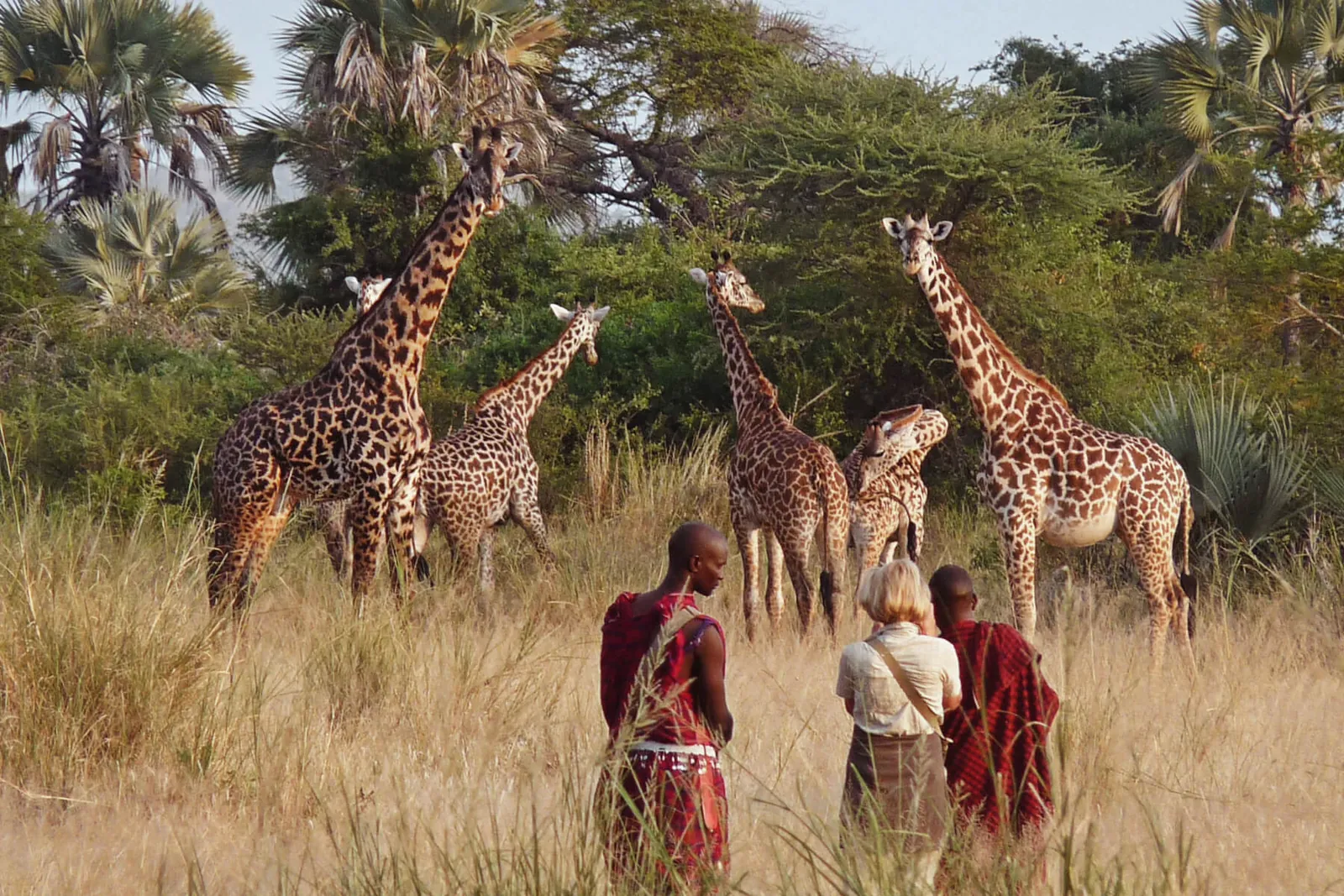
The first thing that changes on foot is your hearing. Out of the vehicle, with the ranger ahead and the guide behind, you notice the oxpeckers chattering before you see the buffalo they are riding on, and the alarm bark of an impala that tells the whole group something has moved. Your guide kneels to show you a set of tracks in the sand, reads the age of a pile of elephant dung by its warmth and texture, and points out the paths worn by animals to water. It is slow, quiet and completely absorbing.
In northern Tanzania, walking safaris happen in two kinds of place. Inside national parks such as Tarangire, Lake Manyara and the Serengeti, TANAPA charges a set fee for short and long walks, which run with an armed park ranger on approved routes. Outside the parks, the wildlife management areas that border them, such as Randilen beside Tarangire and Burunge between Tarangire and Lake Manyara, allow lodges to run their own guided walks. In the Ngorongoro Conservation Area, the authority's tariff lists walks of one to four hours and longer, including named routes such as the Endoro Nature Trail and the elephant caves walk in the highland forest.
What it is really like: early starts to avoid the heat, two to three hours on foot at a gentle pace, frequent stops, and far more attention to small things than on a drive. You are unlikely to walk up to lions, and that is by design; guides keep a careful distance from dangerous animals and steer around them. The excitement is in the tension of being on equal terms, the sudden crack of a branch, and learning to read the land. Our partner lodges in the Burunge area, the Chem Chem camps, are known for walking in the Kwakuchinja corridor, a route elephants use between Tarangire and Lake Manyara, which the Chem Chem Association has been rehabilitating since 2008. In the Randilen area, Tarangire Treetops and Nimali Tarangire both offer guided walks from camp.
The honest caveats. Walking is not a way to see more animals; you will typically see fewer than from a vehicle, but you understand far more. It requires reasonable fitness, closed shoes and the discipline to follow the ranger's instructions exactly, including standing still when told. Minimum ages apply; Ngorongoro's tariff prices children's walks from twelve, and lodges often set their own minimum. In the wetter months grass grows tall and visibility drops, which is why the dry season is preferred.
On your quote a walk is always its own line: the park or authority walking fee where it applies, the ranger, and any lodge activity charge. It is never hidden inside a lodge rate. For example, Ngorongoro currently publishes 23.60 US dollars per adult for a short walk of one to four hours.
It suits curious travellers, repeat safari-goers looking for something new, birders, and anyone who wants to feel the bush rather than watch it. It pairs especially well with a few days of game drives, as the two approaches complement each other.
How to structure it
Building it into your trip.
Add one or two walking mornings to a longer game-drive safari rather than building a whole trip around them. The simplest base is a lodge in a wildlife management area, such as the Chem Chem camps in Burunge or Tarangire Treetops and Nimali Tarangire in Randilen, where walks start from camp. Walk early, back by mid morning, then drive in the afternoon. A night or two in the Ngorongoro highlands adds a forest walk on the crater's outer slopes, priced on your quote as its own line.
Best time to go
When to go.
- January: not a best month
- February: not a best month
- March: not a best month
- April: not a best month
- May: not a best month
- June: best
- July: best
- August: best
- September: best
- October: best
- November: not a best month
- December: not a best month
Best months: June to October.
Gallery
A closer look.

Common questions
Questions, answered.
How much does a walking safari cost in Tanzania?
It depends on where you walk. Inside national parks TANAPA charges a fee per person for short and long walks. In the Ngorongoro Conservation Area the published rate is 23.60 US dollars per adult for a walk of one to four hours. Lodges in wildlife management areas set their own charges. On Savannah & Sands each fee is its own line on your quote.
Is a walking safari safe?
Walks are led by an experienced guide with an armed ranger, follow a strict briefing and keep a careful distance from dangerous animals. The main rules are to stay in single file, keep quiet and do exactly as the ranger says. Incidents are very rare when those rules are followed, but walking with wildlife always carries some inherent risk.
Is there a minimum age?
Yes. Ngorongoro's tariff prices children's walks from age twelve, and lodges often set their own minimum, sometimes higher. Older children who are calm and good at following instructions usually love it. Tell us everyone's age and we confirm the rules for each walk before booking.
What will we see on foot?
Typically fewer large animals than on a drive, but far more detail: tracks, dung, termite mounds, medicinal plants, birds and insects. You may encounter antelope, zebra, giraffe and elephant at a respectful distance. The appeal is understanding the bush and feeling part of it rather than ticking off species.
What should I wear?
Neutral colours such as khaki, olive or brown, avoiding white and bright colours. Closed walking shoes, long trousers for grass and thorns, a hat, sun cream and a small water bottle. Leave noisy bags and loose items in the vehicle. Mornings can be cool, so a light layer helps.
Build your trip
Plan a walking safari trip.
Tell us when you can travel and what you most want to see. We'll build a custom itinerary around Walking Safari with transparent pricing throughout.
Build & price your trip