
Single
A room for one guest, with private bathroom and shower, mosquito net and a terrace or balcony over the gardens and the valley.
Lodges & partnersKaratu
A hill of coffee and lawns above the Karatu highlands, a short drive from the Ngorongoro gate.
From $125 per person per night
About
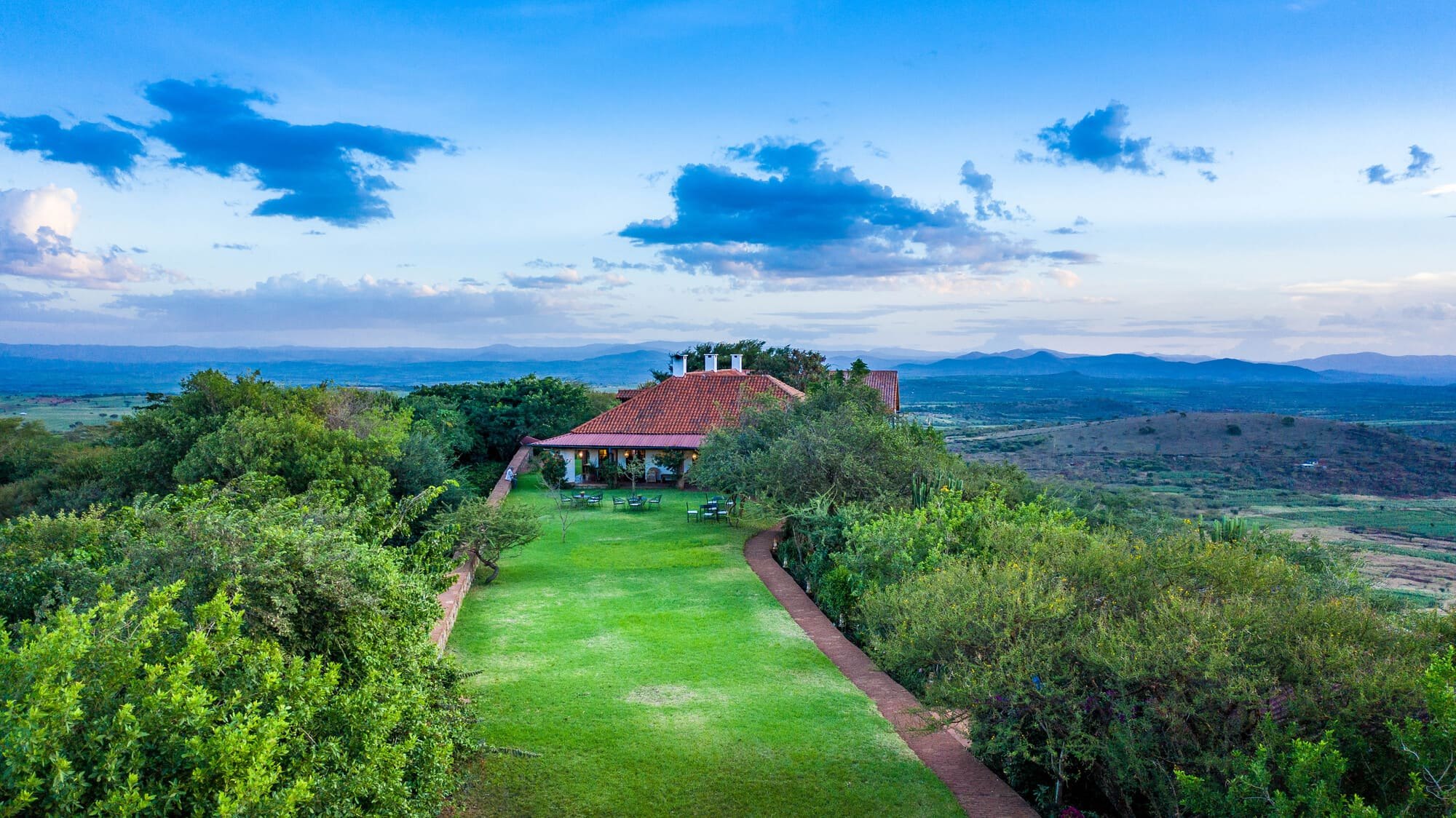
Bashay Rift Lodge stands on Umbwe Hill in the village of Bashay, about four kilometres south of the main road through Karatu and roughly 1,546 metres above sea level. The ground falls away on every side into coffee plantations and market gardens, and the long view runs west to Lake Eyasi and south across the floor of the Rift Valley. The lodge kept most of the hillside as it found it and turned the rest over to coffee and lawned garden, so small antelope still browse the edges and the bird list is long enough to keep binoculars on the breakfast table.
This is farm country rather than game country. The wildlife is twenty minutes away at the Ngorongoro gate, where the Crater floor holds lion, elephant, buffalo and one of the last reliable populations of black rhino in Tanzania, and it is good in every month of the year because the animals there do not migrate. The wider calendar still matters. June to October is dry, short on grass and easy for spotting, and cold enough at this altitude that guests want a fleece after dark. January to March brings the calving herds onto the plains west of the highlands. April and May are the long rains, when the Crater empties of vehicles and the highlands turn a green that photographs beautifully.
The buildings are colonial in style, arranged around a U shaped main house with lounges on one side and dining on the other, and the rooms are spread through smaller buildings down the hill. Inside they are bright and simply furnished in solid wood, woven cotton and local craftwork, and many open onto a terrace over the valley. There are two restaurants and two lounges, a panoramic pool set into the hillside a short walk along the path, a massage room, a boutique, and lounges with fireplaces for the cold evenings. Power comes from a 140 kWp solar installation that covers most of what the lodge uses, and WiFi reaches the common areas.
It suits families and unhurried travellers more than it suits people who want to be first at the gate. Family units have two separate bedrooms, some rooms interconnect, and there are bicycles and a guide at no charge for anyone who wants to ride out through the villages and the canyon paths. The coffee plantation, the vegetable gardens and the beehives are part of the visit rather than decoration, and the kitchen leans on what they produce. Guests who like a lodge to be an event in itself tend to stay two nights.
Getting here is straightforward. The drive from Kilimanjaro International is four to five hours on tarmac through Arusha, Makuyuni and Mto wa Mbu, up the escarpment to Karatu, then four kilometres of track to the gate. Flying in means Lake Manyara airstrip, twenty five to thirty minutes from Arusha Airport, and forty to sixty minutes by road from there.
Signature experiences
A walk through the lodge plantation and the neighbouring farms, following the crop from picking to roasting. The honey from the estate beehives turns up in the kitchen.
Bicycles and a guide at no charge, out through the hills, villages and canyons below the property. The trails are steep in places, so it suits riders with a little confidence.
An early start for a morning with one of the last hunting and gathering families in the Rift, about an hour away. Allow most of the morning once transfers are counted.
Down through Lodoare gate for a full day on the Crater floor, where the density of animals is unlike anywhere else in the country.
A guided half day on foot through montane forest to a waterfall and the mineral caves elephants have dug out over generations.
Gallery
Room types
A room for one guest, with private bathroom and shower, mosquito net and a terrace or balcony over the gardens and the valley.
A room for two sharing one bed, with private bathroom and shower, mosquito net and a terrace or balcony over the gardens and the valley.
The same room as the Double, laid out with two separate beds.
At a glance
Best time to visit
Best months: June to October and December to February.
Location & access
Karatu
About two and a half hours: road to Arusha Airport, twenty five to thirty minutes by light aircraft to Lake Manyara airstrip, then forty to sixty minutes by road up to Karatu and out to the lodge.
About four to five hours: one hour to Arusha, two hours on tarmac to Mto wa Mbu, forty minutes up the escarpment to Karatu, then four kilometres of track to the lodge gate.
On the map
3.382° S, 35.628° E
What's included
Frequently asked
The lodge publishes 37 rooms and suites, including triple rooms, family units with two separate bedrooms, and interconnecting rooms. Quadruple arrangements are possible on request. Trade listings quote lower numbers, so we use the figure the lodge itself publishes.
All year. There are no closed months on the contract, and the Crater is good in every one of them because its animals are resident rather than migratory.
By road it is four to five hours from Kilimanjaro International, through Arusha and Mto wa Mbu and up the escarpment to Karatu, then four kilometres of track. By air it is Lake Manyara airstrip, twenty five to thirty minutes from Arusha Airport, and forty to sixty minutes by road from there.
Yes. Family units have two separate bedrooms and some rooms interconnect. The bicycles, the coffee walk and the school visit all work well with older children. Children cannot be booked into a room of their own here.
Full board with three meals a day, plus VAT and service charge. Drinks, park fees and the Tourism Development Levy are charged separately.
June to October is dry and the easiest for spotting, and January to February brings the calving herds onto the plains west of here. April and May are the long rains, when the Crater is at its quietest and the highlands at their greenest.
Cold enough to matter. At about 1,546 metres the nights are chilly for most of the year and genuinely cold from June to September. The lounges have fireplaces and guests regularly mention wanting an extra layer.
WiFi reaches the common areas rather than the rooms. Power comes from a 140 kWp solar installation covering most of what the lodge uses, with battery backup for the grid outages that are normal in this part of the country.
Yes. From 1 October 2026 visitors entering mainland Tanzania must hold the government inbound travel insurance, 44 USD per adult and valid for up to 92 days, covering emergency medical care, evacuation, repatriation and lost luggage. Children aged 3 to 17 pay half and infants under 3 are free. It is bought online before you fly or on arrival, and residents of Tanzania and of East African and SADC countries are exempt. If you land in Zanzibar first, the Zanzibar policy covers you instead. It is paid by you directly and is not part of our quote.
What's nearby
8 to 10 km to Lodoare gate, twenty to thirty minutes
A collapsed caldera twenty kilometres across holding lion, elephant, buffalo and black rhino in numbers found nowhere else.
27 to 30 km, forty to sixty minutes
A narrow park between the Rift wall and the lake, known for its groundwater forest and its birds.
about 30 km, about an hour
A morning with Hadzabe families, one of the few communities in East Africa still living by hunting and gathering.
30 km, about forty minutes
An irrigated village at the foot of the escarpment where a great many Tanzanian language groups live side by side.
about two hours
The excavation site where the Leakeys uncovered some of the earliest human remains, and a dune of black ash that moves across the plain each year.
90 to 120 km, two to two and a half hours
Baobab country on the way back east, best known for its elephant herds.
Plan this stay
Build your bespoke Tanzania safari with our team. Real lodge rates and itemised pricing throughout.
Build & price your trip
