
Single
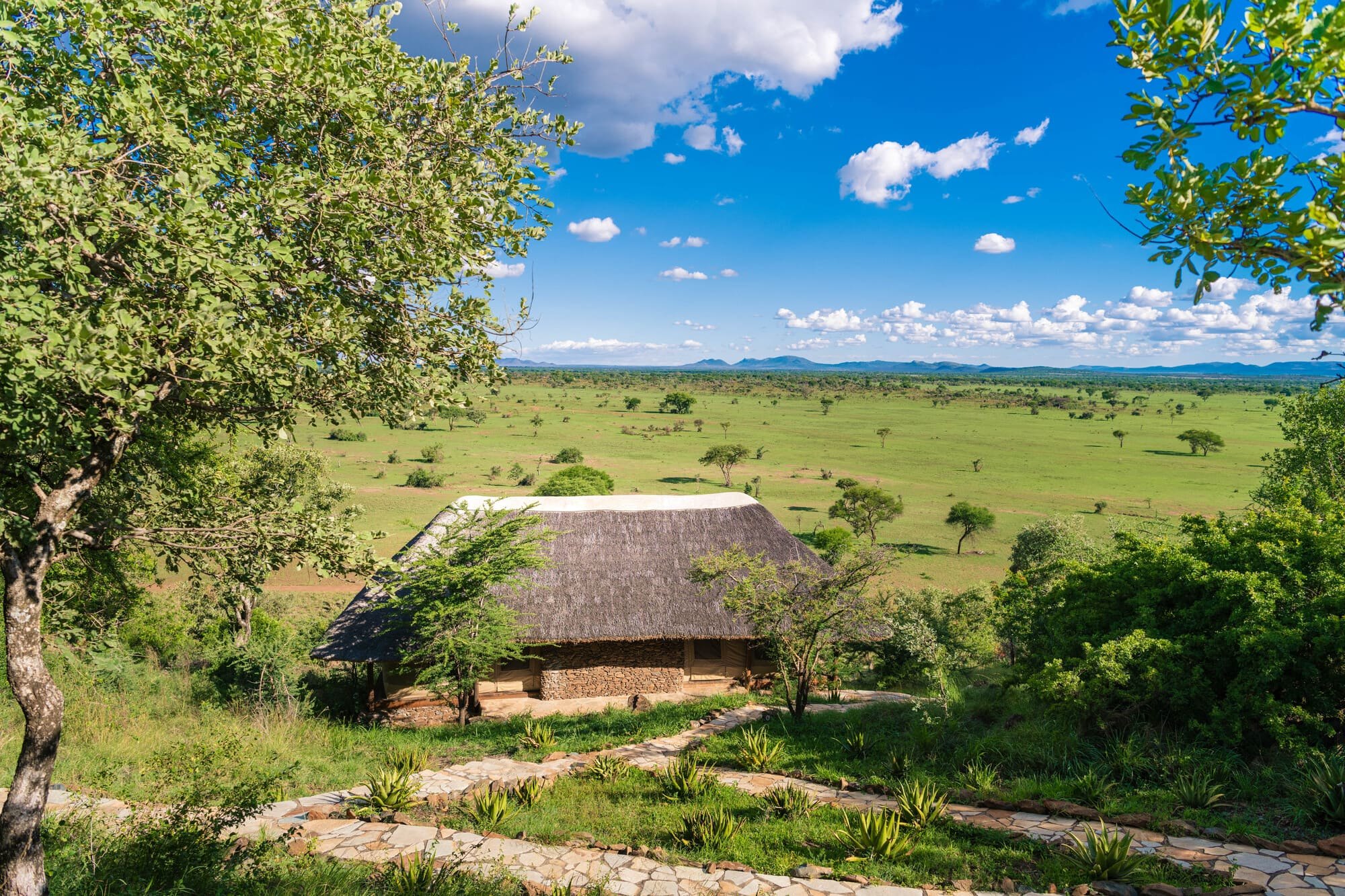
One of the hillside tents taken by a single guest, with a private bathroom, shower and a terrace over the plains.
Lodges & partnersIkoma WMA
A wooded hill on the Ikoma side of the Serengeti, where the rules allow walking and night drives.
From $114 per person per night
About
Grumeti Hills stands on a wooded hill on the Ikoma side of the Serengeti ecosystem, about three kilometres outside the national park boundary and two kilometres from the Grumeti river. That three kilometres changes what a guest can do. Inside the park the gates close at six, vehicles stay on the tracks and nobody walks. Out here on community conservation land, the lodge runs walking safaris with an armed ranger, serves breakfast on the riverbank afterwards, and takes guests out again after dark with a ranger from the Wildlife Department.
The migration is the other reason to be here, and the timing is specific. Herds work north through the western corridor from roughly late May, bank up on the south side of the Grumeti through June, and cross and move on through July. That is this lodge at its strongest. From August to October the columns are far north at the Mara river, two and a half hours away by road, and the lodge becomes a comfortable base for long day trips rather than a front row seat. Resident game stays all year: lion, hyena, buffalo, elephant, giraffe, zebra and the crocodile in the river below.
There are twenty four rooms. Twenty two are tents on raised platforms with king beds, private bathrooms and a terrace, and two are bungalows; five of the units are family arrangements with two separate bedrooms, and four are honeymoon rooms. The buildings are stone and thatch set into the hillside, the interiors run to African fabrics, handmade objects and wooden floors, and the pool is a rock pool cut into the slope rather than a resort rectangle. There is a massage room, a yoga area facing the savannah, a store, complimentary laundry and WiFi in the common areas. Power is a hundred and forty kilowatt solar installation.
The safari fleet is worth a paragraph of its own. The vehicles are retrofitted electric four wheel drives charged from the lodge solar, which the operator claims as an East African first, and they matter most after dark: a silent vehicle and a guide with a thermal imaging camera gets closer to nocturnal animals than an engine ever will, and the images come back to your phone over Bluetooth. The same silence is a gift on a morning drive with photographers aboard.
Getting here is easiest by air, into Fort Ikoma airstrip about eight kilometres away, thirty to forty five minutes by track. The overland route from Kilimanjaro International is ten to twelve hours through Arusha, the Ngorongoro highlands and the length of the park, and should be broken with a night on the way rather than attempted in one.
Signature experiences
Out at seven with a naturalist guide, an armed ranger and a vehicle shadowing you, an easy hour and a half on foot, then a full breakfast laid out on the riverbank while the herds come down to drink.
After dark in a silent electric vehicle with a Wildlife Department ranger aboard, the guide working a thermal camera. Something the national park itself cannot offer, because its gates close at six.
From late May into July the herds bank up on the south side of the river two kilometres from the lodge, and the crossings here draw a fraction of the vehicles that gather in the north.
A German fort built in 1905 to watch the frontier, later British, later a Tanzanian army base, now a heritage site of thick walls and firing slits about half an hour away.
A stop on the road toward the northern Serengeti, with German era buildings still standing in good order and stalls of fabric, food and household goods.
Gallery
Room types
One of the hillside tents taken by a single guest, with a private bathroom, shower and a terrace over the plains.
A tent on a raised platform with a king bed, a dressing alcove, a private bathroom with shower and a large veranda facing the plains. Two of the twenty four rooms are bungalows rather than tents.
The same room as the Double, made up with two separate beds.
At a glance
Best time to visit
Best months: May to October.
Location & access
Ikoma WMA
About three hours: road to Arusha Airport, then roughly an hour and a quarter to two hours to Fort Ikoma airstrip depending on the stops, then thirty to forty five minutes by track to the lodge.
About ten to twelve hours of driving: one hour to Arusha, then the long run through Mto wa Mbu, Karatu, the Ngorongoro highlands, Naabi Hill gate and Seronera before the last stretch north west. This should be broken with a night on the way rather than run in one day.
On the map
2.155° S, 34.619° E
What's included
Frequently asked
Twenty four: twenty two tents on raised platforms and two bungalows. Five are family arrangements with two separate bedrooms and four are honeymoon rooms. Older trade listings still quote sixteen or twenty, from before the lodge grew.
No. It sits about three kilometres outside the park boundary on community conservation land in the Ikoma area. That is why walking safaris and night drives are possible here, and it also changes which fees apply, which we confirm with the supplier when you book.
Yes, and it is the signature of the place. A Wildlife Department ranger comes aboard, the vehicle is a retrofitted electric four wheel drive that makes almost no noise, and the guide works a thermal imaging camera whose images can be sent to your phone.
Roughly late May into July, when the herds move through the western corridor and bank up on the south side of the Grumeti river two kilometres away. From August to October they are far north on the Mara river, about two and a half hours by road.
By air into Fort Ikoma airstrip, about eight kilometres away and thirty to forty five minutes by track, with flights from Arusha Airport taking roughly an hour and a quarter to two hours depending on the stops. Driving from Kilimanjaro International is ten to twelve hours and should be split over two days.
Yes. Five units are family arrangements with two separate bedrooms, and there is a pool. Children cannot be booked into a room of their own here. Walking safaris have their own age rules, which the lodge confirms at the time of booking.
Full board with three meals a day, plus VAT and service charge. Drinks, park and conservation fees and the Tourism Development Levy are charged separately.
Power is a hundred and forty kilowatt solar installation running around the clock, and it also charges the electric safari vehicles. WiFi reaches the common areas.
Yes. From 1 October 2026 visitors entering mainland Tanzania must hold the government inbound travel insurance, 44 USD per adult and valid for up to 92 days, covering emergency medical care, evacuation, repatriation and lost luggage. Children aged 3 to 17 pay half and infants under 3 are free. It is bought online before you fly or on arrival, and residents of Tanzania and of East African and SADC countries are exempt. If you land in Zanzibar first, the Zanzibar policy covers you instead. It is paid by you directly and is not part of our quote.
What's nearby
about 2 km
Where the walking safaris end and breakfast is served, and where the herds cross in June and July.
about 12 km, roughly thirty minutes
A 1905 German fortress on the Serengeti frontier, now a heritage site with walls, firing slits and observation posts.
about 16 km, thirty five minutes
The lodge doorway into the national park for full day drives.
about 42 km, an hour and a quarter
A market town with German era buildings, the usual stop on the road toward Kogatende.
about 55 km, an hour and a half
The big cat heartland of the park, workable as a full day inside the boundary.
about 93 km, two and a half hours
The northern crossing sector in season. A long day, or better split with a night up there.
Plan this stay
Build your bespoke Tanzania safari with our team. Real lodge rates and itemised pricing throughout.
Build & price your trip
