Lodges & partnersSeronera Central Serengeti

Hippo Trails Camp

Twelve tents on a rise on the slopes of Banagi Hill, a short drive from the Retima hippo pool and twenty one kilometres north of the Seronera airstrip.

From $193 per person per night

01 / 06
Tier
Comfort
Location
Seronera Central Serengeti

About

About Hippo Trails Camp.

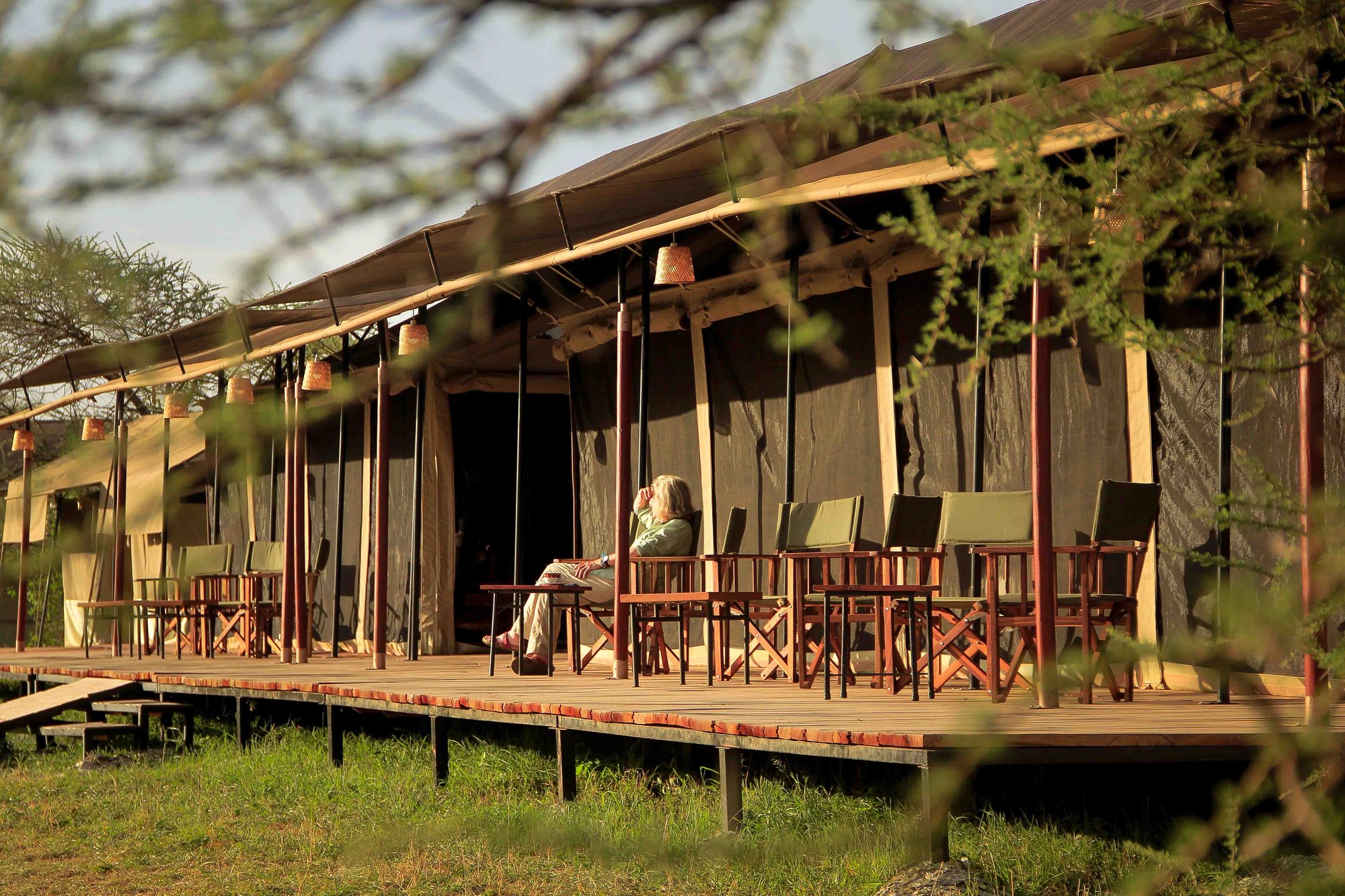
Hippo Trails Camp stands on a low rise on the slopes of Banagi Hill in the central Serengeti, twenty one kilometres north of the Seronera airstrip and next to the Retima picnic site. Twelve canvas tents are set on raised timber platforms and strung along the rise so each one looks out over open grass towards the hills, with the Orangi and Seronera river country falling away below. The camp holds a special campsite licence and runs year round, which in practice means a camp built light on the ground but equipped like a permanent one.\n\nThe position is the reason to come. Retima, where the two rivers meet, holds hundreds of hippo and a good number of large crocodile and is a short drive away. The Seronera river valley half an hour south carries the densest leopard population in the park, with resident lion on the kopjes and cheetah out on the plains to the south. The camp also sits on the corridor running north towards Lobo and Kogatende, so it is quieter than the cluster of properties around Seronera itself. Game is resident through the year because the rivers hold water, which is why the camp stays open in every month. June to October is the easiest viewing, the migration passes through the centre around April to June and again from November, and the green months are the best for birds.\n\nThe tents are generous and plain in a good way. Natural wood floors under sisal matting, a bed under netting, a sitting area with chairs and a table, a writing desk with a charging point, luggage racks, and an extended deck outside with safari chairs. Every tent has its own bathroom built in stone with a flush toilet, a large vanity and a shower with running hot and cold water, all of it heated by solar. Ten tents are doubles or twins and two are family tents. There is no laundry: the camp asks guests to conserve water, and says so plainly, which is more honest than most.\n\nThe heart of the camp is a raised common tent split into a dining room and a lounge and joined by a veranda facing the hills, with a fire lit outside most evenings and wifi that reaches the public areas. Food is the house signature. The managing director of the group trained as a chef and still works the menus with each camp team: a full buffet breakfast with eggs to order, lunch boxes for the long days out, and a sit down dinner. Service is Tanzanian run, warm and personal rather than slick. This is a camp for travellers who want to be properly inside the park and close to the Seronera action, who would rather have position, hot water and good food than designer interiors, and who can live without laundry for a few nights.

Signature experiences

Why guests choose it.

  1. The Retima hippo pool

    The camp sits a short drive from one of the largest hippo gatherings in the Serengeti, where the Orangi and Seronera rivers meet. Hundreds of animals lie packed into the bend, with crocodile on the banks. It is the single thing guests here talk about afterwards.

  2. A full day in the Seronera valley

    Leave after breakfast with a lunch box and stay out. The river valley holds the densest leopard population in the park and the kopjes hold resident lion, so a long day covers more ground than two short drives.

  3. The run north past Banagi

    The camp sits on the corridor between Seronera and the northern Serengeti, which is quieter than the main Seronera cluster. Good country for the hours when everyone else is parked at the same sighting.

  4. Dinner under canvas

    The dining tent is laid with linen and the lounge tent sits alongside it under one long veranda. The managing director of the group trained as a chef and works the menus with each camp, and the kitchen is the quiet strength of the place.

Room types

Where you will sleep.

Safari Tent, Single Room

The safari tent taken by one guest. A bed under netting on a wooden floor with sisal matting, a sitting area with chairs and a table, a writing desk with a charging point, and a bathroom with a flush toilet and a shower with running hot and cold water. A long private veranda faces the grassland.

Safari Tent, Double Room

The safari tent with a large bed under netting, a sitting area, a writing desk with a charging point, and a bathroom with a flush toilet and a shower with running hot and cold water. The veranda runs the width of the tent and looks out over open grass towards the hills.

Safari Tent, Twin Room

The same safari tent set with two beds under netting. Sitting area, writing desk, bathroom with a flush toilet and a shower with running hot and cold water, and a private veranda facing the grassland.

Safari Tent, Triple Room

The safari tent set for three. Sitting area, writing desk, bathroom with a flush toilet and a shower with running hot and cold water, and a private veranda. Available on request.

At a glance

The essentials, in brief.

Amenities

  • Dining tent and lounge tent joined by a veranda
  • Campfire Most Evenings
  • Solar Power Around The Clock
  • Solar heated hot water in every tent
  • Flush toilet and a shower with running hot and cold water in every tent
  • Wifi in and around the lounge and dining tents
  • Private veranda with safari chairs on every tent
  • Writing desk and charging point in every tent
  • Daily Tent Service
  • Two Family Tents

Best for

  • First Time Safari
  • Families
  • Photography
  • Central Serengeti Base
  • Value

Wildlife and nature

  • Hundreds of hippo at the Retima pool, a short drive from camp
  • Leopard along the Seronera river valley, some of the most reliable in Africa
  • Resident lion prides on the kopjes around Seronera
  • Cheetah on the open plains south of the river
  • Elephant, buffalo, giraffe, topi and eland through the year
  • Grey breasted spurfowl and Fischer lovebird, best in the green months

Best time to visit

When to go.

  • January: best
  • February: best
  • March: not a best month
  • April: not a best month
  • May: not a best month
  • June: best
  • July: best
  • August: best
  • September: best
  • October: best
  • November: not a best month
  • December: best
Best months

Best months: June to October and December to February.

Location & access

Getting there.

Location

Seronera Central Serengeti

Arriving by air

Seronera is the nearest airstrip, twenty one kilometres from camp. Light aircraft reach it from Arusha Airport in about an hour and fifteen minutes, often with a stop or two on the way, and the camp meets the aircraft for the run north towards Banagi Hill. From Kilimanjaro International Airport allow about an hour and fifteen minutes by road to Arusha Airport first.

By road

A long but straightforward day, about eight hours. From Kilimanjaro International Airport the road runs west to Arusha, then on tarmac through Makuyuni and Mto wa Mbu, up the Rift escarpment through Karatu to the Loduare gate, across the Ngorongoro rim and past Olduvai Gorge to the Naabi Hill gate, then north across the plains to Seronera and on towards Banagi Hill. Most guests break the drive with a night in Karatu or on the crater rim.

On the map

Where it sits.

2.306° S, 34.833° E

What's included

What the rate covers.

Included

  • Full board, breakfast, lunch and dinner
  • Tea And Coffee
  • Bottled Water At Meals
  • Tourism Development Levy
  • VAT

Not included

  • Park Entry And Conservation Fees
  • Camping fees for the special campsite
  • Drinks other than tea, coffee and water
  • Game Drives
  • Airport Transfers
  • Laundry, which the camp does not offer
  • Flights And Airport Taxes
  • Tips And Gratuities

Frequently asked

Questions, answered.

Where exactly is Hippo Trails Camp?

In the central Serengeti on the slopes of Banagi Hill, twenty one kilometres north of the Seronera airstrip and next to the Retima picnic site. It sits on the corridor between Seronera and the northern Serengeti, away from the main cluster of camps.

How many tents does the camp have?

Twelve, all on raised timber platforms. Ten are doubles or twins and two are family tents. Every tent has its own bathroom with a flush toilet and a shower with running hot and cold water.

When is the camp open?

All year. The rivers nearby hold water through the dry months, so resident game stays in the area in every season and the camp does not close.

How do guests reach the camp?

Most fly. Seronera is the nearest airstrip, about an hour and fifteen minutes from Arusha Airport on the light aircraft services, then forty five minutes to an hour by road to camp, usually taken as a game drive. By road from Arusha it is a long day, roughly seven hours through Ngorongoro and across the plains, and most people break it with a night on the way.

What is included in the rate?

Full board, so breakfast, lunch and dinner, with tea, coffee and bottled water at meals, plus the Tourism Development Levy and VAT. Park entry and conservation fees, the special campsite fee, game drives, transfers, other drinks and gratuities are all settled separately.

Are families with children welcome?

Yes. Two of the twelve tents are family tents and the camp prices a triple. Note that the contract requires children below thirteen to share a tent with an adult, so a child cannot take a tent alone here.

Is there wifi, power and laundry?

Wifi is complimentary and reaches the lounge and dining tents and the ground around them. The camp runs on solar around the clock, including the hot water. There is no laundry service: water is scarce and the camp asks guests to use it carefully.

Is there a swimming pool?

No. Hippo Trails is a canvas camp inside the park and has no pool and no spa. The public areas are a dining tent, a lounge tent and a campfire.

What is the best time to visit?

June to October is the dry season and the easiest game viewing, with thin bush and animals holding to the water. The migration moves through the central Serengeti around April to June going north and again from November going south. The green months from November to May are quieter and far better for birds.

What is there to do around camp?

Game drives in the Seronera valley and north past Banagi, the Retima hippo pool, birding, and the Serengeti Visitor Centre near the airstrip. Balloon flights over the plains leave from the Seronera area and are arranged separately.

What time is check in?

From one in the afternoon, with check out at ten in the morning.

What are meals like?

Buffet breakfast with eggs cooked to order, a lunch box for the days spent out on game drives, and a sit down dinner in the dining tent. Special diets are catered for with notice.


What's nearby

Worth the short trip.

  • Retima Hippo Pool

    A short drive north of camp at the meeting of the Orangi and Seronera rivers. Hundreds of hippo and a good number of large crocodile.

  • Seronera river valley

    About half an hour south. Fever tree riverine forest that holds the highest leopard density in the Serengeti, alongside lion and cheetah.

  • Serengeti Visitor Centre

    Near the Seronera airstrip. A short interpretive trail through the kopjes and a shaded spot to break a long driving day.

  • Moru Kopjes

    A long drive southwest. Granite outcrops with Maasai rock paintings and the best chance in the park of black rhino.

  • Northern Serengeti and the Mara river

    The camp sits on the road north. From July to October the river crossings are a long day or a night away at Kogatende.

Plan this stay

Build a trip around Hippo Trails Camp

Build your bespoke Tanzania safari with our team. Real lodge rates and itemised pricing throughout.

Build & price your trip