
Single
One of the twelve tents taken by a single guest, with a sitting area, a private bathroom with shower and a terrace facing west over the plains.
Lodges & partnersIkoma WMA
Twelve tents facing west on a hill outside the park, where walking and night drives are allowed.
From $158 per person per night
About
Ikoma Hills is the smaller of two lodges that share a hill on the Ikoma side of the Serengeti ecosystem, outside the national park boundary on community conservation land. Twelve tents look west over the plains, which is the detail that matters most at the end of the day, and the Grumeti river runs through the country below. Being outside the park is not a compromise here, it is the product: the gates of the national park close at six, vehicles must stay on the tracks and nobody walks, and none of those rules apply on this side of the line.
So the day is shaped differently. A walk leaves at seven with a naturalist guide, an armed ranger and a vehicle shadowing the party, an easy hour and a half on foot, and it ends with a full breakfast laid out in the open on the bank of the Grumeti while the herds come down to drink. After dark the lodge goes out again with a ranger from the Wildlife Department aboard, in a retrofitted electric four wheel drive that makes almost no sound, the guide working a thermal imaging camera.
June and July are the months the migration is physically on this doorstep, as the herds move up through the western corridor and cross the Grumeti. From August into October the columns are in the northern Serengeti and on the Mara river, which is a long day from here, so the lodge works then as a comfortable base with the WMA experience as the reason to stay. Resident game holds all year: elephant, lion, leopard, buffalo, giraffe, waterbuck, hippo and crocodile, with fewer vehicles than the central park sees.
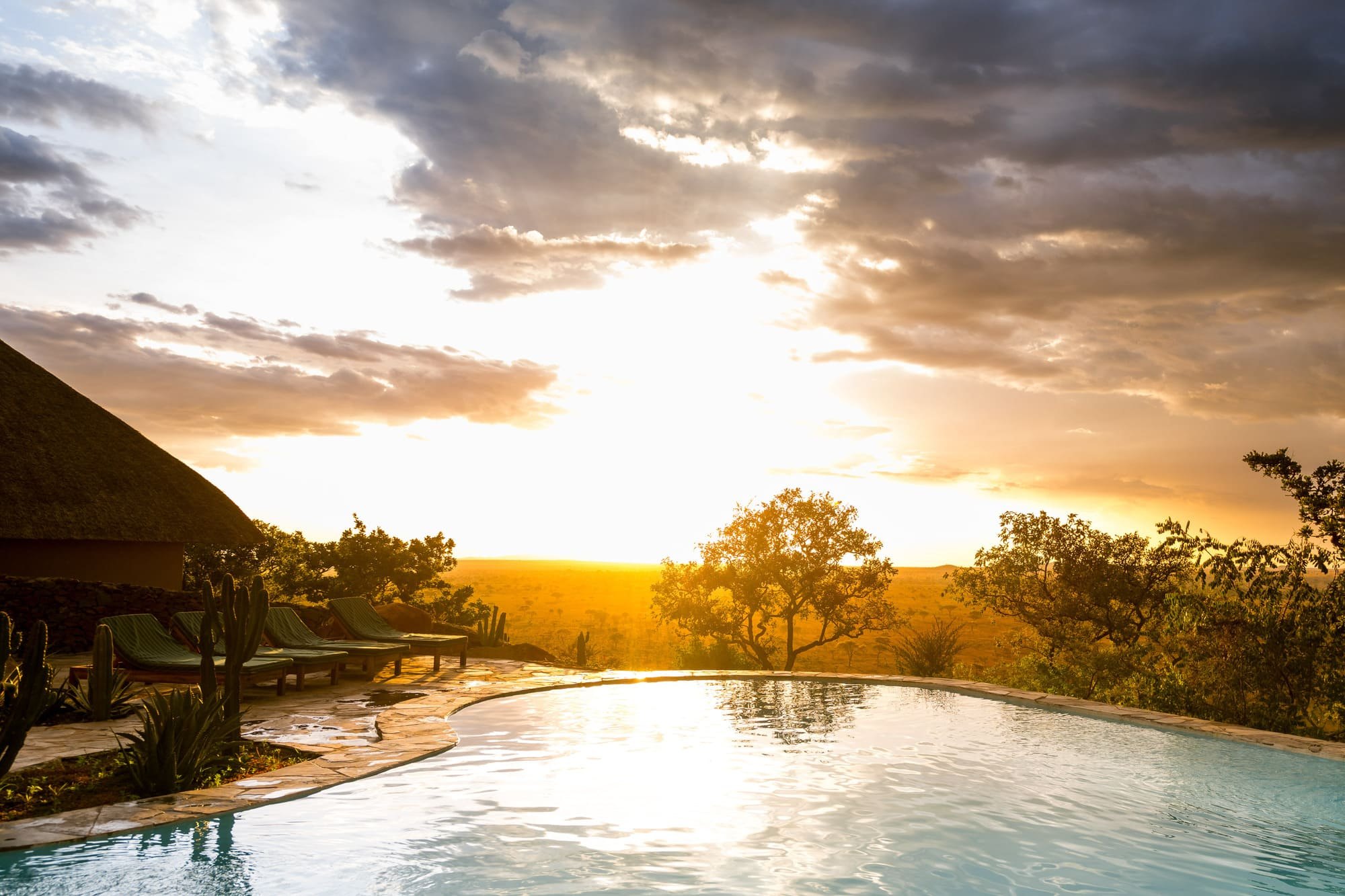
The tents are modular, each with three parts, a partly open sitting area, a bedroom behind mosquito netting opening onto the terrace, and an integrated bathroom with shower, washbasin and toilet, plus a small desk. Floors are wood. One tent is a family unit with two separate bedrooms, and a tent sleeps up to four. There is a panoramic pool, a restaurant, a lounge, a fire lit every evening and massage by the pool. Power is entirely solar, including the hot water, and WiFi reaches the common areas.
Getting here means Fort Ikoma airstrip, a little over eight kilometres away and twenty to thirty minutes by track, with the published Coastal Aviation service from Arusha taking about an hour and a half to two and a quarter elapsed via Manyara. The overland route from Kilimanjaro International runs to ten hours or more and should be treated as a two day journey with a night in Karatu or the central Serengeti.
Signature experiences
The walk leaves at seven with a guide and an armed ranger and ends with a full breakfast set out on the riverbank, watching the herds come down to drink or move to the far side.
Out after dark with a Wildlife Department ranger in a silent electric vehicle, the guide working a thermal camera. The national park cannot offer this because its gates close at six.
The tents and the pool face west on purpose. The end of the day here is the reason the lodge was built on this side of the hill.
A German fort of 1905 built to watch the Serengeti frontier, later British, later an army base, now a heritage site of thick walls and firing slits.
A stop on the road north toward Kogatende, with German era buildings in good order and stalls of fabric, food and household goods.
Gallery
Room types
One of the twelve tents taken by a single guest, with a sitting area, a private bathroom with shower and a terrace facing west over the plains.
A modular tent with a partly open sitting area, a bedroom behind mosquito netting opening onto the terrace, a private bathroom with shower and a small desk. A tent sleeps up to four.
The same tent as the Double, made up with two separate beds.
At a glance
Best time to visit
Best months: June to October.
Location & access
Ikoma WMA
About three hours: road to Arusha Airport, then about an hour and a half to two and a quarter to Fort Ikoma on the published Coastal service via Manyara, then twenty to thirty minutes by track.
Ten hours or more of driving: one hour to Arusha, then the long run through Mto wa Mbu, Karatu, the Ngorongoro highlands, Naabi Hill gate and Seronera before the last stretch north west. Treat it as a two day journey with a night on the way.
On the map
2.155° S, 34.619° E
What's included
Frequently asked
Twelve, including one family unit with two separate bedrooms. A tent sleeps up to four. Older trade listings still say ten, from before the lodge grew.
No. It sits outside the park boundary on community conservation land in the Ikoma area. That is what makes walking safaris and night drives possible, and it changes which fees apply, which we confirm with the supplier when you book.
They are two separate lodges under the same ownership on the same hill, about seventy metres apart, sharing an activity menu and a guiding team. Ikoma Hills is the smaller and newer of the two, with twelve tents against twenty four rooms next door.
Yes. A ranger from the Wildlife Department comes aboard, the vehicle is a retrofitted electric four wheel drive that makes almost no noise, and the guide works a thermal imaging camera.
By air into Fort Ikoma airstrip, a little over eight kilometres away and twenty to thirty minutes by track, with the published service from Arusha Airport taking about an hour and a half to two and a quarter via Manyara. Driving from Kilimanjaro International is ten hours or more and is a two day journey.
Yes. One tent is a family unit with two separate bedrooms, and there is a pool. Children cannot be booked into a tent of their own here, and walking safaris have their own age rules that the lodge confirms at booking.
Full board with three meals a day, plus VAT and service charge. Drinks, park and conservation fees and the Tourism Development Levy are charged separately.
June and July, when the herds move up through the western corridor and cross the Grumeti below the hill. From August to October they are in the northern Serengeti and on the Mara river, a long day away by road.
Yes. From 1 October 2026 visitors entering mainland Tanzania must hold the government inbound travel insurance, 44 USD per adult and valid for up to 92 days, covering emergency medical care, evacuation, repatriation and lost luggage. Children aged 3 to 17 pay half and infants under 3 are free. It is bought online before you fly or on arrival, and residents of Tanzania and of East African and SADC countries are exempt. If you land in Zanzibar first, the Zanzibar policy covers you instead. It is paid by you directly and is not part of our quote.
What's nearby
a short drive, and the end point of the morning walk
Where breakfast is served after the walk, and where the herds cross in June and July.
about twenty minutes
The lodge doorway into the national park for full day drives.
about eight kilometres, beside the airstrip
A 1905 German fortress on the Serengeti frontier, now a heritage site open to visitors.
on the road toward Kogatende
A market town with German era buildings and busy stalls, the usual stop heading north.
about an hour and a half
The big cat heartland of the park, a full day out.
a long day
The northern crossing sector from August to October. Better split with a night up there than run in a day.
Plan this stay
Build your bespoke Tanzania safari with our team. Real lodge rates and itemised pricing throughout.
Build & price your trip
