
Bungalow, Single Room
The bungalow room taken by one guest. A hardwood bed, a fireplace, a writing desk at the window, a dressing area, an en suite bathroom with twin basins, and a private verandah onto the lawn.
Lodges & partnersKaratu
Four canvas tents under thatch and eight cottage rooms on one lawn, on the Manyara side of Karatu.
From $88 per person per night
About
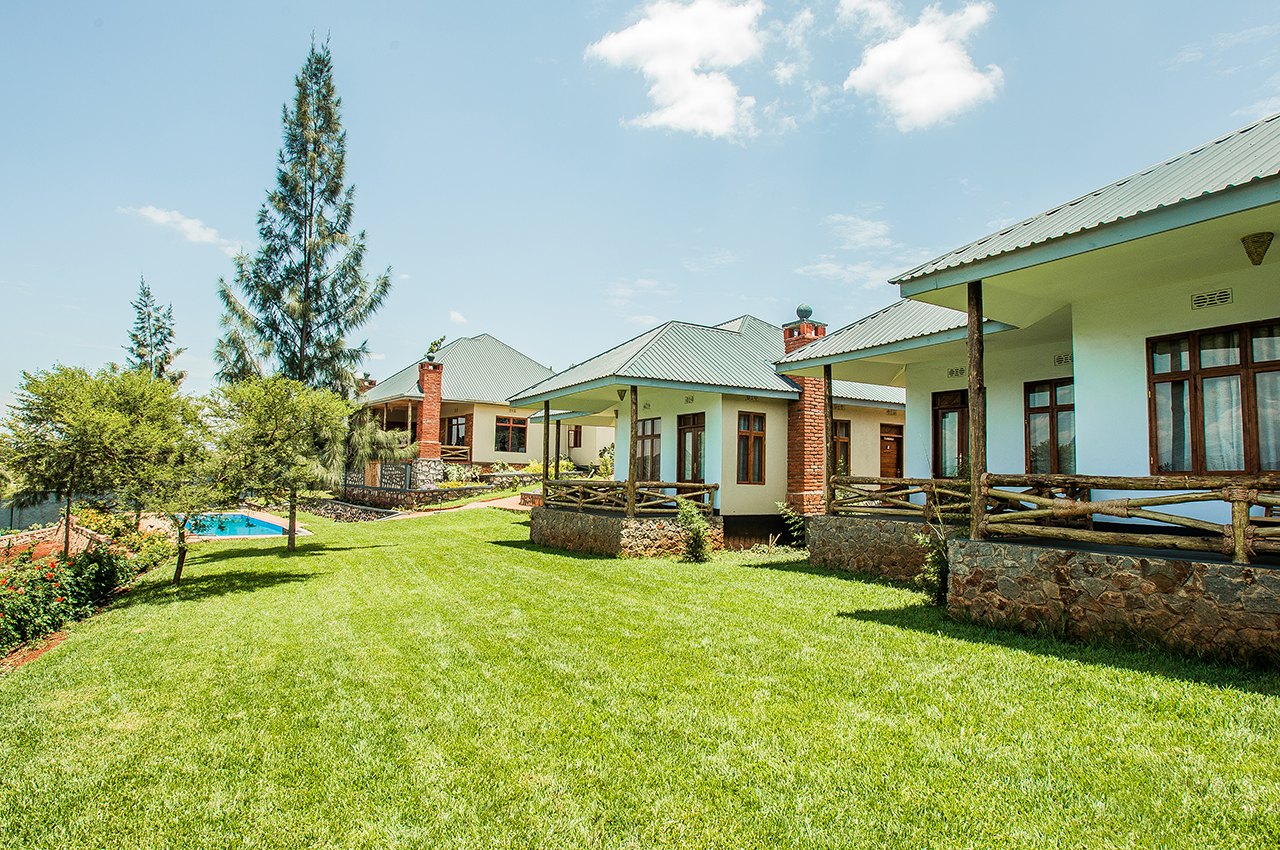
Kankari Lodge sits on the eastern side of Karatu, about three and a half kilometres out of town on the side you arrive from when you drive up from Arusha. It is a small place, twelve units in one walled garden, and it is the only lodge in its group that puts two kinds of accommodation on the same lawn. Eight rooms sit in four solid cottages, white rendered masonry on stone plinths under pitched metal roofs, standing in a row above the pool. The other four are canvas tents raised on timber platforms, each under its own separate thatch roof on heavy timber posts, with a rustic timber railed veranda in front. One booking can put a honeymoon couple under canvas and the rest of the party in brick, which is a genuinely useful thing on a family trip.
The grounds are lawned and well watered, with mature conifers, bougainvillea and lantana, stone retaining walls and open views to the farmland and hills around. The lodge calls itself a birding garden and that is fair. At this altitude the evenings are cold, which is why every unit has a fireplace and why two more burn on the large common deck.
Being on the eastern side of town has a practical consequence worth knowing. Lake Manyara and its gate are close, about nineteen kilometres and twenty five minutes down the escarpment, and the Manyara airstrip is about the same, which makes Kankari one of the better Karatu choices if the itinerary includes a flight or a Manyara day. The Loduare gate into the Ngorongoro Conservation Area is further than from the town lodges, roughly thirty five to forty five minutes, so a crater morning starts earlier here. Tarangire is about an hour and a half southeast.
Rooms have twin or queen beds in heavy locally made hardwood frames, pale walls, a writing desk at the window, a dressing area, hurricane style lanterns on the bedside tables and local artwork. Bathrooms are en suite, with a long timber vanity and twin vessel basins. The tents have the same beds on a varnished pine floor, a natural stone feature wall behind the headboards, a sitting area with a settee and coffee table, and large roll up canvas windows with fitted insect mesh screens.
The cosy dining room and the lounge are in the main building overlooking the pool, and meals are served to individual tables rather than from a buffet line. Food is fresh and sourced from the farming country around Karatu, and safari lunch boxes go out on request. Wifi reaches the common areas rather than the rooms. Getting here is about three and a half hours from Kilimanjaro International Airport, or around two and a half hours from Arusha.
Signature experiences
Four tents and eight cottage rooms share one lawn, so a party can split between the two or swap halfway through a stay. No other lodge in the group offers both.
The gate is about nineteen kilometres down the escarpment, twenty five minutes, which is closer than from any of the Karatu town lodges. Groundwater forest, elephant herds and flamingo on the lake, and back for lunch.
Two outdoor fireplaces burn on the large common deck after dark, which at this altitude is where everyone ends up before dinner.
Mature conifers, flowering shrubs and open farmland beyond the wall pull in a lot of highland birds. A slow circuit before breakfast is the easiest wildlife of the trip.
Gallery
Room types
The bungalow room taken by one guest. A hardwood bed, a fireplace, a writing desk at the window, a dressing area, an en suite bathroom with twin basins, and a private verandah onto the lawn.
The bungalow room with one queen bed, a fireplace for the cold highland evenings, a writing desk at the window, a dressing area, an en suite bathroom with twin basins, and a private verandah onto the lawn.
The same bungalow room set with two beds rather than one. Fireplace, writing desk at the window, dressing area, en suite bathroom with twin basins, and a private verandah.
The bungalow room set for three, with a third bed added to the twin layout. Fireplace, dressing area, en suite bathroom, and a private verandah. Available on request.
The luxury tent taken by one guest. Canvas on a raised timber platform under its own thatch roof, a stone feature wall behind the bed, a varnished pine floor, a sitting area with a settee, screened canvas windows, a fireplace, and a timber railed verandah.
The luxury tent with one queen bed, a stone feature wall, a sitting area with a settee and coffee table, a varnished pine floor, large screened canvas windows, a fireplace, an en suite bathroom, and a timber railed verandah under the thatch.
The same luxury tent set with two beds rather than one. Stone feature wall, sitting area with a settee, screened canvas windows, fireplace, en suite bathroom and a verandah under the thatch.
The luxury tent set for three, with a third bed added to the twin layout. Sitting area, fireplace, en suite bathroom and a timber railed verandah. Available on request.
At a glance
Best time to visit
Best months: June to October and December to March.
Location & access
Karatu
Lake Manyara airstrip is the nearest landing point, about eighteen kilometres away and roughly twenty five minutes by road, which is the shortest airstrip run of the Karatu lodges. Light aircraft reach it from Arusha Airport and from the Serengeti airstrips.
About three hours thirty minutes, roughly 195 kilometres. From Kilimanjaro International Airport the road runs to Arusha on the A23, then west on the B144 through Makuyuni, down the Rift escarpment past Mto wa Mbu, and up to the eastern edge of Karatu, which is the first side of the town you reach.
On the map
3.338° S, 35.696° E
What's included
Frequently asked
On the eastern side of Karatu, about three and a half kilometres out of the town centre, which is the first side you reach driving up from Arusha. Lake Manyara is twenty five minutes back down the escarpment and the Ngorongoro gate about forty minutes the other way.
The eight rooms sit in four solid cottages, white rendered masonry under pitched metal roofs. The four tents are canvas on raised timber platforms, each under its own thatch roof, with a stone feature wall behind the beds and a pine floor. Both have fireplaces, verandas and en suite bathrooms, and both share the same garden and pool.
About forty minutes to the Loduare gate from here, longer than from the lodges in Karatu town because Kankari sits on the far side of it, and roughly an hour more down to the crater floor. A crater morning starts early.
By road it is around three and a half hours from Kilimanjaro International Airport and about two and a half hours from Arusha, on tarmac the whole way. Flying in, Lake Manyara airstrip is about eighteen kilometres away, twenty five minutes by road, which is the shortest airstrip run of the Karatu lodges.
Twelve in total: eight rooms in four double cottages and four canvas tents. It is a small lodge and the owners describe it that way.
The published rate is full board, so breakfast, lunch and dinner are covered, and it includes the Tourism Development Levy and VAT. Park and conservation area entry fees, drinks, activities and anything else taken at the property are settled separately.
Yes, and the mix of tents and rooms suits a family well. Rooms and tents can be set as triples with notice. Children between six and twelve sharing with adults are charged at a set child rate rather than a share of the adult price, the same rate in both categories.
At individual tables in the dining room overlooking the pool, rather than from a buffet line. Food is fresh and sourced from the farming country around Karatu, and safari lunch boxes go out on request. Special diets are handled with notice.
Wifi reaches the common areas rather than the rooms, so plan to use it on the deck or in the lounge. The lodge does not publish how its power is supplied, so charge devices in the evening as you would anywhere in the highlands.
No, and at roughly 1,500 metres you will not want it. The evenings are cold, which is why every room and tent has a fireplace and why two more burn on the common deck.
June to October is the dry season and the most reliable window for the Ngorongoro Crater and Tarangire. December to March brings the calving herds onto the Ndutu plains within reach. April, May and November are the quiet months here and the lowest season.
From midday, with check out at ten in the morning.
What's nearby
About twenty five minutes down the escarpment, the closest of the Karatu lodges. Groundwater forest, big elephant herds, baboon troops and flamingo on the lake.
About forty minutes west to the Loduare gate. One of the most reliable places in Africa to see black rhino, alongside lion, elephant, buffalo and spotted hyena.
About an hour and a half southeast. Dry season elephant numbers here are among the highest in Tanzania, among baobabs.
The farming country around Karatu is coffee and maize, and several farms run short tours of the plantations and the washing stations.
A long morning south. Time with Hadzabe and Datoga communities on the lake shore.
Plan this stay
Build your bespoke Tanzania safari with our team. Real lodge rates and itemised pricing throughout.
Build & price your trip
