
Single
One of the twelve rooms taken by a single guest, with an ensuite bathroom, a ceiling fan and a private terrace looking down the valley.
Lodges & partnersKaratu
Twelve rooms on a coffee hill above Karatu, a short run from the Ngorongoro gate and cool enough to want the fire lit.
From $158 per person per night
About
Karatu is the town everybody passes through on the way to the Ngorongoro Crater and almost nobody thinks of as a destination. That is a mistake. It sits at around 1,550 metres in the highland farming country on the far side of the Rift escarpment, the soil is volcanic and deep, and the district grows coffee, maize, wheat and pyrethrum on hills that stay green long after the plains below have gone brown. Kilimani House sits on one of those hills, in Bashay village, inside a working coffee plantation about ten kilometres from the town centre.
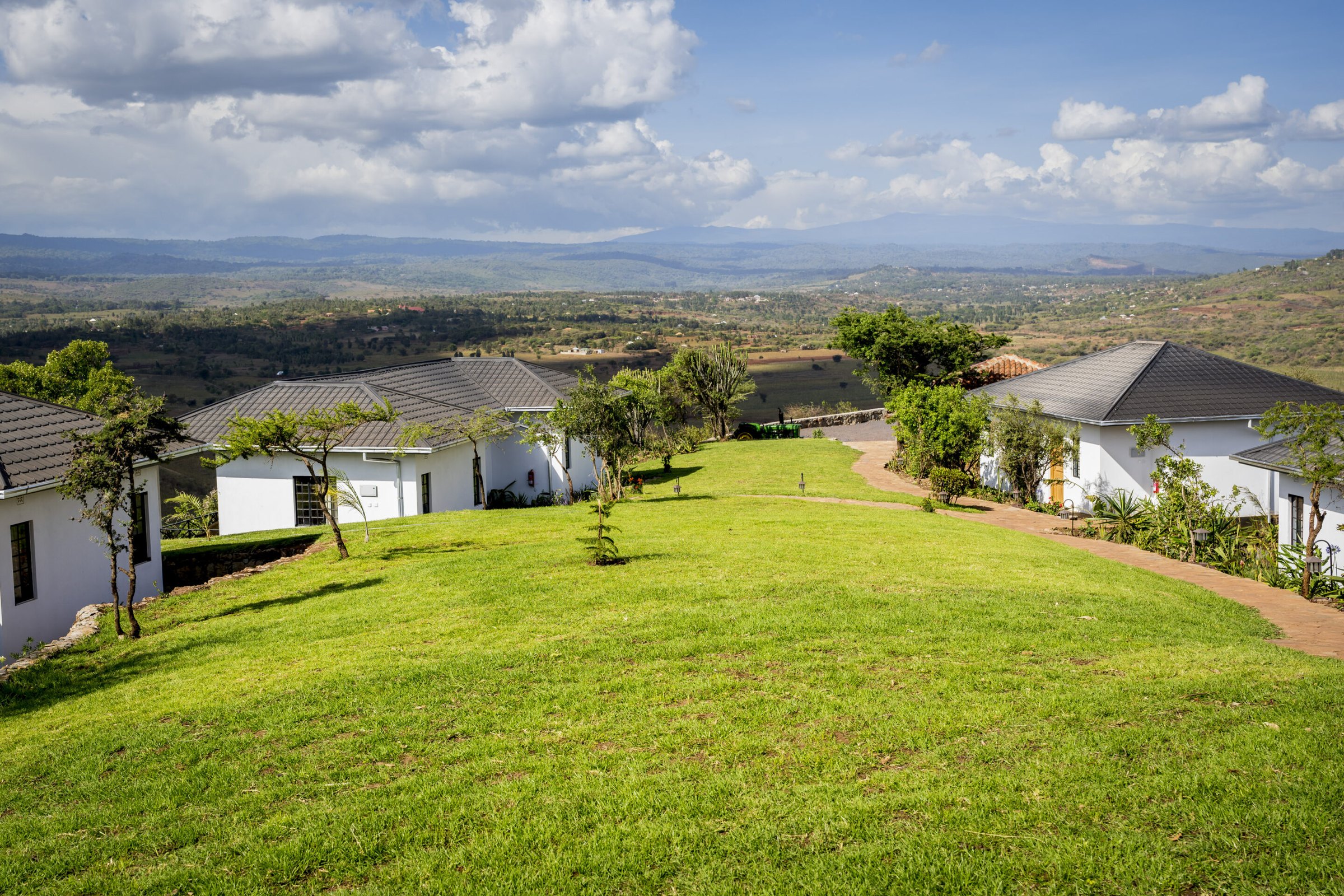
The building is in a colonial country house style, low and long in deep gardens, with the ground falling away to the valley and the Rift escarpments and Ngorongoro foothills on the horizon. Inside it is solid wood, woven cotton and local craft work, and the lounges are built around fireplaces, which at this altitude is not decoration. Days are mild and bright; nights are cold enough that you will want the fire.
There are twelve rooms, all with a king bed, a ceiling fan, an ensuite bathroom with a separate toilet and a private terrace with a valley or hill view. Two have bathtubs. The lodge is small and quiet by design and reads as a grown up place rather than a family one. Outside there is a panoramic pool with a sun deck, a restaurant on the valley side, a lounge, a massage room and a shop. Power comes from a 140 kilowatt peak solar installation that carries most of the property demand around the clock, and two vegetable gardens supply the kitchen.
The position is the practical argument. The Ngorongoro Loduare gate is about thirteen kilometres away, twenty five minutes or so, which means an early start onto the Crater floor without a long drive first. Lake Manyara is about thirty five kilometres in the other direction, and Lake Eyasi, where the Hadzabe still hunt and gather and the Datoga work iron, is about thirty kilometres south.
What we like about it is that it gives you a reason to stay rather than sleep. The coffee plantation tour runs from the picking through to the cup. Mountain bikes are free and there are hill, village and canyon trails from the door with a guide. There are walks, village visits and a long standing partnership with Bashay Primary School, which has around thirteen hundred pupils. And then there is the simple pleasure of sitting on a terrace at 1,550 metres in the late afternoon with the Rift wall going gold in front of you.
Signature experiences
The lodge sits inside a working plantation, and the tour runs the whole way from the picking and the drying beds through to the cup. Karatu volcanic soil and altitude are why this crop is here.
The Loduare gate is about thirteen kilometres away, twenty five minutes or so, which buys you an early descent onto the Crater floor while it is still quiet.
About thirty kilometres south, an arid basin where the Hadzabe still hunt and gather and the Datoga work metal. Mornings out with them are the usual format.
Bikes are free to guests and a guide takes you out on hill, village and canyon trails through the farming country. A good way to spend an afternoon between park days.
The lodge has a long standing partnership with the village school, which has around thirteen hundred pupils, and guests can visit when school is in session.
Gallery
Room types
One of the twelve rooms taken by a single guest, with an ensuite bathroom, a ceiling fan and a private terrace looking down the valley.
A room with a king bed, a ceiling fan, an ensuite bathroom with a separate toilet and a private terrace with a valley or hill view. Two of the rooms have a bathtub.
The same room as the Double, made up with two separate beds.
At a glance
Best time to visit
Best months: June to October.
Location & access
Karatu
About two and a half hours: an hour and a quarter by road to Arusha Airport, then a short flight to Lake Manyara airstrip, then about thirty one kilometres and fifty minutes up the escarpment through Karatu. Most guests on the northern circuit drive to Karatu instead, because the road is good.
About four hours in total: roughly an hour to Arusha, two hours on to Mto wa Mbu, thirty five minutes up the Rift escarpment to Karatu town, then about ten kilometres and twenty minutes on the Bashay village road to the lodge. Nearly all of it is tarmac. These are our estimates, because the operator publishes no transfer times.
On the map
3.381° S, 35.629° E
What's included
Frequently asked
Twelve. All have a king bed, a ceiling fan, an ensuite bathroom with a separate toilet and a private terrace. Two have bathtubs.
The Loduare gate into the Conservation Area is about thirteen kilometres away, roughly twenty five minutes, and the drive up to the Crater rim and down onto the floor follows from there. It is close enough for an early descent without a long drive first.
By road from Kilimanjaro International it is about four hours: an hour to Arusha, two hours to Mto wa Mbu, thirty five minutes up the escarpment to Karatu and then about twenty minutes to the lodge. Flying means Arusha Airport to Lake Manyara airstrip and about fifty minutes by road from there, but most guests on the northern circuit drive.
The lodge sits inside a working coffee plantation and runs a tour from the picking through to the cup. Mountain bikes are free and a guide takes you out on hill and village trails. There are walks, village visits, a partnership with the local primary school and a massage room.
At about 1,550 metres the days are mild and the nights are properly cool, which is why the lounges are built around fireplaces. Bring something warm for the evening and for an early start on the Crater rim, which is higher again.
The lodge is small and quiet in character and sources differ on whether it takes triples and interconnecting rooms. Tell us who is travelling and we will confirm the configuration with the property before you book.
Full board, plus VAT and service charge. Drinks and any park fees are charged separately. Karatu is a town rather than a park, so there is no park entry fee for the nights you spend here.
June to October is the dry season and the easiest for the parks. November to May is greener, better for birds and quieter, with the heaviest rain in March and April. Karatu itself stays green much longer than the plains below it.
Yes. From 1 October 2026 visitors entering mainland Tanzania must hold the government inbound travel insurance, 44 USD per adult and valid for up to 92 days, covering emergency medical care, evacuation, repatriation and lost luggage. Children aged 3 to 17 pay half and infants under 3 are free. It is bought online before you fly or on arrival, and residents of Tanzania and of East African and SADC countries are exempt. If you land in Zanzibar first, the Zanzibar policy covers you instead. It is paid by you directly and is not part of our quote.
What's nearby
about 13 km, 25 minutes
The entrance to the Conservation Area and the road up to the Crater rim.
about 10 km
The district highland market town, busy on market days and the service centre for the whole farming belt.
about 35 km, 55 minutes
Groundwater forest, the Rift escarpment and a soda lake below it.
about 30 km
An arid basin south of Karatu where the Hadzabe hunt and gather and the Datoga work iron.
in the Ngorongoro forest above Karatu
A forest walk through the highland canopy to a waterfall and the salt licks the elephants have dug into the hillside.
beyond the Crater, a long day out
The Leakey excavation and its museum, on the way down to the Serengeti plains.
Plan this stay
Build your bespoke Tanzania safari with our team. Real lodge rates and itemised pricing throughout.
Build & price your trip
