
Single
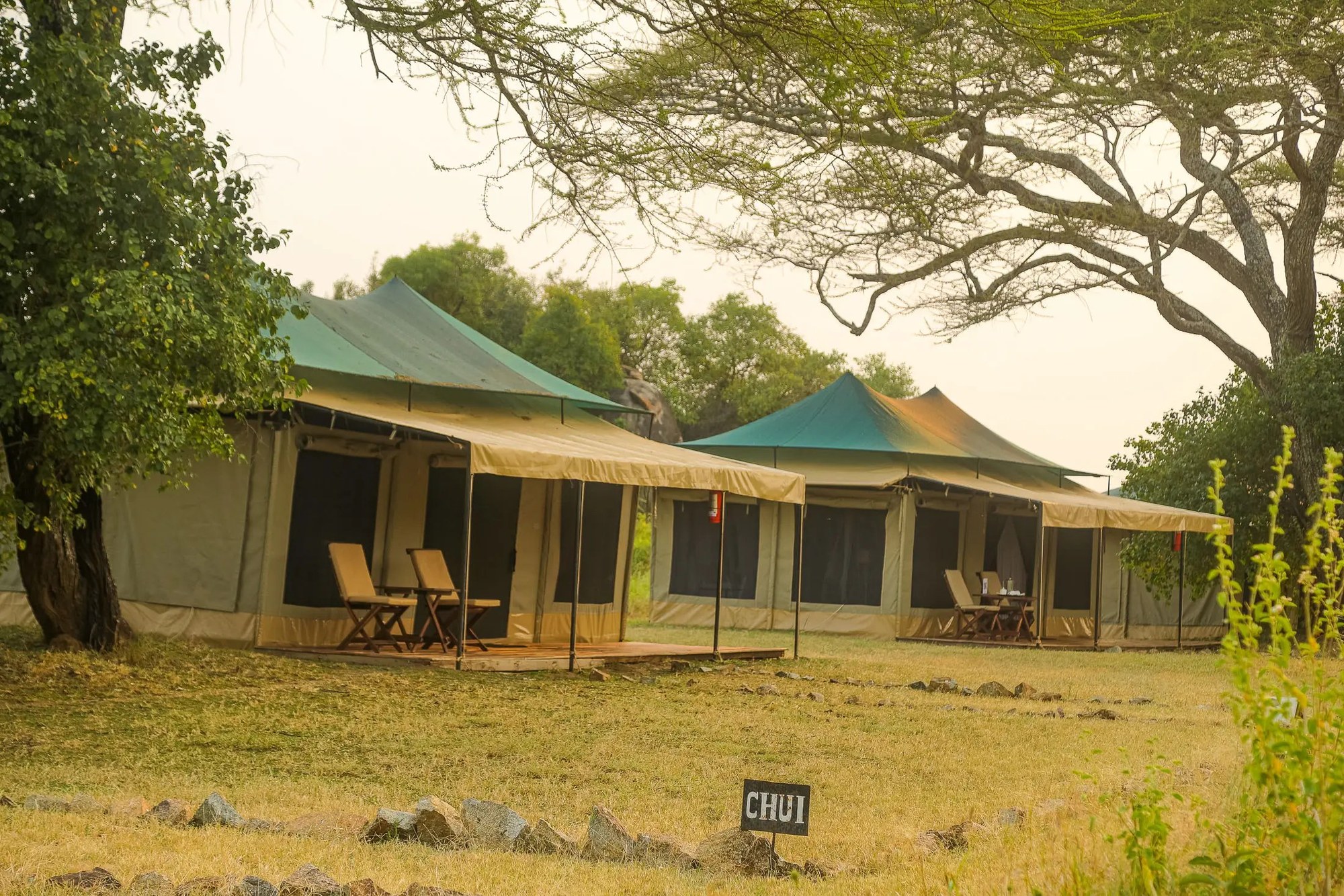
One tent for one guest, with a four poster bed under a mosquito net, a sitting area on a raised deck and a private bathroom with a flush toilet and a hot shower.
Lodges & partnersSeronera Central Serengeti
Ten tents under acacia at Sero 1, a few minutes behind the Seronera airstrip, in the part of the Serengeti where the big cats stay all year.
From $233 per person per night
About
The camp sits at Sero 1 in Seronera, the middle of the Serengeti, a few minutes by track from the Seronera airstrip and close to the river valley that gives the central park its reputation. Ten tents stand under acacia with the plains running out in front of them, and the granite kopjes that lions use as lookouts are within an easy morning's drive. It is a small camp, permanently pitched and open the whole year, so the country outside the tent changes with the season while the camp itself stays put.
Seronera holds water when the rest of the park dries, which is why the resident game never leaves. Lion prides work the kopjes and the river line, leopard rest in the sausage trees along the Seronera river, and cheetah hunt the open ground to the south and east. The migration passes through twice, moving north from about May and back south from about November, so the camp sits in the path of the herds without depending on them. Guests regularly report elephant, giraffe and hyena moving between the tents after dark, which is normal for an unfenced camp in the middle of a national park and the reason staff walk guests to their tents at night.
Tents are canvas on raised decks with four poster beds under mosquito nets, a sitting area, and a private bathroom with a flush toilet and a hot shower. Hot water is prepared when you ask for it, which is how most tented camps inside the park work. Power is solar, so charging is best done in daylight. Meals are full board, served in the dining tent or outside by the fire, with packed lunches made up for anyone out on a full day drive. There is a lounge tent, a campfire, and wireless internet that carries messages rather than calls.
It suits travellers who want to be in the middle of the Serengeti and would rather spend the budget on days in the park than on the camp itself. Couples on a first Serengeti trip do well here, as do families who are comfortable in canvas, and the short hop from the airstrip makes the camp workable on a trip of only two or three nights. It is not the place for anyone expecting hotel service or constant power. It is a small camp in a national park and it behaves like one.
Access is the quiet advantage. The airstrip is a few minutes away, which makes this one of the easiest camps in the central Serengeti to reach by light aircraft, and guests can be out on a game drive within the hour of landing. By road it is a long day from Arusha, normally broken overnight at Karatu or on the Ngorongoro rim.
Signature experiences
Permanent water in the middle of the park, which is why the resident cats stay. Guides work the river line and the sausage trees for leopard and the open ground for cheetah.
The granite outcrops around Seronera hold prides through the heat of the day. Guides know which rocks are occupied and the light on the stone early and late is the reason to be out.
Elephant, giraffe and hyena move through the tents after dark and staff walk guests back at night. It is the part of a Seronera stay people describe first when they get home.
The migration crosses the central Serengeti heading north from about May and south again from about November. Timing moves with the rain every year, so nobody sensible promises a date.
Gallery
Room types
One tent for one guest, with a four poster bed under a mosquito net, a sitting area on a raised deck and a private bathroom with a flush toilet and a hot shower.
One tent for two guests sharing a double bed, with a sitting area on a raised deck and a private bathroom with a flush toilet and a hot shower.
The same tent as the double, laid out with two separate beds. Suits friends and family travelling together.
One tent for three guests with a third bed added, the option families and small groups use most often.
At a glance
Best time to visit
Best months: January to February and June to October.
Location & access
Seronera Central Serengeti
About two and a half hours in total: roughly forty five minutes by road from Kilimanjaro to Arusha Airport, about one hour and fifteen minutes by light aircraft to Seronera airstrip, then a few minutes by vehicle to camp.
About nine hours in total and normally split over two days: roughly one hour from Kilimanjaro to Arusha, three hours west past Lake Manyara to Karatu, then the climb over the Ngorongoro rim and down through Naabi Hill Gate into the Serengeti, a further four to five hours across the plains to Seronera.
On the map
2.448° S, 34.844° E
What's included
Frequently asked
Ten. It is a small camp, which is why the staff get to know guests quickly and why it books out in the busy months. The tent count comes from the camp's distribution listings rather than from the contract, so treat it as close rather than exact.
At Sero 1 in Seronera, the central Serengeti, on a short track behind the Seronera airstrip. It is inside Serengeti National Park, so park fees apply for every day of the stay.
Most fly. It is about forty five minutes by road from Kilimanjaro to Arusha Airport, then about an hour and a quarter by light aircraft to Seronera airstrip, then a few minutes by vehicle. By road it is about nine hours from Kilimanjaro and is normally split over two days with a night at Karatu or on the Ngorongoro rim.
All year. The camp is permanently pitched at Sero 1 and the contract carries no closed months, so it can be booked in any month including the green season in April and May.
Accommodation and full board, three meals a day, with drinking water. The rate also carries the Tourism Development Levy and VAT. Game drives, transfers, park fees, camping fees, laundry and beverages other than drinking water are all charged separately.
No. Game drives, walking safaris and night drives are all outside the rate here, which is normal for a camp at this level in Seronera. Most guests arrive with a vehicle and guide already booked for the whole trip, and that is the arrangement we would put together.
Yes. The camp takes children, the triple tent is the one families use most, and the contract sets out how children are charged by age. Bear in mind the camp is unfenced and animals walk through it after dark, so children need to be with an adult at all times.
Power is solar, so charge cameras and phones during the day rather than overnight, and expect the supply to be limited rather than constant. Hot water for showers is prepared when you ask for it, which is standard for tented camps inside the park. Anyone travelling with a medical device that needs mains power should tell us before booking.
The camp offers wireless internet and guests generally get enough signal for messages and email. Do not plan on video calls from the middle of the Serengeti.
June to October is the driest stretch and the easiest game viewing, and the herds usually move north through the central park from about May. January and February put the calving herds within reach on the plains to the south. April and May are green, quiet and cheaper, with resident cats still on the river.
No. It sits inside the national park with no fence, and elephant, giraffe and hyena regularly move between the tents at night. Staff escort guests to and from the tents after dark and that escort is not optional.
April and May bring afternoon rain, green grass and far fewer vehicles at sightings. The resident lion, leopard and cheetah of the Seronera valley do not leave, so the game viewing stays good even when the migration is elsewhere.
Yes. From 1 October 2026 visitors entering mainland Tanzania must hold the government inbound travel insurance, 44 USD per adult and valid for up to 92 days, covering emergency medical care, evacuation, repatriation and lost luggage. Children aged 3 to 17 pay half and infants under 3 are free. It is bought online before you fly or on arrival, and residents of Tanzania and of East African and SADC countries are exempt. If you land in Zanzibar first, the Zanzibar policy covers you instead. It is paid by you directly and is not part of our quote.
What's nearby
A few minutes from camp
A raised walkway through a kopje, a shaded picnic area and a display on how the ecosystem works. It is a useful first stop on arrival and a good place to sit out the middle of the day.
About an hour and a half north
A permanent pool where two rivers meet, holding a resident hippo group. One of the few places inside the park where guests may leave the vehicle and look down on the water from a raised bank.
About two hours south west
Maasai painted shelters and the gong rock, a boulder that rings when it is struck. The Moru country also holds some of the park's rhino, though sightings are never promised.
About an hour south on the Naabi road
Granite outcrops standing out of the plains, named for the lions that use the high rock to watch the herds below. Hyrax, raptors and the blue and pink agama live in the cracks.
Plan this stay
Build your bespoke Tanzania safari with our team. Real lodge rates and itemised pricing throughout.
Build & price your trip
