
Single
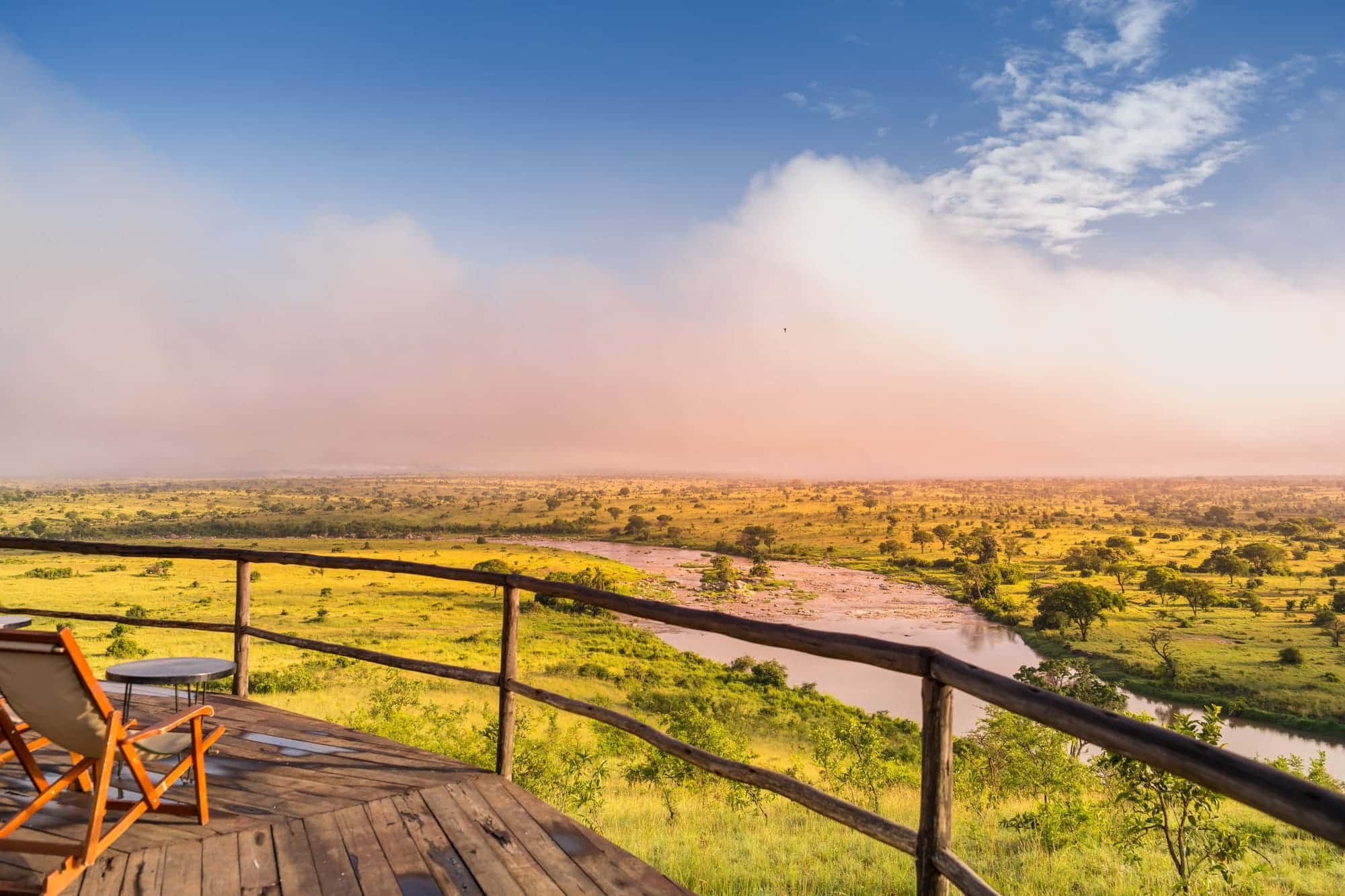
One of the sixteen tents taken by a single guest, with an ensuite bathroom with flush toilet and hot shower and a private terrace above the river.
Lodges & partnersKogatende Northern Serengeti (Mara River)
Sixteen tents on a hill inside a bend of the Mara, in the quiet western end of the crossing country.
From $142 per person per night
About
The Mara river runs west across the top of the Serengeti and then makes a long northward loop, and Mara River Post sits on the hill inside that loop, with the water curling round it on three sides about two hundred and sixty metres below. It is inside the national park, on the southern bank, in the far western part of the Kogatende sector. The view is the reason the camp is where it is: an open sweep of river and savannah from a terrace, which is not something most camps in the north can offer.
Be clear about the geography, because it decides how your days run. The camp is roughly sixteen kilometres west of the Kogatende airstrip and ranger post, which is the hub of this sector. The nearest named crossing point is about three and a half kilometres away and the western crossings are within easy morning reach. The famous, heavily photographed crossings near Kogatende are thirteen to twenty two kilometres east, which is an hour or more each way on Serengeti tracks. Guests who have stayed here describe exactly that: an hour down to the river in the morning, and the trade is worth it for how quiet the camp itself is. The nearest other camp is well over a kilometre away and then there is nothing for eight.
On the migration, we would rather under promise. The herds reach the Mara realistically from late July, the strongest months are August and September, and October can still be good. June is optimistic and we do not sell it as a crossing month. Crossings themselves are not scheduled events: the herds cross north one day and back south a few days later, and whether you see one is a matter of being in the right place on the right morning. What is reliable is the river itself, which holds hippo and crocodile all year, and the resident game of the north, which includes elephant close to camp, buffalo, giraffe, lion, leopard and topi. The Lamai wedge, the triangle between the river and the Kenyan border, starts about four kilometres north across the water and is rewarding at any time of year.
There are sixteen tents, arranged as two wings of eight, each wing with its own open sided mess tent. A tent is forty square metres on a raised wooden platform, canvas under a thatched roof for the heat, with a king or twin bed, an ensuite bathroom with a flush toilet, basin and hot shower, a private terrace, mosquito nets, and sockets and USB points for charging. WiFi reaches the common areas and not the tents. There is a restaurant, a lounge, a treatment area, and a pool cut into the hillside with the river below it. Power is solar around the clock.
The camp is permanent, with a stone main building, and does not move with the seasons. It is not trying to be a design statement; it is a comfortable, well placed base in a part of the Serengeti where being well placed is most of the battle.
Signature experiences
The camp sits on a knoll inside a meander with the Mara below it on three sides. The terraces and the pool look straight down on the river, which is where most guests spend the middle of the day.
The nearest named crossing point is about three and a half kilometres from camp and the western ones are within morning reach. They see a fraction of the vehicles that the Kogatende crossings do.
The famous points near Kogatende are thirteen to twenty two kilometres east, about an hour each way. In August and September it is worth the drive, and worth knowing in advance that it is a drive.
The triangle between the Mara and the Kenyan border, starting about four kilometres north across the river. Strong resident game, fewer vehicles, and the one part of the park where going off the track is permitted.
The river holds both all year, whatever the herds are doing. On a quiet afternoon you can watch them from the terrace rather than from a vehicle.
Gallery
Room types
One of the sixteen tents taken by a single guest, with an ensuite bathroom with flush toilet and hot shower and a private terrace above the river.
A forty square metre tent on a raised wooden platform, canvas under thatch, with a king bed, an ensuite bathroom with flush toilet, basin and hot shower, a private terrace, mosquito nets and charging points.
The same tent as the Double, made up with two separate beds.
At a glance
Best time to visit
Best months: July to October.
Location & access
Kogatende Northern Serengeti (Mara River)
About four hours: an hour and a quarter by road to Arusha Airport, then two to two and three quarter hours to Kogatende on a multi stop bush service, then roughly thirty to fifty minutes west on track. Coastal Aviation, Auric Air, Regional Air and Grumeti Air all schedule the strip.
About twelve hours of driving: an hour to Arusha, three hours to Karatu, three to three and a half hours through the Ngorongoro highlands to Naabi Hill gate, an hour and a half to two hours to Seronera, then four to five hours north on park track to Kogatende and the last sixteen kilometres west. This is a two day journey with a night in Karatu or the central Serengeti. Most guests fly.
On the map
1.569° S, 34.742° E
What's included
Frequently asked
Sixteen, arranged as two wings of eight, each wing with its own open sided mess tent. Two are family tents with two bedrooms. Older listings still say eight, from the camp original configuration before it grew.
It is on a hill inside a bend of the Mara, with the river curling round it on three sides about two hundred and sixty metres below. The terraces and the pool look down on the water.
The nearest named crossing point is about three and a half kilometres away and the western crossings are within easy morning reach. The famous points near Kogatende are thirteen to twenty two kilometres east, which is an hour or more each way on park tracks.
Realistically from late July to October, strongest in August and September. The herds cross north and then back south with no schedule, so a crossing is a chance rather than an itinerary item. Anyone promising you one in June is guessing.
The river holds hippo and crocodile all year, elephant come close to camp, and the north has good resident lion, leopard, buffalo, giraffe and topi. The Lamai wedge across the river is rewarding at any time and is the one part of the park where going off track is allowed.
By air into Kogatende airstrip, about sixteen kilometres east, roughly thirty to fifty minutes by track. The flight from Arusha Airport takes about two to two and three quarter hours and stops at other strips on the way. Driving from Kilimanjaro International is about twelve hours and should be treated as a two day journey.
No. It is permanent, with a stone main building, a pool cut into the hillside and solar power around the clock, and it stays in one place all year.
Full board, plus VAT and service charge. Drinks, park fees, concession fees and the Tourism Development Levy are charged separately.
Yes. From 1 October 2026 visitors entering mainland Tanzania must hold the government inbound travel insurance, 44 USD per adult and valid for up to 92 days, covering emergency medical care, evacuation, repatriation and lost luggage. Children aged 3 to 17 pay half and infants under 3 are free. It is bought online before you fly or on arrival, and residents of Tanzania and of East African and SADC countries are exempt. If you land in Zanzibar first, the Zanzibar policy covers you instead. It is paid by you directly and is not part of our quote.
What's nearby
about 260 metres below the camp
The river wraps round the hill on three sides. Hippo and crocodile hold in it year round.
3.5 to 11 km
The quieter crossings, within morning reach and far less busy than the Kogatende cluster.
13 to 22 km east, about an hour each way
The points everybody photographs. Busy in August and September, and worth the drive in those months.
from about 4 km north, across the river
The triangle up to the Kenyan border. Excellent resident game and the only part of the park where off track driving is allowed.
about 16 km east
The sector headquarters, park formalities and the airstrip most guests fly into.
about 12 km north east
Granite outcrops in open country, classic ground for lion and leopard.
Plan this stay
Build your bespoke Tanzania safari with our team. Real lodge rates and itemised pricing throughout.
Build & price your trip
