
Single
One of the sixteen tents taken by a single guest, with private bathroom, solar heated shower and a terrace over the savannah.
Lodges & partnersTarangire National Park
Sixteen tents set into a granite kopje in Tarangire, above a sea of baobabs and two lakes.
From $105 per person per night
About
Maweninga Camp sits on a granite massif in the north west of Tarangire National Park, about eight kilometres inside the boundary it shares with Burunge Wildlife Management Area and a long way from the tracks most vehicles use. The camp calls itself the hanging savannah, which is fair enough: the tents are cut into the side of the rock on raised platforms, and what they look at is baobab country falling away to the Rift floor, with Lake Burunge and Lake Manyara in the middle distance and the Ngorongoro highlands standing up behind them on a clear morning.
Tarangire is at its best from July into November. The river and the Silale swamp are the only reliable water for a long way, so animals move into the park as everywhere else dries out, the bush thins, and elephant gather along the river in the herds the park is known for. Cats follow the concentration. June is already good and December is good again once the short rains green things up. March to May are the long rains, when much of the game disperses out of the park and the tracks get difficult. From November through to May this is also serious birding country, with migrants arriving from across Africa and Eurasia.
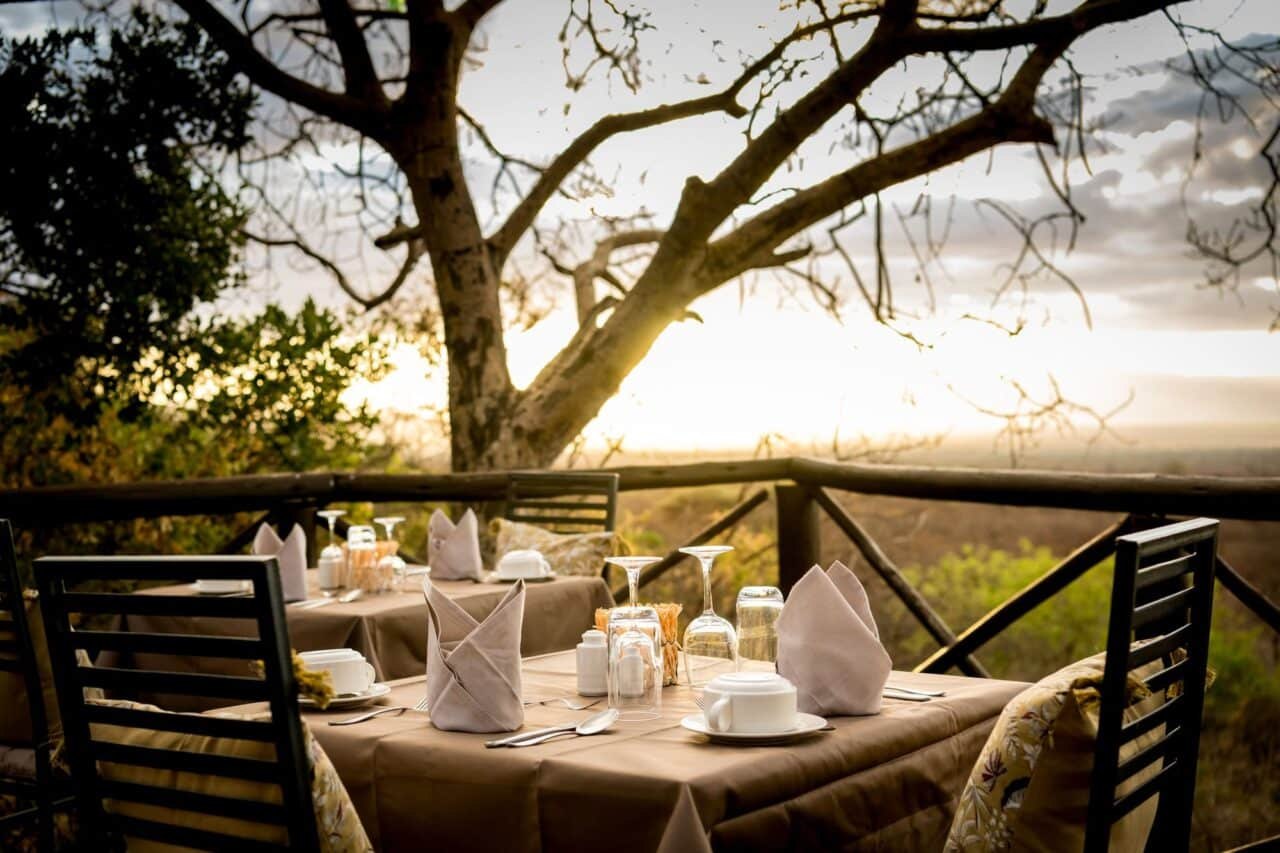
The camp is deliberately simple. Sixteen tents of twenty four square metres, each with a double bed, rough cut wooden furniture, a dressing alcove, a private bathroom with a solar heated shower and a terrace opening onto the savannah. Triples and quadruples can be made up. Meals are home cooked and served in a semi open mess on the flat top of the rock, a fire is lit every evening, and the power is a forty six kilowatt solar installation with no generator behind it. WiFi reaches the common areas. There is no pool.
It suits people who came for the bush rather than for the property. The camp is unfenced, giraffe and elephant cross the view from the terraces, and the walking safari with a park ranger is the thing guests remember. It is a poor choice for anyone who wants a pool, a spa or a short transfer from the gate, and a very good one for photographers, for second time visitors and for families with children old enough to sit still in a vehicle.
Most guests arrive by road, about five hours from Kilimanjaro International through Arusha and down the Babati road, with the last stretch on park track through the north west sector. Flying in means Kuro airstrip, twenty to twenty five minutes from Arusha Airport on the scheduled service, then a game drive transfer across the park of roughly forty five minutes to an hour and a quarter.
Signature experiences
An early morning walk of about two hours among the baobabs and acacias with an armed ranger. The reward is the small detail you never see from a vehicle, and a fair chance of kudu or elephant on foot.
The two places the game concentrates once the dry season sets in. Elephant herds, big buffalo numbers and the cats that follow them, all within a morning of camp.
A pre dawn transfer, an hour or so aloft over the baobab country as the light comes up, and a full breakfast laid out in the open when you land.
The mess and the fire pit sit on the flat top of the kopje. It is the best seat in the camp at either end of the day, and on a clear night the stars run to the horizon on every side.
A long day south to the ochre paintings at Kolo, thousands of years old, with three main sites and a small museum. Worth it for anyone with an interest in the deeper history.
Gallery
Room types
One of the sixteen tents taken by a single guest, with private bathroom, solar heated shower and a terrace over the savannah.
A tent of twenty four square metres with a double bed, dressing alcove, private bathroom with shower and a terrace opening onto the plain.
The same tent as the Double, made up with two separate beds.
At a glance
Best time to visit
Best months: June to December.
Location & access
Tarangire National Park
About two and a half hours: road to Arusha Airport, twenty to twenty five minutes by light aircraft to Kuro airstrip in Tarangire, then forty five minutes to an hour and a quarter by game drive vehicle across the park.
About five hours: one hour to Arusha, then two to three hours south on tarmac through Makuyuni and Minjingu, and roughly an hour on park track from the Sangaiwe side to the camp.
On the map
3.906° S, 35.996° E
What's included
Frequently asked
Sixteen, each of twenty four square metres, set on raised platforms into the side of the granite kopje. Triples and quadruples can be made up, so a tent takes up to four guests.
Yes. It sits about eight kilometres inside the western boundary, in the north west sector of the park. That means Tanzania National Parks entry fees apply for every night of the stay, and they are charged separately from the room rate.
All year. There are no closed months on the contract, although March to May are the long rains and much of the game disperses out of the park in that window.
By road it is about five hours from Kilimanjaro International, through Arusha and down the Babati road, with the last hour on park track. By air it is Kuro airstrip, twenty to twenty five minutes from Arusha Airport, then forty five minutes to an hour and a quarter across the park.
Yes, and tents can be made up as triples or quadruples. There is no pool and no childrens programme, so it suits children old enough to enjoy long drives. Children cannot be booked into a tent of their own here.
Full board with three meals a day, plus VAT and service charge. Drinks, park fees and the Tourism Development Levy are charged separately.
Power is a forty six kilowatt solar installation running around the clock, and the showers are solar heated. WiFi reaches the common areas rather than the tents.
July to November, when the river and the swamp are the only water for a long way and the elephant herds concentrate. June and December are good. April and May are the wettest and the quietest.
Yes. From 1 October 2026 visitors entering mainland Tanzania must hold the government inbound travel insurance, 44 USD per adult and valid for up to 92 days, covering emergency medical care, evacuation, repatriation and lost luggage. Children aged 3 to 17 pay half and infants under 3 are free. It is bought online before you fly or on arrival, and residents of Tanzania and of East African and SADC countries are exempt. If you land in Zanzibar first, the Zanzibar policy covers you instead. It is paid by you directly and is not part of our quote.
What's nearby
from the door
The spine of the park and the reason the game is here in the dry months. Elephant, buffalo, lion and the palms along the water.
a morning drive
Evergreen marsh that holds water when everything else has gone, and the densest game viewing in the park late in the dry season.
the view from the camp, about an hour and a half by road
The shallow soda lake below the western escarpment, good for flamingo and waterbirds.
about three hours
UNESCO listed ochre paintings of hunting scenes and animals, with a small museum at Kolo.
one and a half to two hours
Groundwater forest under the Rift wall, and the lake shore with its birds.
about two hours
The market town at the Manyara turning, where a great many Tanzanian language groups live side by side.
Plan this stay
Build your bespoke Tanzania safari with our team. Real lodge rates and itemised pricing throughout.
Build & price your trip
