
Single
One of the seventeen tents taken by a single guest, on a stone terrace facing the plain, with a private bathroom, shower and flush toilet.
Lodges & partnersNdutu Plains
Seventeen tents around a granite kopje near Olduvai Gorge, facing the plain that runs west to Ndutu.
From $125 per person per night
About
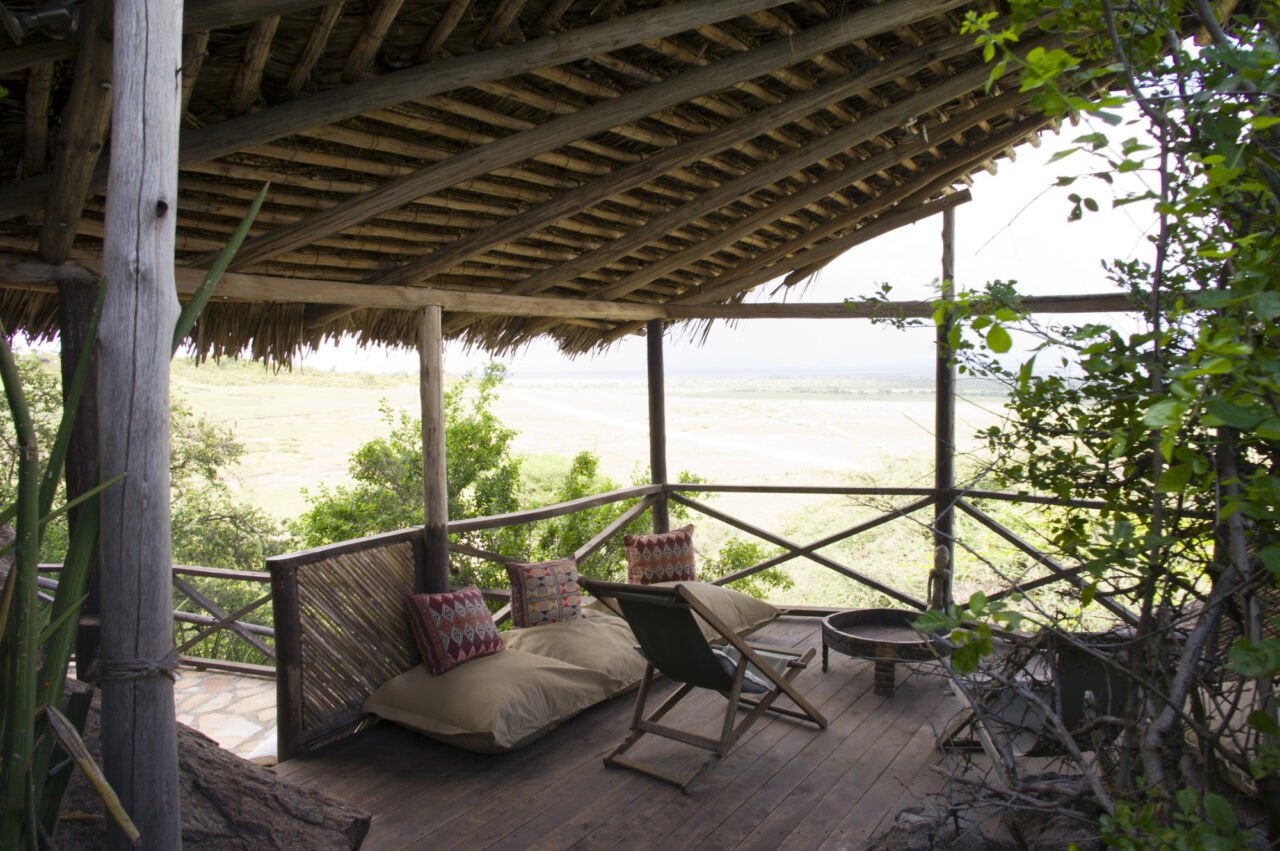
Olduvai Camp is built around a granite kopje inside the Ngorongoro Conservation Area, about nine kilometres from Olduvai Gorge and roughly thirty six kilometres from the crater itself. The seventeen tents stand on stone terraces around the rock, all of them facing out onto a plain that runs west toward Lake Masek and Lake Ndutu. The common areas are set into the rock under a wide thatched roof, and wild sisal grows on the kopje, which is the plant the gorge takes its Maasai name from.
The calendar here is unusually sharp. From December to April the migration is on these plains, and from January to March the herds calve, with thousands of young born on the short grass every day and the predators that follow them close behind. That is the window this camp exists for, and February is the heart of it. By April and May the herds have moved north and the rains are heavy. From July to October the plains are dry and largely empty of migratory game, and the camp is best used as a one night stop for the gorge and the culture rather than sold as a migration property. Resident giraffe, cheetah, gazelle and ostrich stay on all year.
The tents are thirty five square metres, with a large bed, a dressing area and a private bathroom with a shower and a flush toilet. Four are family units with two separate bedrooms. Thatch, canvas, wood and natural materials in soft ochres and faded greens, and a terrace on every one. There are two restaurants, one seating about forty and a smaller one on the rock face, a lounge with a panoramic terrace, a perched lounge with a fire corner, and a platform with a telescope for the stars. Power is entirely solar and the hot water runs around the clock.
What sets the camp apart is what happens on foot. At first light you can walk out with a Maasai warrior toward the gorge, and what you see on the way is as much pastoral as wild: families fetching water, herds being watered, the plain coming awake. Late in the afternoon there are walks up to the higher kopjes. There are Maasai village visits, the gorge and its museum, and full day volcano treks for strong walkers. The camp is Maasai staffed and describes its arrangement with the surrounding communities in terms of jobs, cultural exchange and school support.
By road it is about seven to eight hours from Kilimanjaro International, through Arusha, Karatu and Lodoare gate, then down off the highlands onto the plain, which is a full safari day rather than a transfer. Flying means Ndutu airstrip, one hour and twenty five minutes to two hours and a quarter from Arusha Airport depending on the routing, then about an hour by road.
Signature experiences
Out from camp at first light with a Maasai warrior, down toward Olduvai Gorge, past families watering their herds. The walk is as much about the living landscape as the fossil one.
The excavation site where the Leakeys uncovered some of the earliest human remains, about nine kilometres away, with a museum that puts the finds in order.
From January to March the short grass west of camp fills with wildebeest and zebra dropping their young, and with the lion, cheetah and hyena that follow them. The single best reason to be here.
A walk up to the higher rocks as the light goes. Silence, wind and warm stone under your hands, and the plain turning colour below you.
A guided visit to a village that has kept its traditions, and back at camp a craft market run by the same families.
Gallery
Room types
One of the seventeen tents taken by a single guest, on a stone terrace facing the plain, with a private bathroom, shower and flush toilet.
A tent of thirty five square metres with a large bed, a dressing area, a private bathroom with shower and flush toilet, and a terrace facing the plain.
The same tent as the Double, made up with two separate beds.
At a glance
Best time to visit
Best months: December to April.
Location & access
Ndutu Plains
About three and a half hours: road to Arusha Airport, then one hour twenty five minutes to two hours fifteen to Ndutu airstrip depending on the routing, then about an hour by road to camp.
About seven to eight hours: one hour to Arusha, two and a half to three hours to Karatu, half an hour to Lodoare gate, then about two hours across the highlands and down onto the plain. In practice this is a full safari day with stops rather than a transfer.
On the map
3.035° S, 35.282° E
What's included
Frequently asked
Seventeen, each of thirty five square metres, set on stone terraces around the kopje. Four of them are family tents with two separate bedrooms.
It sits inside the Ngorongoro Conservation Area about nine kilometres from the gorge, roughly thirty six kilometres from the crater, and about twenty six kilometres east of Lake Masek on the Ndutu side.
All year. The strongest months are December to April, and January to March in particular, when the migration calves on the plains to the west.
By road it is seven to eight hours from Kilimanjaro International through Arusha, Karatu and Lodoare gate, which most itineraries run as a safari day with stops. By air it is Ndutu airstrip, one hour twenty five to two hours fifteen from Arusha Airport, then about an hour by road.
Yes. Four tents are family units with two separate bedrooms, and the walks, the gorge and the Maasai visits work well with children. Sources differ on whether there is a minimum age, so we confirm that with the camp at the time of booking. Children cannot be booked into a tent of their own here.
Full board with three meals a day, plus VAT and service charge. Drinks, Ngorongoro Conservation Area fees and the Tourism Development Levy are charged separately.
Power is entirely solar and runs around the clock, and so does the solar heated hot water. The bathrooms have flush toilets. WiFi reaches the common areas rather than the tents.
More than at most camps on this circuit. Walks at first light and late afternoon with Maasai guides, the gorge and its museum, the Shifting Sands, village visits, a craft market at camp, a telescope on the stargazing platform, and full day volcano treks for strong walkers.
Yes. From 1 October 2026 visitors entering mainland Tanzania must hold the government inbound travel insurance, 44 USD per adult and valid for up to 92 days, covering emergency medical care, evacuation, repatriation and lost luggage. Children aged 3 to 17 pay half and infants under 3 are free. It is bought online before you fly or on arrival, and residents of Tanzania and of East African and SADC countries are exempt. If you land in Zanzibar first, the Zanzibar policy covers you instead. It is paid by you directly and is not part of our quote.
What's nearby
about 9 km
The site where the Leakeys uncovered some of the earliest human remains, with a small museum on the rim.
a half day paired with the gorge
A crescent dune of black volcanic ash that moves a little further across the plain every year.
about 26 km and about 39 km west
The lakes at the heart of the calving country, and the boundary with Serengeti National Park.
about 36 km
A full day on the crater floor, with the densest concentration of large mammals in the region.
a long day east
An eighty metre monolith with a Stone Age shelter excavated by the Leakeys at its foot.
walking distance or a short drive
A guided visit to a village that has kept its traditions, arranged through the families the camp works with.
Plan this stay
Build your bespoke Tanzania safari with our team. Real lodge rates and itemised pricing throughout.
Build & price your trip
