
Standard Tent
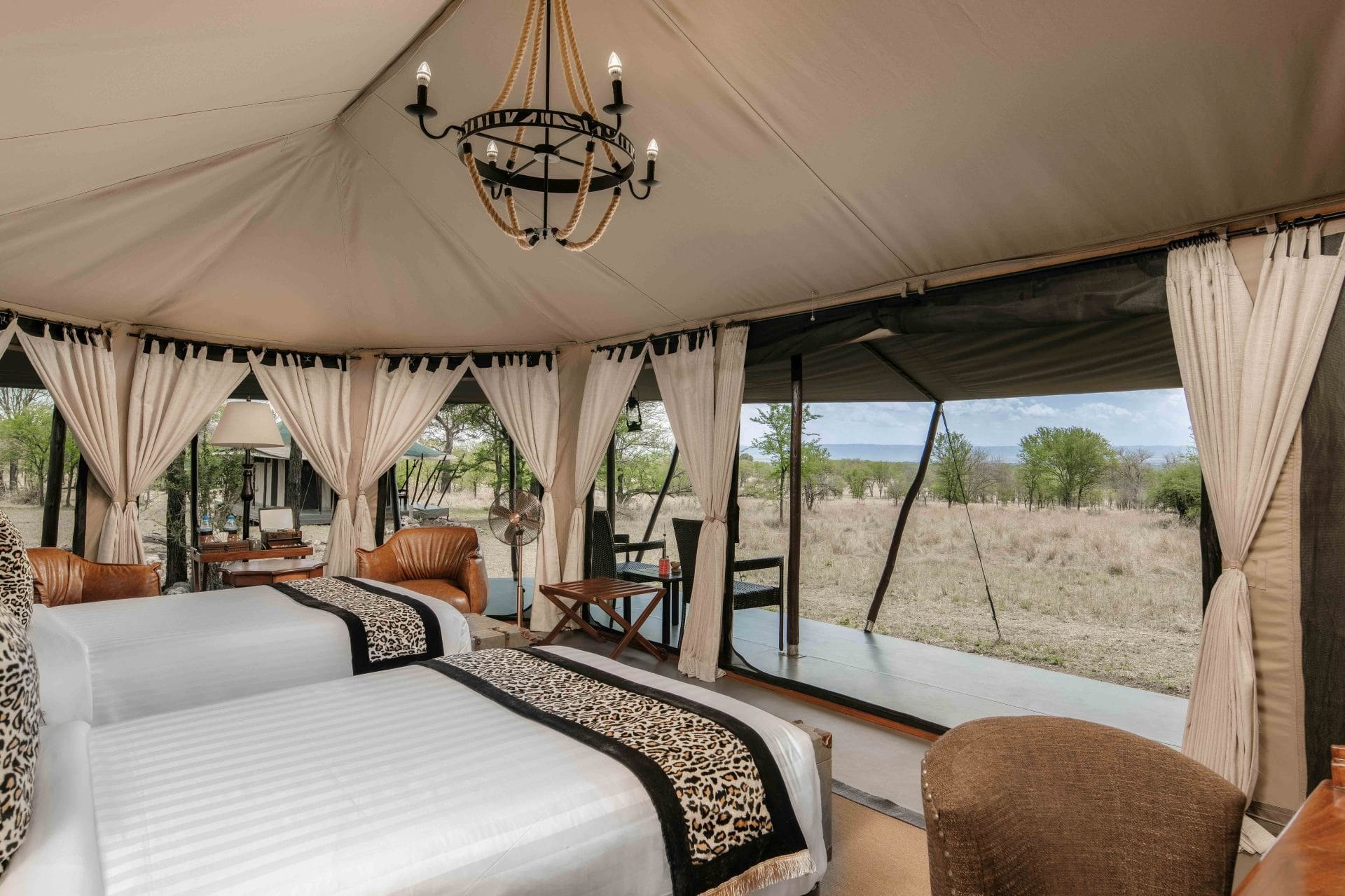
Canvas on a raised platform with a private deck, one super king bed or two singles, ensuite with a flush toilet and hot shower, room for one extra bed.
Lodges & partnersKogatende Northern Serengeti (Mara River)
A small tented camp two and a half kilometres from the Mara River, in the part of the northern Serengeti the herds cross.
From $875 per person per night
About
Ole Serai Luxury Camp Kogatende sits in the far north of the Serengeti, about two and a half kilometres back from the Mara River, in the sector where the river crossings happen. The camp is built light: canvas tents on raised timber platforms, spaced along a line of shade trees, each one turned to face open grassland rather than the neighbouring tent. There is no fence. Zebra graze through the camp in the early morning and the night noise is hyena and, often enough, lion.
The northern Serengeti works on its own calendar. From July to October the herds are here and the river crossings are a short drive from camp, unpredictable by nature and worth the wait when they come. June and November sit either side of that window, when the herds are arriving or drifting south again and the camp is quieter. January to March the north is green and empty of crowds, with resident giraffe, topi, eland and the resident prides that never leave. The camp does not sell April and May.
Each tent has a super king bed or two singles, an ensuite with a flush toilet and a hot shower, and a private deck. Power is solar with a generator behind it, running 24 hours, and there is WiFi in the main areas. The camp centre is a lounge and dining tent with a library and a viewing deck, and a curio shop. Laundry is included to a daily value, which matters more than it sounds on a long safari with hand luggage limits. A massage can be arranged in camp.
It suits travellers who want the migration without a large lodge around it, photographers who need to be near the river early, and couples who would rather eat dinner under canvas with eight other guests than in a dining room of sixty. Families are welcome and one extra bed fits in a tent. It is not the right camp for anyone who wants a pool or a spa.
Access is by air. Kogatende airstrip is a short drive away, about an hour and a quarter of flying from Arusha, and the camp meets guests at the strip when the Game Package is booked. Driving up from Arusha is possible but takes the better part of two days each way.
Signature experiences
From July to October the herds mass on the banks a short drive from camp and cross when they decide to. Guides read the build up and position early, which is the whole trick.
A full breakfast laid out in the open with a waiter looking after the details, timed for the light just after dawn. Booked at camp as a supplement.
Dinner served on the deck of your own tent with the grassland in front of you. Quiet, unhurried and away from the main dining tent.
The camp team tell Serengeti stories around the fire after dinner. Ten dollars a person and the best hour of the evening.
Gallery
Room types
Canvas on a raised platform with a private deck, one super king bed or two singles, ensuite with a flush toilet and hot shower, room for one extra bed.
At a glance
Best time to visit
Best months: July to October. Closed in April to May.
Location & access
Kogatende Northern Serengeti (Mara River)
About three hours in total. Forty five minutes by road from Kilimanjaro International to Arusha Airport, then about an hour and a quarter by light aircraft to Kogatende airstrip, often with one stop, then a short game drive transfer to camp. The camp meets guests at the airstrip when the Game Package is booked.
Possible but long. Roughly two days each way from Kilimanjaro International by road, through Arusha, Karatu, the Ngorongoro highlands and the full length of the Serengeti from south to north. Almost every guest flies instead.
On the map
1.581° S, 34.881° E
What's included
Frequently asked
The camp is small and the published tent count is not consistent between the operator page and the trade listings, so we confirm the exact number with the camp at the time of booking. In practice it reads as a camp of roughly fourteen to sixteen tents, which is why it feels private.
The camp sells from June through to the end of March. April and May are not sold. The busiest months are July to October, when the herds are in the north.
By air to Kogatende airstrip, which is a short game drive from camp. That is about an hour and a quarter of flying from Arusha Airport, and Arusha is a forty five minute road transfer from Kilimanjaro International. The camp meets guests at the airstrip when the Game Package is booked.
Between July and October the herds are in the Kogatende sector and crossings happen within a short drive of camp. No guide can promise a crossing on a given day, because the herds choose their moment, so three nights gives a far better chance than one.
Yes. Children under 6 stay free of charge sharing with their parents, children from 6 to 15 pay a reduced rate, and one extra bed can be added to a tent. The camp is unfenced, so children need to be walked to and from their tent after dark by a guide.
All Inclusive board, which is breakfast, lunch and dinner with soft drinks, plus laundry to a daily value. Park fees, the Tourism Development Levy, concession fees and game drives are charged separately.
No. Game drives come through the Game Package, which is a shared safari vehicle plus airstrip transfers, charged per person per day with a minimum of two guests. A private vehicle can be booked instead, subject to availability.
Solar power with a generator behind it runs 24 hours, and there is WiFi in the main areas. Signal in the far north of the Serengeti is workable rather than fast.
Quiet, green and very uncrowded. January to March the northern plains hold resident game and the big cats that live on them, and you often have a sighting to yourself. It is the best value time of year to be here.
No pool. A massage can be arranged in camp on request. The camp is built light and deliberately simple, which is part of why it sits where it does.
Yes. From 1 October 2026 visitors entering mainland Tanzania must hold the government inbound travel insurance, 44 USD per adult and valid for up to 92 days, covering emergency medical care, evacuation, repatriation and lost luggage. Children aged 3 to 17 pay half and infants under 3 are free. It is bought online before you fly or on arrival, and residents of Tanzania and of East African and SADC countries are exempt. If you land in Zanzibar first, the Zanzibar policy covers you instead. It is paid by you directly and is not part of our quote.
What's nearby
About 10 to 15 minutes
Camp sits about two and a half kilometres from the river, and roughly ten separate crossing sites lie along a fifteen kilometre stretch of it. Crossings cannot be timed, so guides work the sites through the morning and wait with the herds.
A morning drive over the Kogatende bridge
A stretch of about 376 square kilometres between the Mara River and the Kenyan border, added to the park in 1965. Ground access is over the seasonal bridge at the Kogatende rangers post, so it stays quiet.
A morning drive north
Granite outcrops standing roughly ninety metres above the grassland, with klipspringer on the rock faces and the only oribi population in the Serengeti on the plains around them.
A full day out to the north east
Permanent freshwater springs feeding a stream that runs down to the Mara. Buffalo herds of over a thousand and elephant come in to drink, and the Larelemangi salt lick sits close by.
Plan this stay
Build your bespoke Tanzania safari with our team. Real lodge rates and itemised pricing throughout.
Build & price your trip
