
Standard Tent
Canvas on a raised platform with a private deck, one super king bed or two singles, ensuite with a flush toilet and hot shower, room for one extra bed.
Lodges & partnersSeronera Central Serengeti
A tented camp among the Moru kopjes, where granite outcrops hold lion through the middle of the day.
From $400 per person per night
About
Ole Serai Luxury Camp Moru Kopjes sits in the Moru area, in the southern part of the central Serengeti, where granite outcrops push up through the grass plains. The kopjes are the reason to be here. They hold shade and water in the dry months, so lion lie up on them through the heat of the day, and klipspringer and hyrax live on them permanently. It is also the part of the Serengeti where the plains open out toward the south, which puts the camp within reach of the calving grounds when the herds are down there in February.
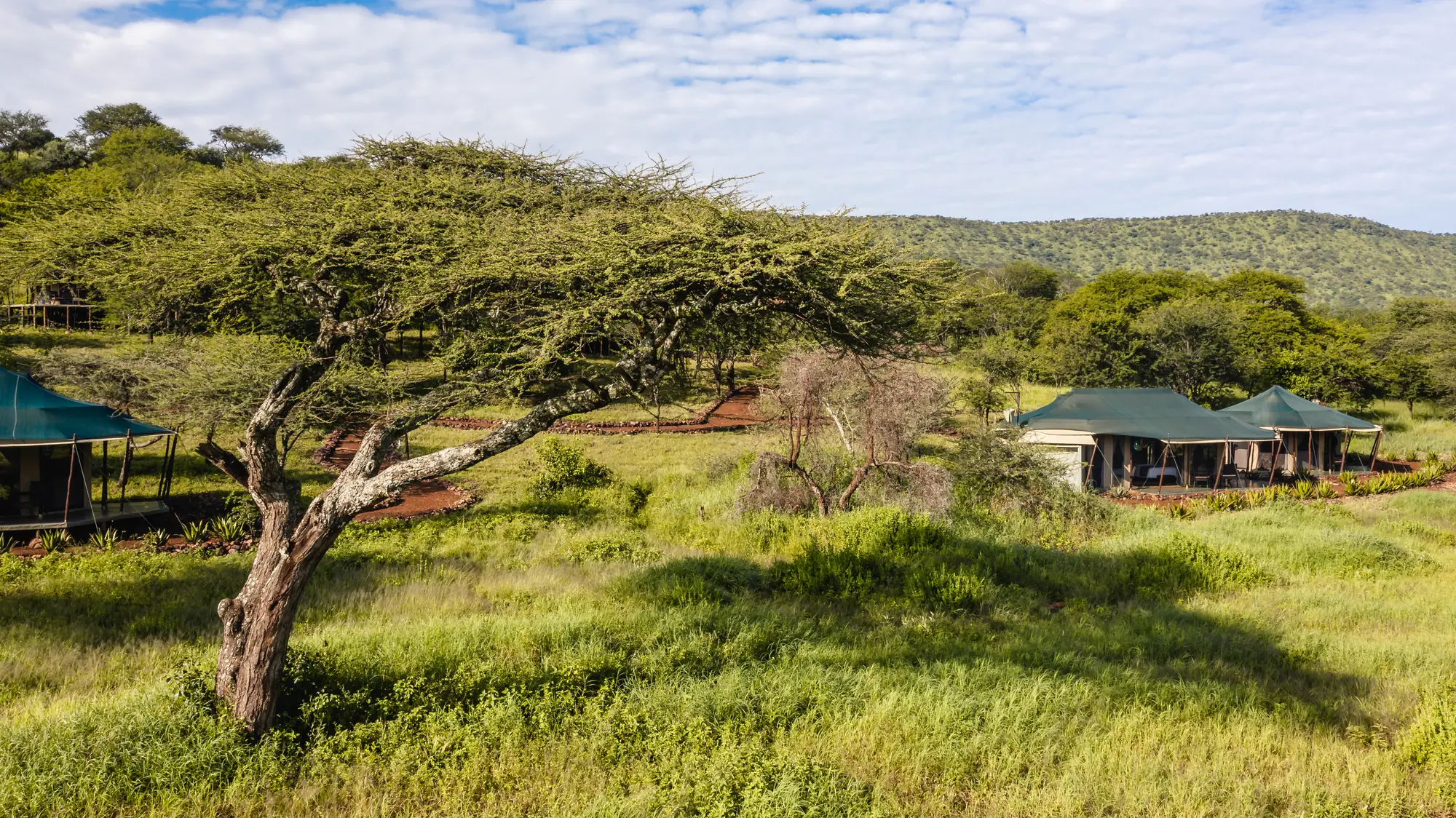
The camp is canvas on raised timber platforms, tents spread along a line with decks turned to the plains. Each has one super king bed or two singles, an ensuite with a flush toilet and a hot shower, and room for one extra bed. Solar power with a generator behind it runs around the clock and WiFi reaches the main areas.
Board here is full board rather than all inclusive, which is the one real difference from the other Ole Serai camps. Breakfast, lunch and dinner are in the rate, beverages are charged at camp, and guests who prefer everything folded in can take the all inclusive upgrade at a fixed nightly amount. Laundry is not in the rate at this camp.
It suits photographers, anyone with an interest in the rock art and the old Maasai country around Moru, and travellers combining the centre with the southern plains in calving season. It is not the closest camp to the airstrip and the transfer in is a proper game drive.
Access is by air to Seronera airstrip, about an hour and ten minutes from Arusha, then a longer drive south and west into the Moru area.
Signature experiences
The granite outcrops around camp are where lion spend the middle of the day. Guides know which rocks are occupied and when.
The Moru area holds Maasai painted rock shelters and the gong rock, a boulder that rings when struck. A guided morning covers both.
Breakfast set up in the open with a waiter looking after it, timed for the first light on the rocks.
The camp team tell stories around the fire after dinner, for a small charge a person.
Gallery
Room types
Canvas on a raised platform with a private deck, one super king bed or two singles, ensuite with a flush toilet and hot shower, room for one extra bed.
At a glance
Best time to visit
Best months: January to February and June to October.
Location & access
Seronera Central Serengeti
About two and a half hours in total. Forty five minutes by road from Kilimanjaro International to Arusha Airport, then about an hour and ten minutes by light aircraft to Seronera airstrip, then a game drive transfer south and west into Moru.
About eight to ten hours from Kilimanjaro International, normally split over two days with a night in the Ngorongoro highlands or at Karatu, then down into the Serengeti and west into the Moru area.
On the map
2.619° S, 34.732° E
What's included
Frequently asked
In the Moru area, the southern part of the central Serengeti, among the granite kopjes. It sits between the Seronera valley and the southern plains.
Year round. The contract prices every month, with the highest rates from July to October and over the days around Christmas and New Year.
Full board, so breakfast, lunch and dinner are in the rate. Beverages are charged at camp, and there is an all inclusive upgrade at a fixed amount per person per night if you would rather have everything included.
By air to Seronera airstrip, about an hour and ten minutes of flying from Arusha Airport, then a game drive transfer south and west into the Moru area.
The kopjes. Granite outcrops hold lion through the day, and the area also has Maasai rock paintings and the gong rock. The wider Moru area is one of the few places in the Serengeti with black rhino.
Yes. Children under 6 stay free of charge sharing with their parents, children from 6 to 15 pay a reduced rate, and one extra bed fits in a tent. The camp is unfenced, so children are walked to and from their tent after dark.
No. Game drives come through the Game Package, a shared safari vehicle plus airstrip transfers charged per person per day with a minimum of two guests. A private vehicle can be booked instead, subject to availability.
Not at this camp. The all inclusive camps in the group include laundry to a daily value, but Moru Kopjes is full board and laundry is charged.
Solar with a generator behind it, running 24 hours, and WiFi in the main areas.
February. The herds drop their calves on the southern plains and the predator activity is the highest of the year. Moru is within reach of that country while staying in the central Serengeti.
Yes. From 1 October 2026 visitors entering mainland Tanzania must hold the government inbound travel insurance, 44 USD per adult and valid for up to 92 days, covering emergency medical care, evacuation, repatriation and lost luggage. Children aged 3 to 17 pay half and infants under 3 are free. It is bought online before you fly or on arrival, and residents of Tanzania and of East African and SADC countries are exempt. If you land in Zanzibar first, the Zanzibar policy covers you instead. It is paid by you directly and is not part of our quote.
What's nearby
A short game drive from camp
A large boulder pitted with round hollows that rings like a bell when it is struck with a stone. Maasai herders used it to send signals across the plains.
At the same kopje cluster as Gong Rock
Ochre and white figures painted on a sheltered rock face, showing shields, elephants and people, attributed to young Maasai warriors.
Within the Moru area
Moru holds the only black rhino sanctuary in the Serengeti, watched around the clock by the Serengeti Rhino Project. Sightings are never promised and the monitoring teams set how close a vehicle may go.
Next to the kopjes
A shallow soda lake that crusts white at the edges and draws greater and lesser flamingo. Lions use the fringing grass to wait for animals coming down to drink. This is the Moru lake, not the one in the Ngorongoro Crater.
Plan this stay
Build your bespoke Tanzania safari with our team. Real lodge rates and itemised pricing throughout.
Build & price your trip
