
Single
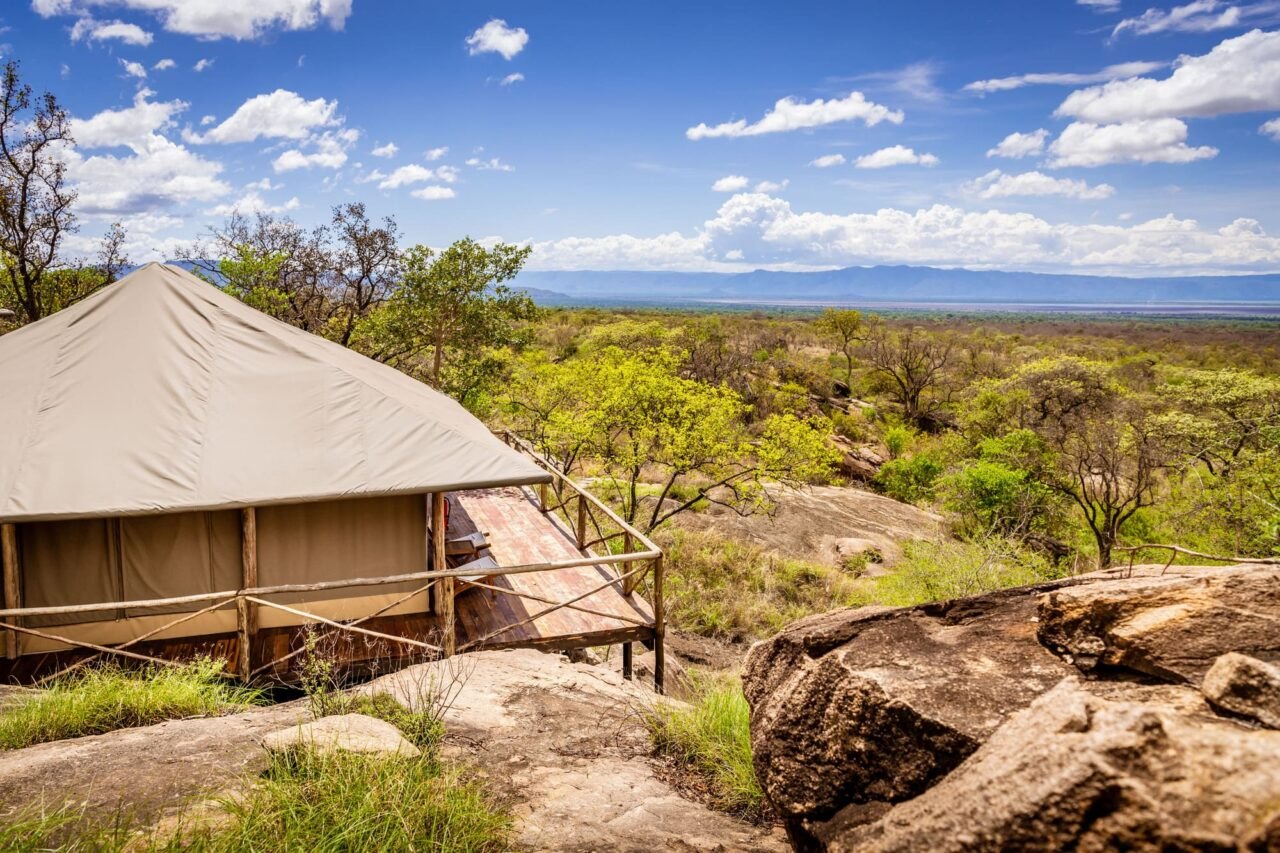
One of the eight tents taken by a single guest, with an ensuite bathroom with flush toilet and shower and a private terrace facing west over the park.
Lodges & partnersTarangire National Park
Eight tents wedged into a granite cliff inside Tarangire, facing west over baobab country to the Rift wall.
From $142 per person per night
About
The name is literal. Ormatai Rock is built on and into a cliff edge of granite, with the tents on platforms pushed between boulders and vegetation, and the whole camp faces west. That orientation is the point. The view runs out over baobab country and the Tarangire woodlands to the Rift Valley wall, the Ngorongoro highlands behind it, and on a clear evening the shine of Lake Burunge and Lake Manyara on the horizon. The end of the day is what this camp is for, and guests take it from the rock.
It sits inside Tarangire National Park, about nineteen kilometres south of the main gate and roughly eight kilometres in from the nearest park boundary, which puts it past the belt of day visitors who come up from Arusha and turn around. Tarangire gets a fraction of the traffic of the other northern parks to begin with, and the southern half of it is quieter still. The sister camp, Maweninga, sits less than four hundred metres away on the same rock, and the two share a guiding team and an activity list.
Tarangire reputation rests on elephant, and on one seasonal fact. From roughly June to October, as the country around dries out, game concentrates on the permanent water of the Tarangire river and the Silale swamp, and the elephant herds that gather there are the largest and most reliable sight in the northern circuit. September into early October is the peak. From November to May the rains disperse the game widely across the park and beyond it, and this is where we part company with the brochure: the operator describes the park as bursting with life from June to February, and the independent seasonal record does not support the back half of that. What the green season does bring is the birding, which is genuinely at its best from November to May with migrants on top of a strong resident list, and a green landscape with almost nobody in it.
The country immediately around the camp is baobab, acacia, wooded hills and open savannah, with rock hyrax living in the boulders. Guests report hearing lion and leopard close to the tents at night. Mornings can start on foot: a walk of about two hours with a park ranger, which is the standard and legal way to walk inside a Tanzanian national park, threading between the baobabs. Night drives can be arranged on request under the camp group TANAPA permit, which is an unusual thing to hold inside a national park and is not something we would present as a nightly fixture.
There are eight tents, one of them a family tent with two separate bedrooms, each thirty five square metres with comfortable bedding, an ensuite bathroom with a flush toilet and shower, mosquito nets and a private terrace. The look inside is deliberately plain: raw materials, earthy colours, wooden furniture. The mess hall works as restaurant and lounge, there is a lounge and a panoramic terrace and a fire lit in the evening. Power is entirely solar, around the clock, from a 46 kilowatt peak installation. WiFi reaches the common areas and not the tents. There is no pool. Food comes largely from the markets of the Manyara region.
One practical note, because it matters more here than at most camps: the paths between the tents run over rock and tree roots, so the camp suits guests who are steady on their feet.
Signature experiences
The camp faces west on purpose. The panoramic terrace looks over the park to the Rift wall, the Ngorongoro highlands and the lakes at Burunge and Manyara, and the last hour of the day is what the place was built around.
A morning walk of about two hours with a park ranger, which is how walking is done legally inside a national park. Baobab and acacia country on foot is a different scale from the same ground in a vehicle.
From June to October the herds gather on the permanent water of the swamp and the Tarangire river. It is the most reliable big game sight in the northern circuit and the reason most people come to this park.
The camp group holds a TANAPA permit that allows night driving inside the park, which is normally not possible. It is arranged on request rather than run nightly, and it brings leopard, hyena and the smaller nocturnal species.
A full day south, a UNESCO listed complex of shelters painted over thousands of years with hunting scenes, human figures and animals. The operator runs it as a day trip from camp.
Gallery
Room types
One of the eight tents taken by a single guest, with an ensuite bathroom with flush toilet and shower and a private terrace facing west over the park.
A thirty five square metre tent on a platform between the boulders, with comfortable bedding, an ensuite bathroom with flush toilet and shower, mosquito nets and a private terrace looking west to the Rift wall.
The same tent as the Double, made up with two separate beds.
At a glance
Best time to visit
Best months: June to October.
Location & access
Tarangire National Park
About two and a half hours: an hour and a quarter by road to Arusha Airport, then roughly thirty minutes to Kuro airstrip inside the park, then about fifteen kilometres and thirty to forty five minutes across the park to camp. Air Excel also schedules Kilimanjaro directly to Kuro, which removes the road leg.
About four to five hours: forty five minutes to an hour to Arusha, two to two and a half hours south via Makuyuni to the Tarangire main gate, then about nineteen kilometres and forty five to ninety minutes on park track to the camp. The approach road is bumpy. These are our estimates, because the operator publishes no transfer times.
On the map
3.904° S, 35.998° E
What's included
Frequently asked
Eight, one of them a family tent with two separate bedrooms, each thirty five square metres. A few trade listings say nine, counting the family tent separately, and it is worth confirming the configuration with us when you book.
Yes. It sits about eight kilometres in from the nearest park boundary and nineteen kilometres south of the main gate, which puts it past the belt of day visitors. One aggregator site says otherwise and is wrong.
Yes. There is a morning walk of about two hours accompanied by a park ranger, which is the standard and legal way to walk inside a Tanzanian national park. It runs through baobab and acacia country below the camp.
They can be arranged on request. Night driving is normally not permitted inside a national park, and the camp group holds a TANAPA permit that allows it here, with a driver guide and a second guide working a spotlight. It is not a nightly fixture, so ask when you book.
June to October, peaking in September and early October, when the drying country pushes the herds onto the permanent water of the Tarangire river and the Silale swamp. That concentration is the most reliable big game sight in the northern circuit.
From November to May the rain spreads the game out across the park and well beyond it, so the big concentrations break up. What you get instead is the best birding of the year with migrants on top of a strong resident list, green country and very few vehicles.
No. The camp is small and built into the rock, and the evening happens on the panoramic terrace and around the fire instead. The paths between the tents run over rock and tree roots, so the camp suits guests who are steady on their feet.
By road it is about four to five hours from Kilimanjaro International, with the last nineteen kilometres on park track. Flying means Kuro airstrip inside the park, about fifteen kilometres out and thirty to forty five minutes across the park, with Air Excel scheduling daily service from Arusha and from Kilimanjaro.
Yes. From 1 October 2026 visitors entering mainland Tanzania must hold the government inbound travel insurance, 44 USD per adult and valid for up to 92 days, covering emergency medical care, evacuation, repatriation and lost luggage. Children aged 3 to 17 pay half and infants under 3 are free. It is bought online before you fly or on arrival, and residents of Tanzania and of East African and SADC countries are exempt. If you land in Zanzibar first, the Zanzibar policy covers you instead. It is paid by you directly and is not part of our quote.
What's nearby
about 400 metres
The sister camp on the same rock, sharing the guiding team and the activity list.
about 15 km
The airstrip inside the park, with scheduled service from Arusha and Kilimanjaro.
about 16 km west
A shallow alkaline Rift lake on the park western flank, part of the view from camp and good for flamingo and waterbirds.
roughly 25 to 30 km south
The great black cotton swamp that holds water through the dry season and pulls in the elephant and buffalo herds.
about 19 km north
The park northern entrance, off the Makuyuni road.
about 94 km south, a full day
A UNESCO listed complex of painted rock shelters, thousands of years old.
Plan this stay
Build your bespoke Tanzania safari with our team. Real lodge rates and itemised pricing throughout.
Build & price your trip
