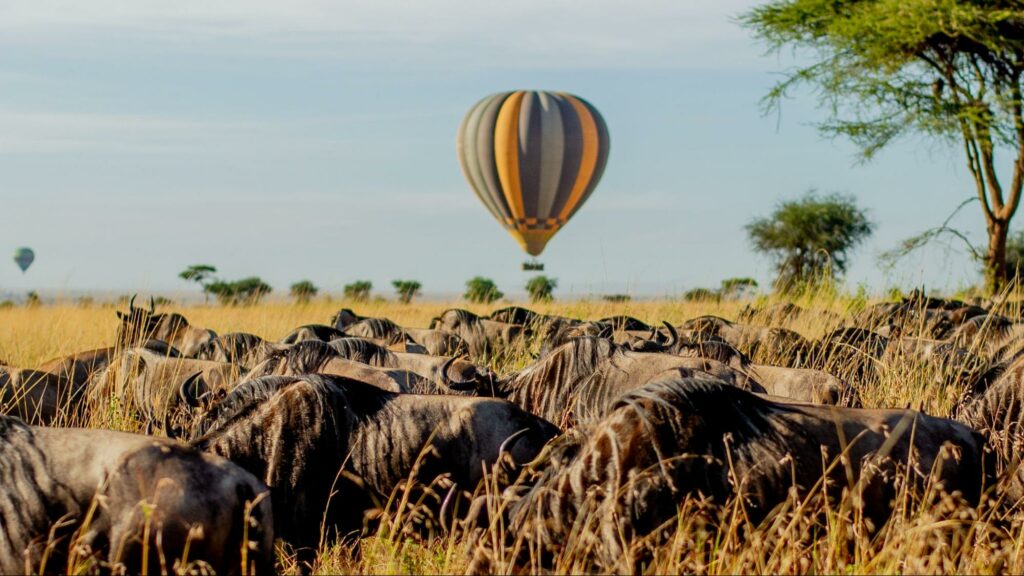
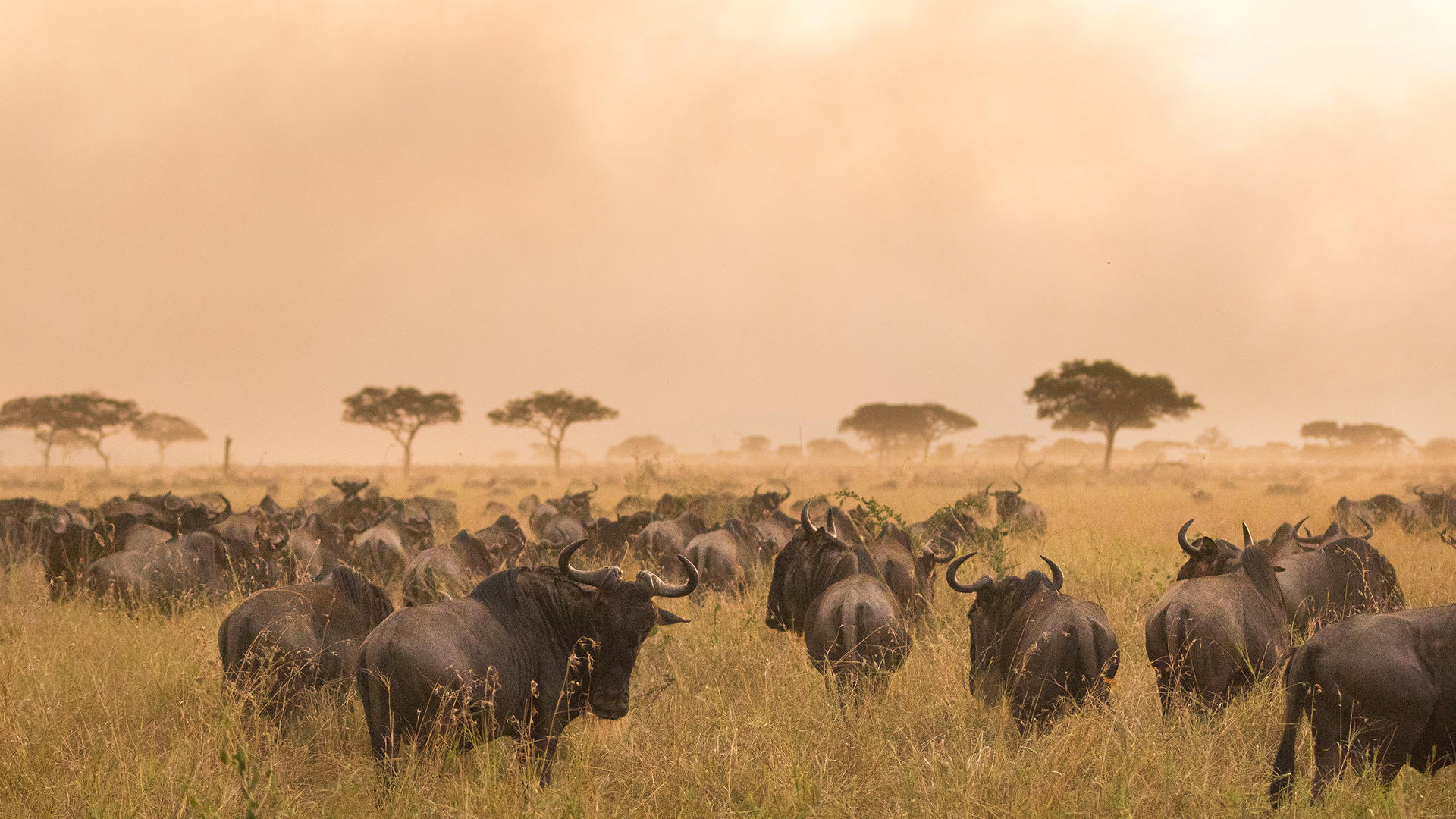
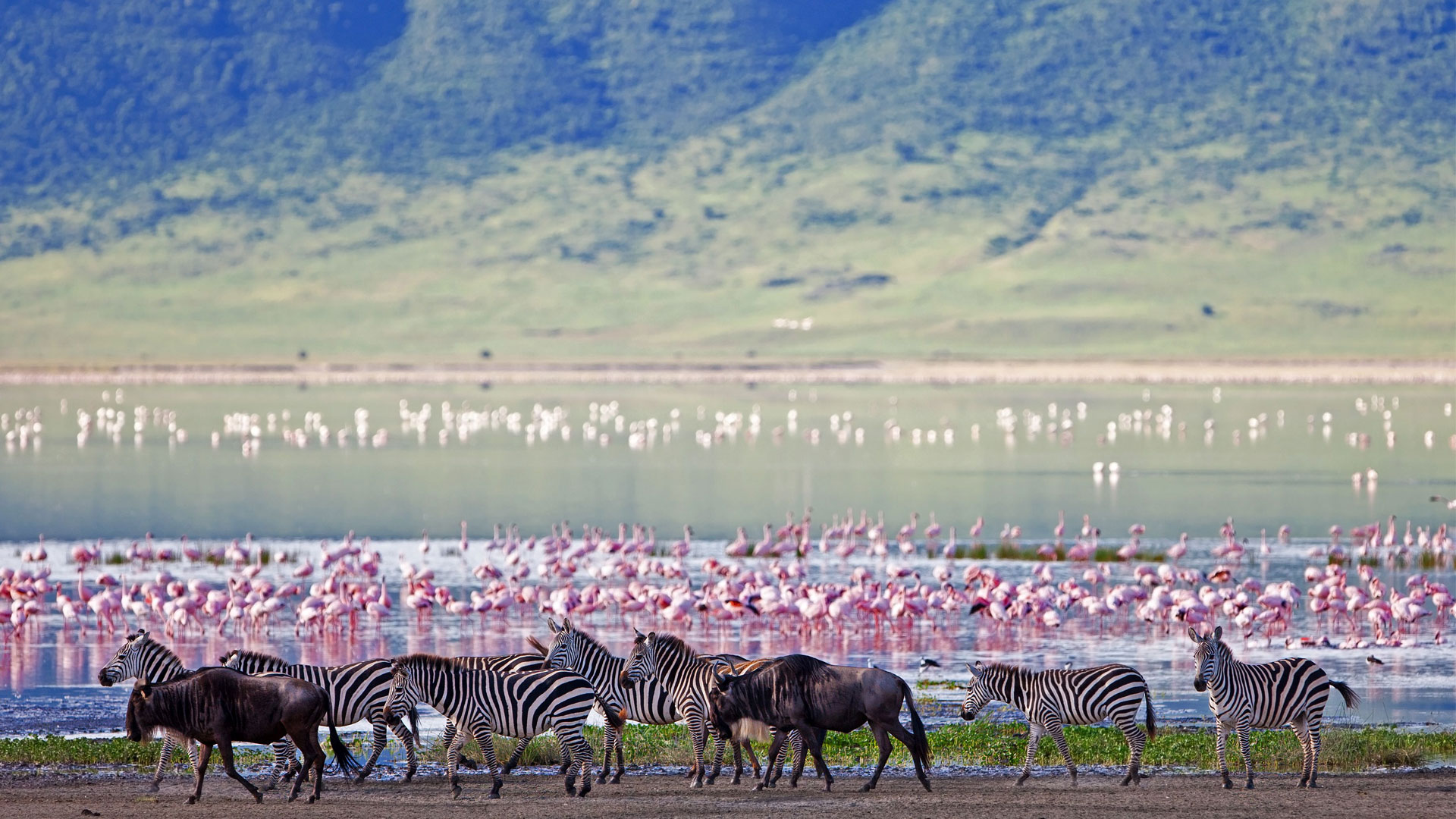
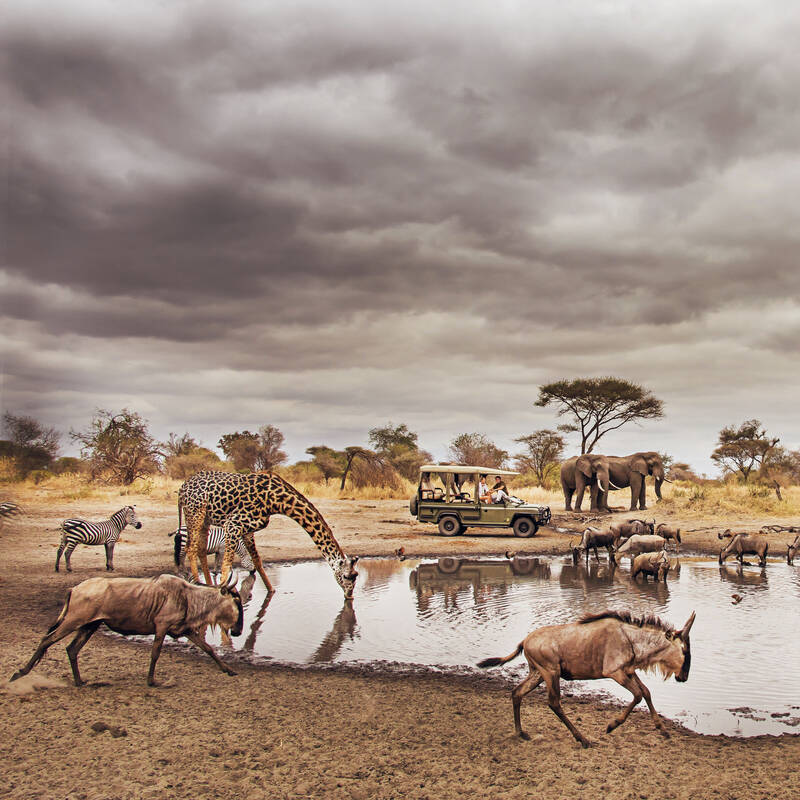
Roughly 1.3 million wildebeest, around 200,000 zebra, and over 400,000 Thomson's gazelle move through the Serengeti and Maasai Mara in a continuous loop. The loop is 500 to 620 miles end to end, though individual animals walk more — sometimes 1,500 miles a year — because the herds backtrack and zigzag with the rain. There is no off-season.
The herds follow rainfall. Wildebeest are thought to detect distant rain through some combination of smell, low-frequency hearing, and barometric pressure — the exact mechanism is still studied, but the behaviour is consistent: where it rains, the herds go. Fresh rain brings fresh, mineral-rich grass, and the cows need that grass to feed their calves.
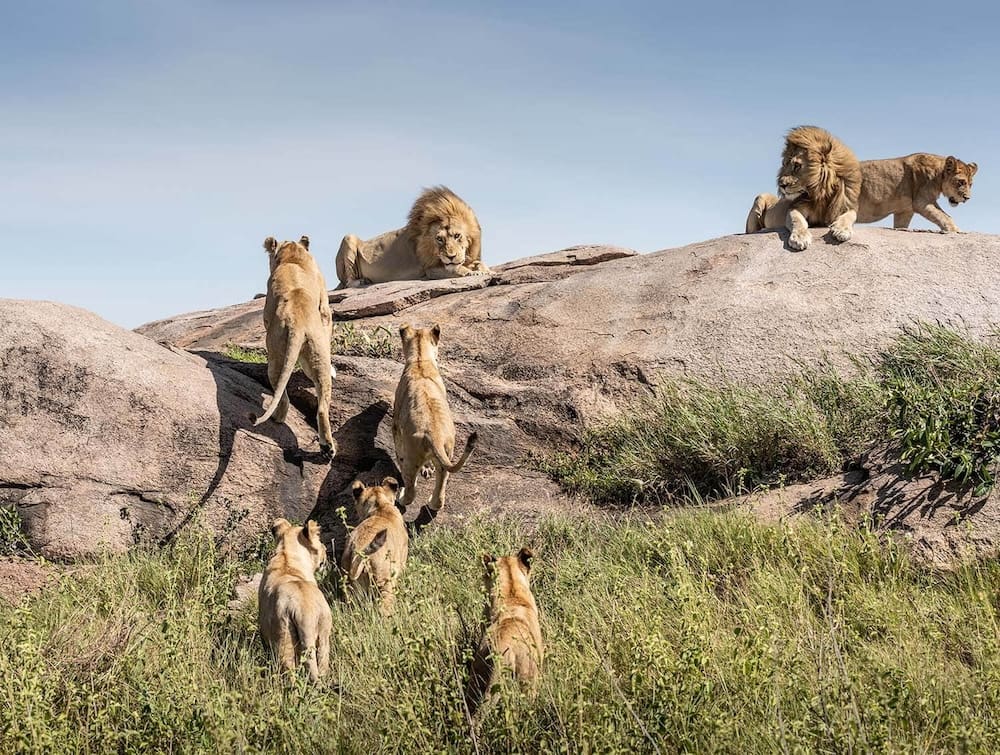
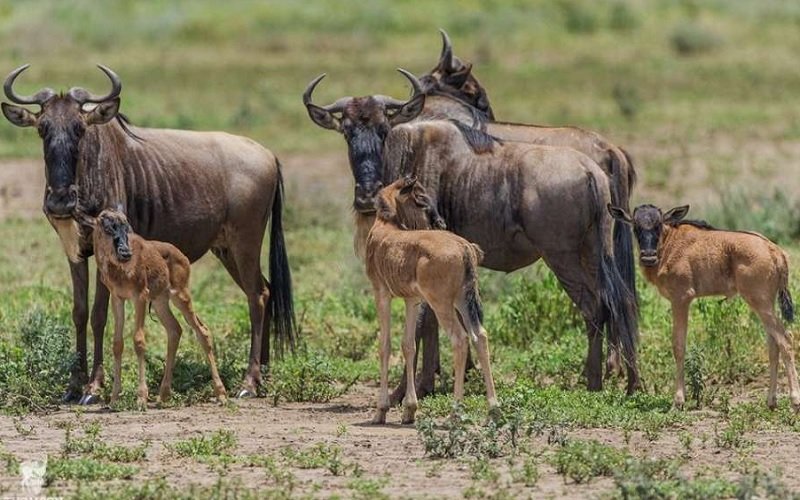
From January through early March the herds are on the short-grass plains around Ndutu in the southern part of the ecosystem. The calcium- and phosphorus-rich grass there is what newborn calves need. Roughly 500,000 are born in a two- to three-week window centred on February. Predator activity in that window is the most concentrated wildlife viewing of the year, anywhere in Africa.
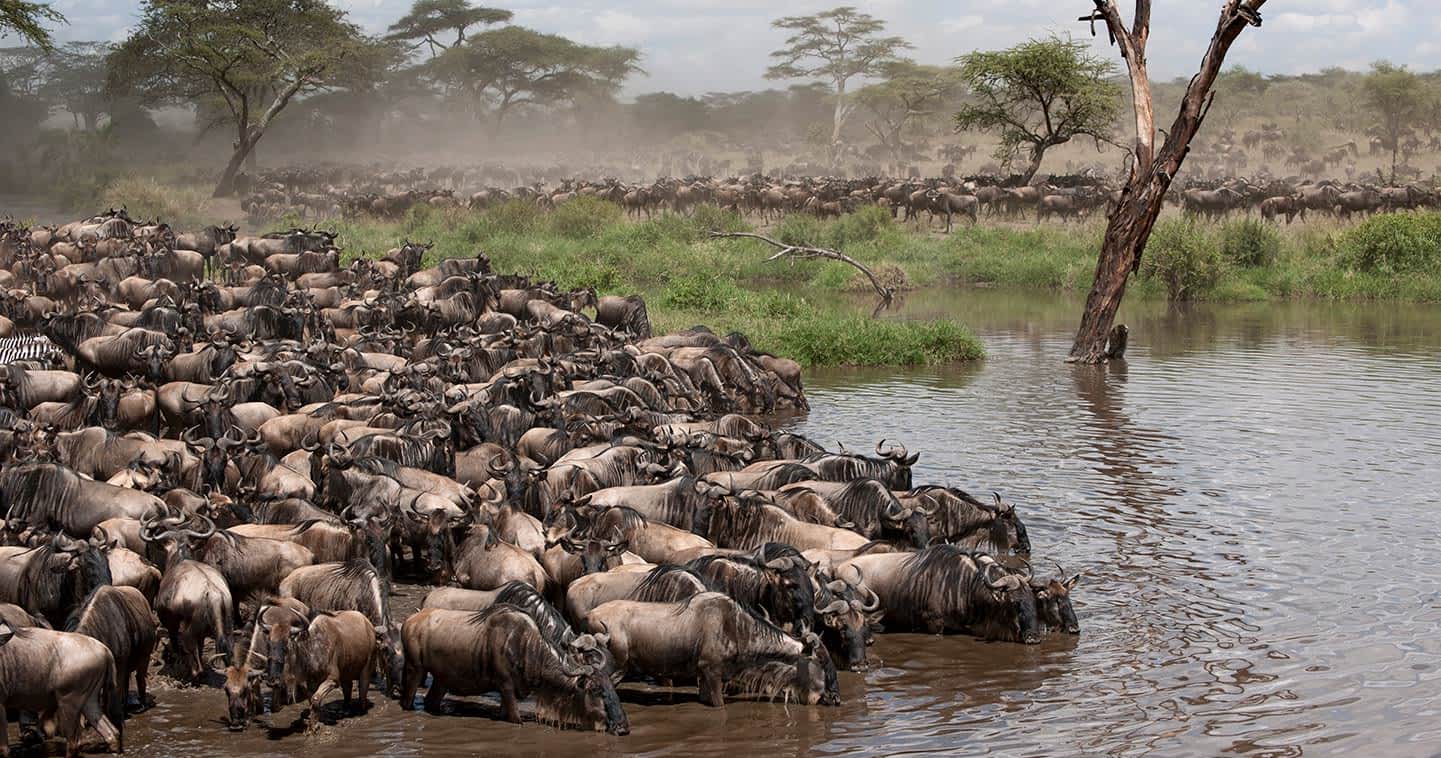
From July through October the herds are in the north, around the Mara River. The river runs east to west across the herds' north-south route. They cross because there is no other way to follow the rain. Crossings happen in both directions, multiple times — peaking in August and September. The crocodiles are resident; they wait.
What this means for planning: the question is not whether you'll see the Migration. The question is which zone you'll see it in. The calendar above is the answer.