Safari Tent
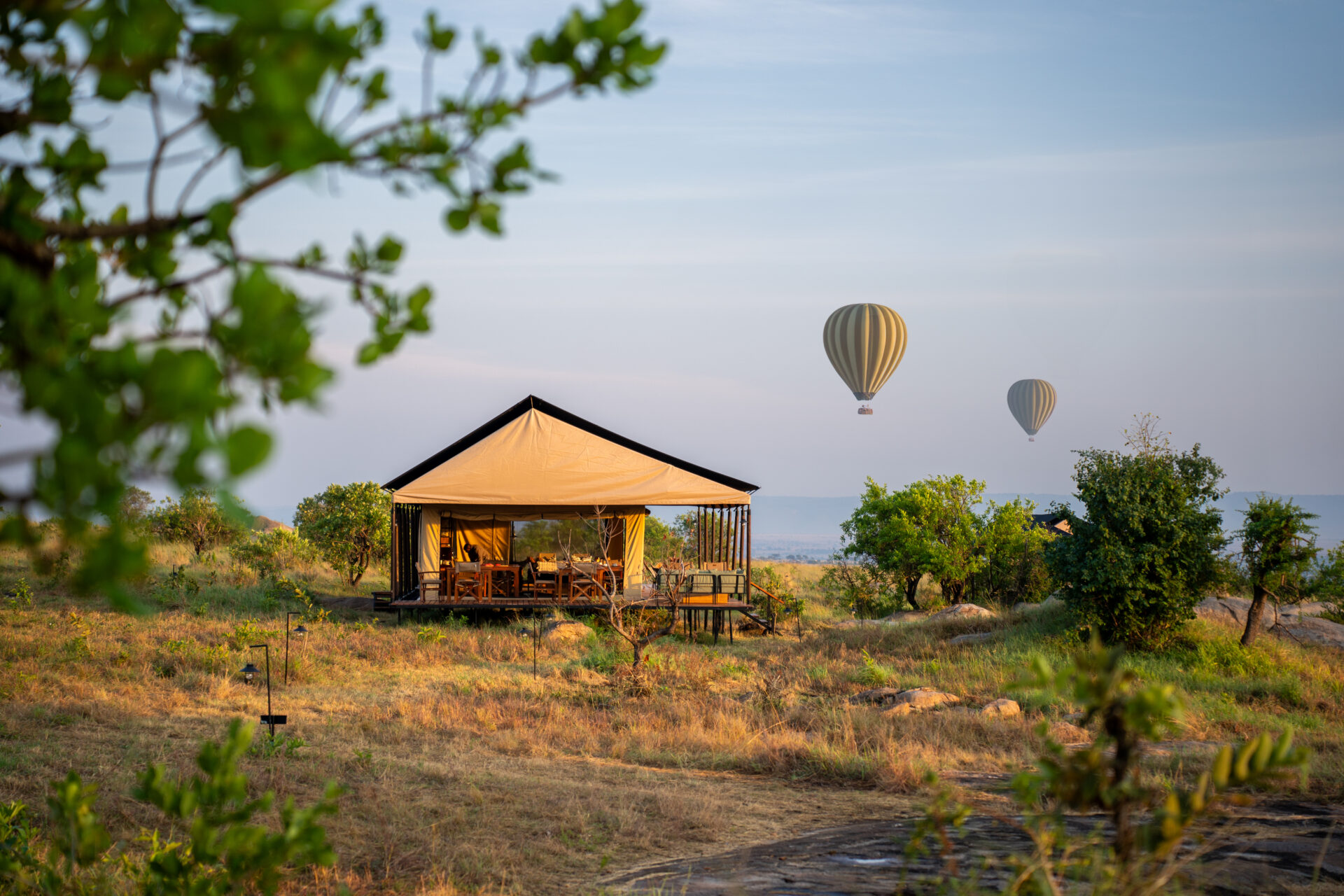
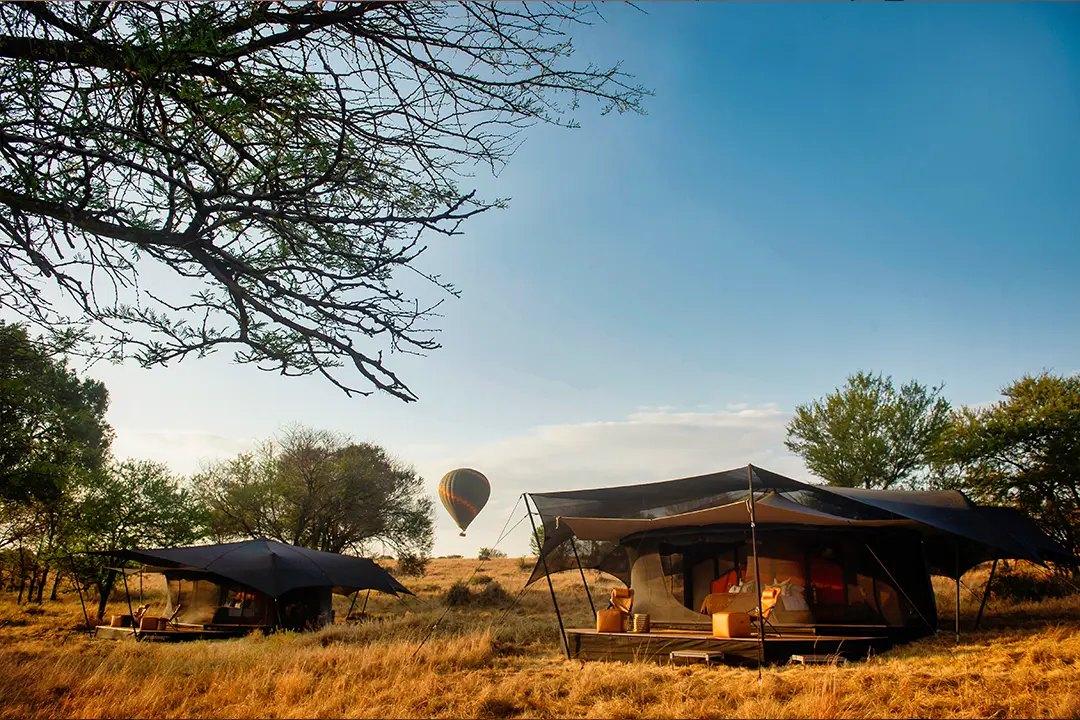
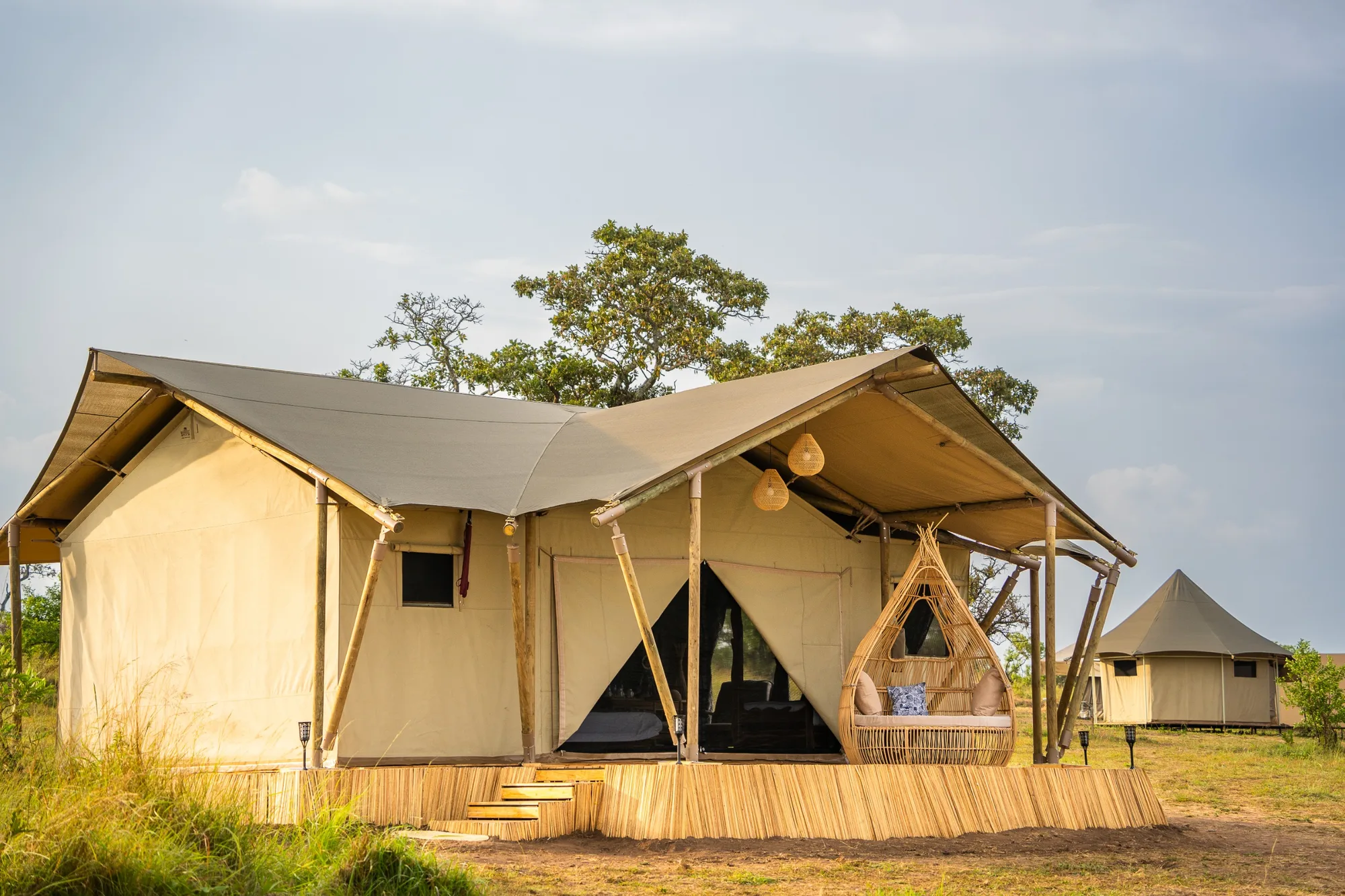
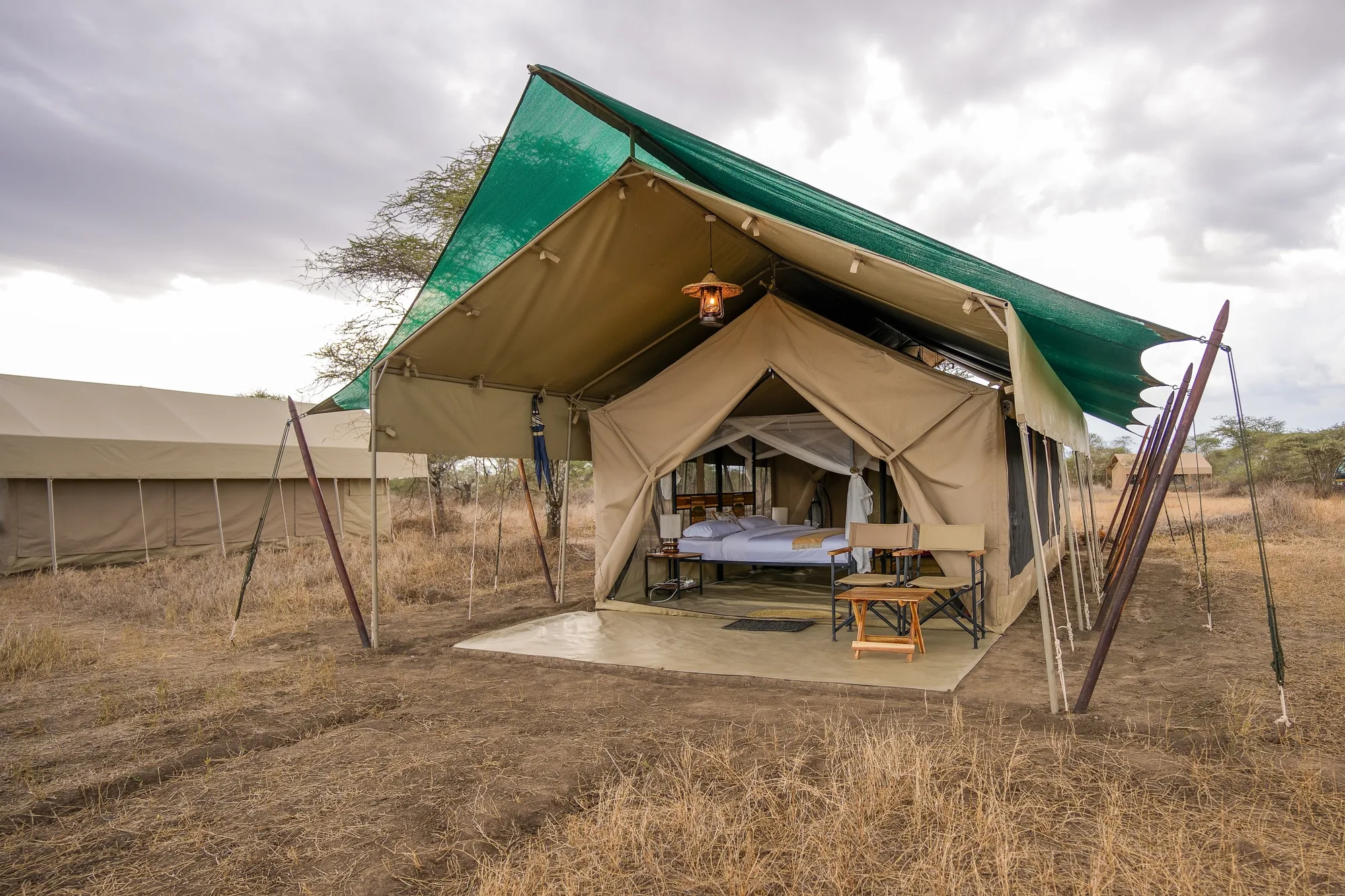
A canvas tent raised on its own wooden platform with a deck around it, a fixed bathroom with hot water, power around the clock and a fan. Available as Single, Double, Twin or Triple.
Lodges & partnersLobo area, Serengeti National Park
Twenty elevated tents built into a rocky outcrop above the Grumeti River, each one raised on its own platform over the valley.
About
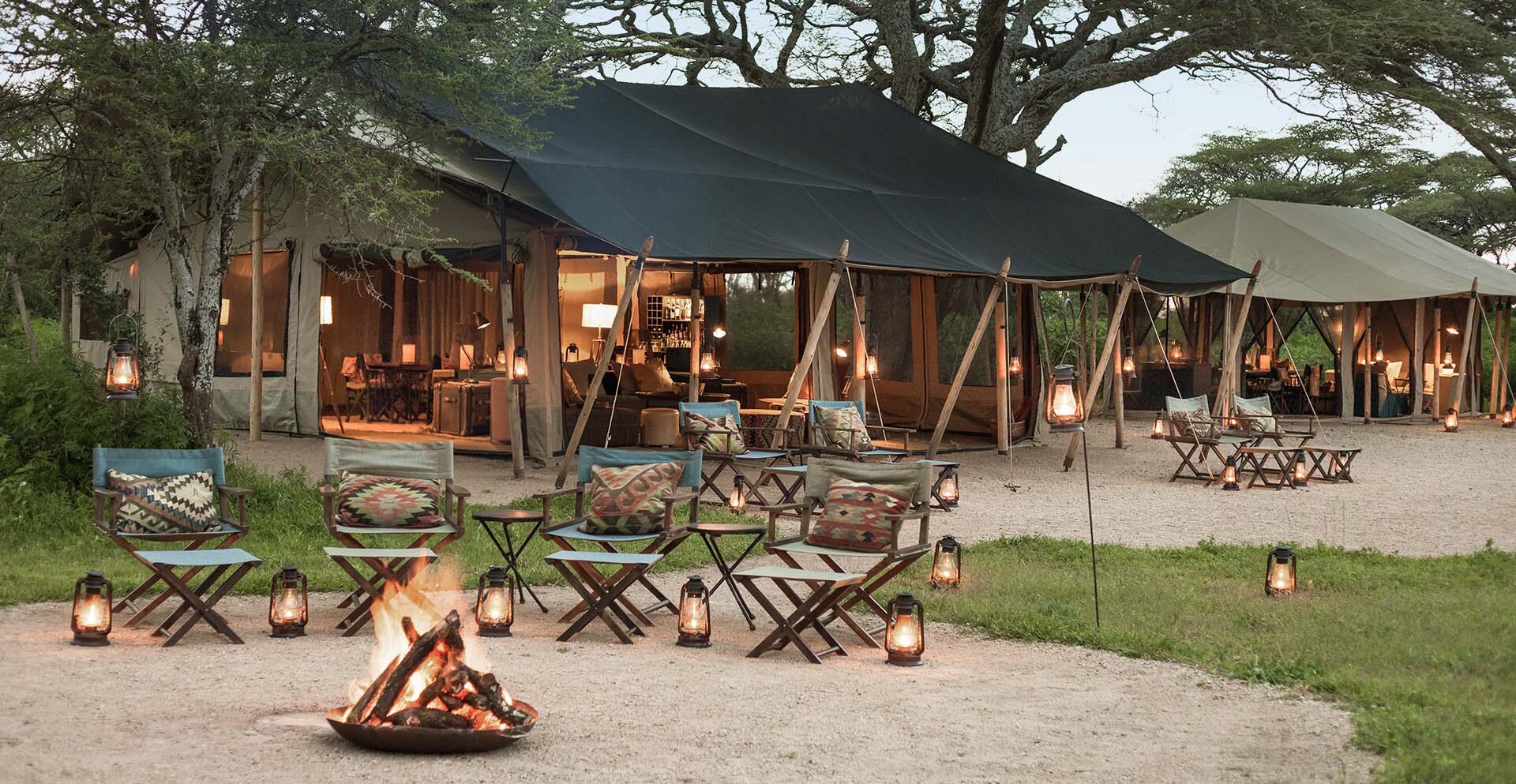
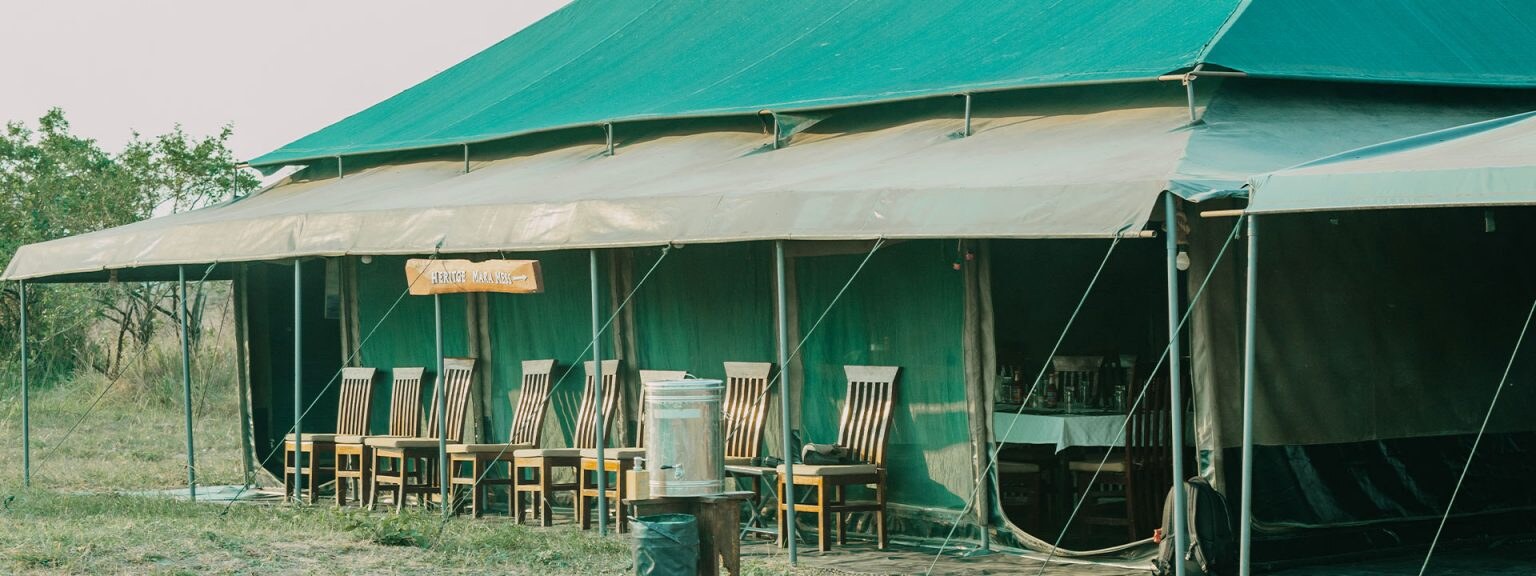
Serengeti Migration Camp is a permanent camp of twenty elevated tents, built up the side of a rocky outcrop beside the Grumeti River in the north of the central Serengeti, near Lobo. Each tent sits on its own raised wooden platform with a deck that wraps around it, so the valley stays in front of you from the bed to the bath to the chair outside. Walkways and steps link the tents to a split level main area holding the lounge, the restaurant, viewing decks and a pool.
The river below the camp holds resident hippo, and the sound of them carries up through the night. Lobo kopje country is lion country all year, leopard work the river bend, and elephant move through the valley. The migration passes through this part of the Serengeti on the way north, roughly in June and July, and again on the way south in October and November. The camp does not follow the herds. It is a fixed base, and the Mara River crossing country lies about a hundred kilometres further north, which makes it a long day out rather than a short drive.
Accommodation is a single category, the Safari Tent, offered as Single, Double, Twin and Triple and billed as a unit. Every tent has a fixed bathroom with hot water, power around the clock, a fan, and a wooden door rather than a zip. Game drives are with the operator you choose for your safari. A two hour walking safari with a professional guide, for guests of sixteen and over, can be added.
It suits guests who want a proper camp in the bush with the comfort of permanent plumbing, photographers who want a base with resident game rather than one that chases the herds, walkers, and travellers happy to trade the immediacy of the crossings for a quieter part of the park. It is worth a second thought for families with a toddler, because the tents are reached by steps and stand above a drop.
Access is by light aircraft from Arusha to Lobo airstrip, about an hour and a half, then roughly thirty to forty five minutes by road as a game drive transfer. Kogatende is used instead when the day routing suits it. Driving up from Kilimanjaro is possible but it makes a very long day and is not the usual route.
Signature experiences
Tents and decks climb a rocky outcrop above the river, linked by walkways and steps, so there are quiet corners at different heights to sit and watch the valley.
The river below the camp holds resident hippo. They are audible from the tents through the night and visible from the viewing decks by day.
Included in the rate. A guided walk with an armed professional guide for guests of sixteen and over, built around tracking and birding rather than big game.
The migration crosses this part of the Serengeti on the way north in about June and July, and again on the way south in about October and November.
Gallery
Room types
A canvas tent raised on its own wooden platform with a deck around it, a fixed bathroom with hot water, power around the clock and a fan. Available as Single, Double, Twin or Triple.
At a glance
Best time to visit
Best months: July to October.
Location & access
Lobo area, Serengeti National Park
About three hours in total: an hour by road from Kilimanjaro to Arusha Airport, then about an hour and a half by light aircraft to Lobo airstrip, then thirty to forty five minutes by road as a game drive transfer. Kogatende is used instead when the day routing suits it.
Drive access not recommended: 11 to 12 hours from Kilimanjaro International. Bush flight is the standard route for the northern Serengeti.
On the map
1.928° S, 35.019° E
What's included
Frequently asked
Twenty elevated tents, built up the side of a rocky outcrop and linked by walkways and steps. Each tent stands on its own wooden platform with a verandah, a fixed bathroom and a wooden door. This is a permanent camp, not a mobile one that moves with the herds.
All year. Demand is heaviest from July to November, when the herds are in the north of the Serengeti.
Most guests fly. It is about an hour and a half by light aircraft from Arusha Airport to Lobo airstrip, then roughly thirty to forty five minutes by road as a game drive transfer. Kogatende is used instead when the day routing suits it. Driving from Arusha is possible but it makes a very long day.
Wifi reaches the main lounge area only, not the tents. Each tent has an internal telephone to reach the front of house. Mobile coverage in this part of the northern Serengeti is patchy and we would not plan a working day around it.
The tents have power around the clock and square three pin sockets, so cameras and phones charge at the tent rather than at a central point. Hot water is solar heated and runs day and night. Each tent has a fan.
There is a medical officer based at the camp, and the managers are first aid trained with a first aid kit on site. For anything serious the camp has a link to the flying doctor service to Nairobi. Travel insurance that covers evacuation is essential here, as it is anywhere in the Serengeti.
Yes, children of all ages are accepted. Walking safaris are not open to guests under sixteen. The tents are raised on platforms reached by steps, with a verandah and a drop below, so the camp is worth a second thought if you are travelling with a toddler.
Accommodation, all meals, soft drinks, daily laundry, a two hour walking safari with a professional guide, and the airstrip transfer. Game drives are with the operator you choose for your safari. Not included: park and concession fees, vehicle entry, flights, gratuities, and the four hour walking safari, which is sold separately.
The northern crossing season runs from about the middle of July into October, with most movement in August and September. The camp is not on the crossing river. The Mara sits about a hundred kilometres further north, so crossings from here are a long day out rather than a short drive, and guests whose trip is built around them usually add nights at a camp in the far north.
Quieter, greener and far emptier. April and May bring the heaviest rain and the game spreads out, so sightings take more driving, but you can have a sighting entirely to yourself. The camp stays open all year.
Game drives in the morning and the afternoon, and a guided walk with a professional guide for guests of sixteen and over. Beyond that the camp itself is part of the point: it climbs the side of a rocky outcrop, so there are quiet corners at different heights to sit with a book and watch the country below.
Yes. From 1 October 2026 visitors entering mainland Tanzania must hold the government inbound travel insurance, 44 USD per adult and valid for up to 92 days, covering emergency medical care, evacuation, repatriation and lost luggage. Children aged 3 to 17 pay half and infants under 3 are free. It is bought online before you fly or on arrival, and residents of Tanzania and of East African and SADC countries are exempt. If you land in Zanzibar first, the Zanzibar policy covers you instead. It is paid by you directly and is not part of your trip price.
What's nearby
About thirty to forty five minutes. Granite kopje country holding resident lion all year.
About an hour. Permanent springs that draw game outside the migration months.
About a hundred kilometres north. A long day out in the crossing season rather than a short drive.
Nearby
The Kogatende Northern Serengeti (Mara River) guide: where to stay, when to go and how to get there.
View : Every lodge we work with in Kogatende Northern Serengeti (Mara River)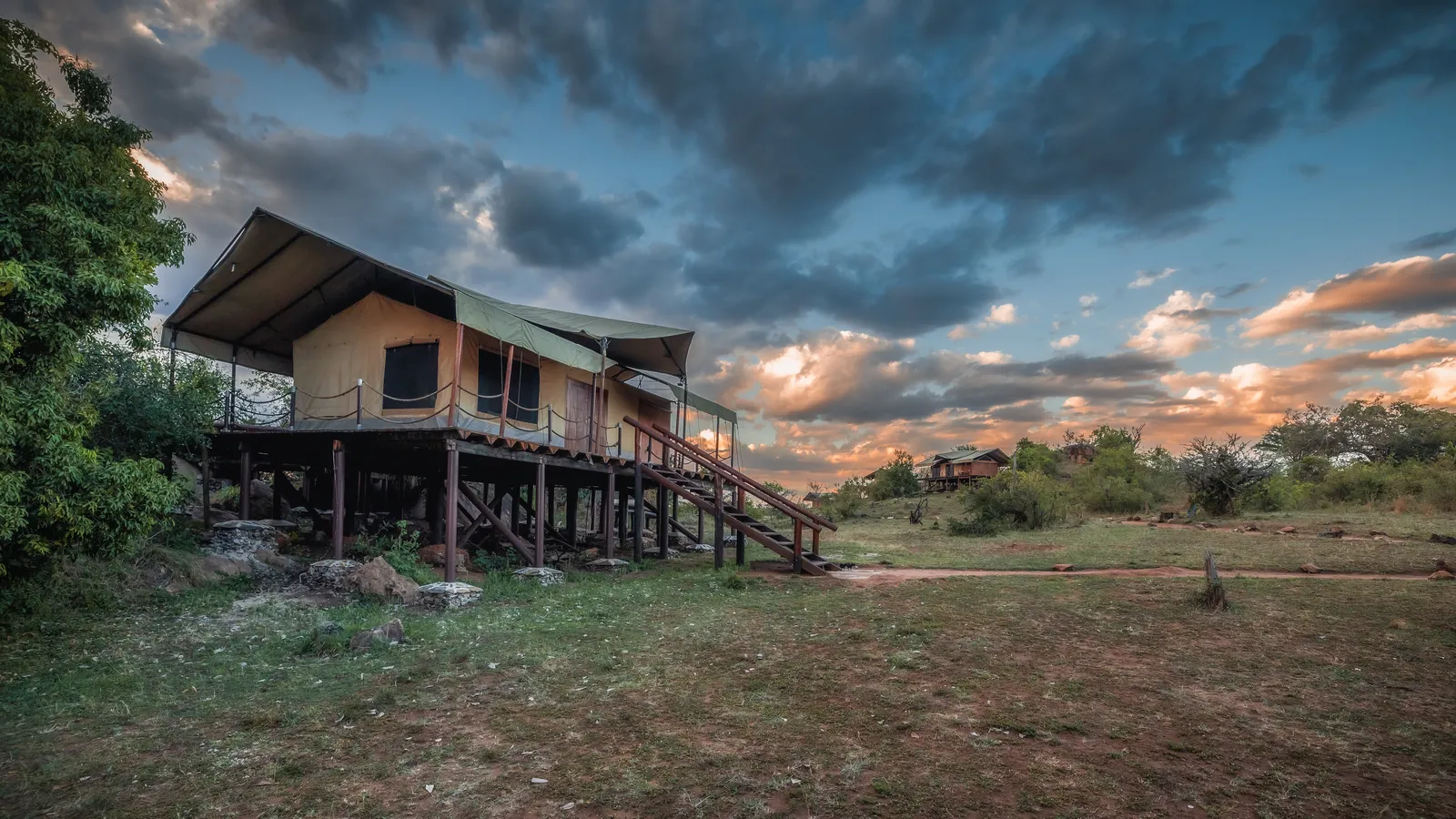
Plan this stay
Build your bespoke Tanzania safari with our team. Real lodge rates and itemised pricing throughout.
Build & price your trip