Lodges & partnersSeronera Central Serengeti

Manya Luxury Camp Central Serengeti

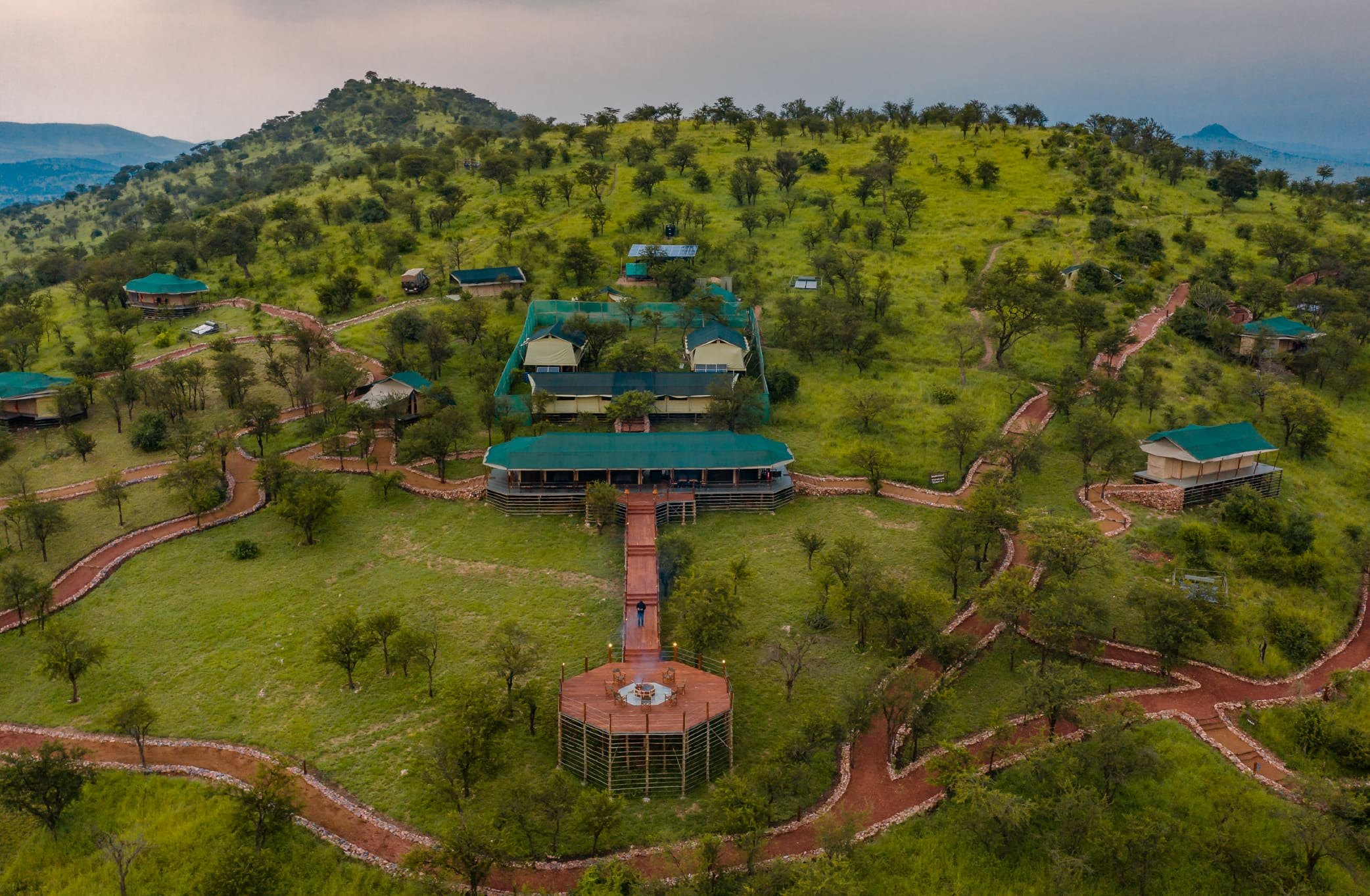
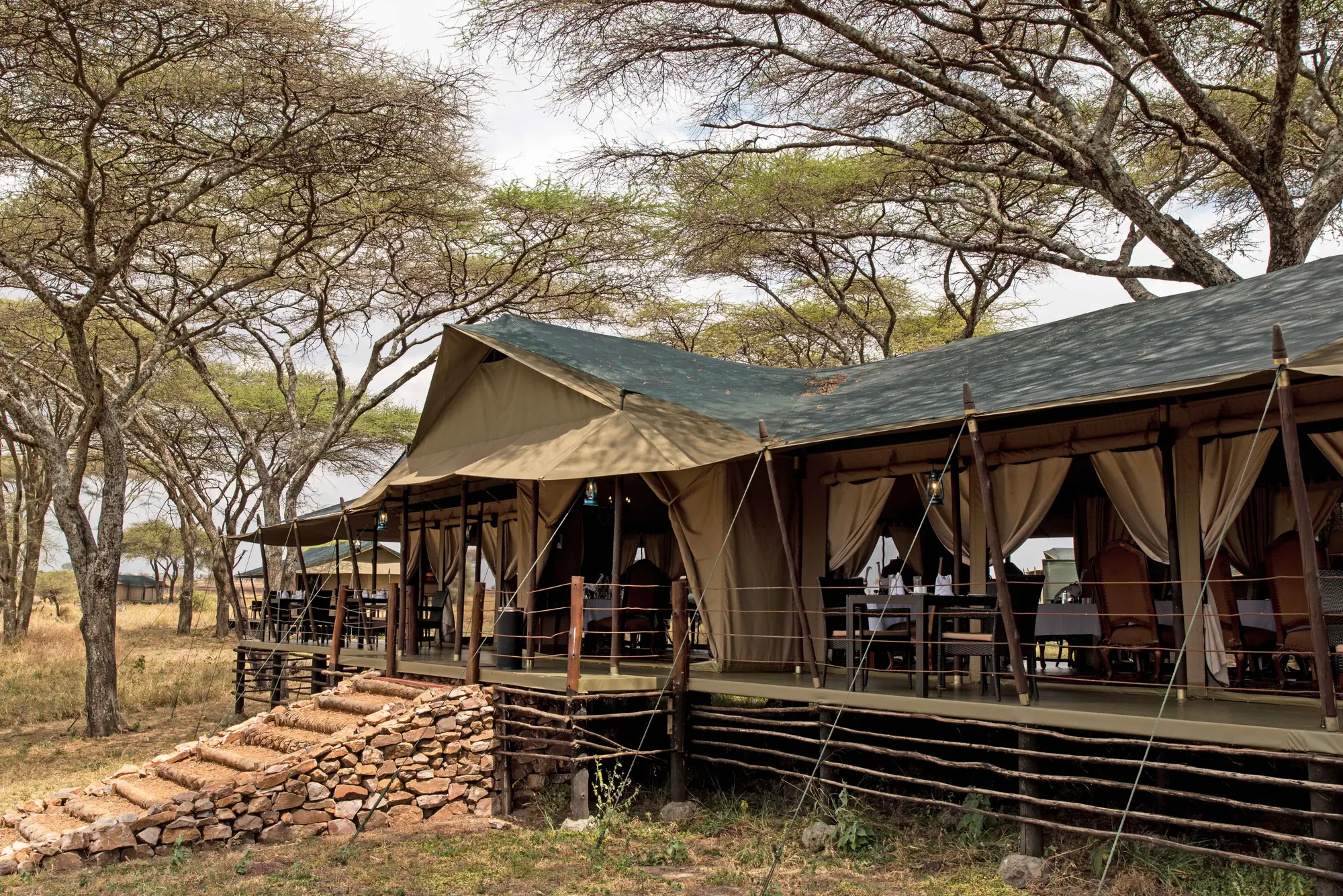
Ten tents on the open plain of the central Serengeti, raised on decks with the grass running up to the veranda and nothing fenced between you and it.

Tier
Premium
Location
Seronera Central Serengeti

About

About Manya Luxury Camp Central Serengeti.

Manya Luxury Camp stands on the open plain of the central Serengeti, a little north of Seronera, at coordinates the camp gives as 2 degrees 12 minutes south and 34 degrees 48 minutes east. There are ten tents and nothing else. The camp is unfenced, so the plain simply runs on through it, and the walk from your veranda to the mess tent at night is done with a torch and an escort rather than alone. Ten tents is small enough that the staff know your name by the second morning and the kitchen knows how you take your eggs.

The central Serengeti is the part of the park worth visiting in any month, because its predators live here rather than passing through. The Seronera valley to the south holds permanent water and resident lion, leopard and cheetah, and a morning drive down into it typically turns up cats. Elephant, buffalo, giraffe, topi and hyena are around all year. The migration herds move through this part of the park on their way north in roughly May and June and again coming south later in the year, so in those months you may find them on your doorstep, but nobody can promise it and the camp does not try to.

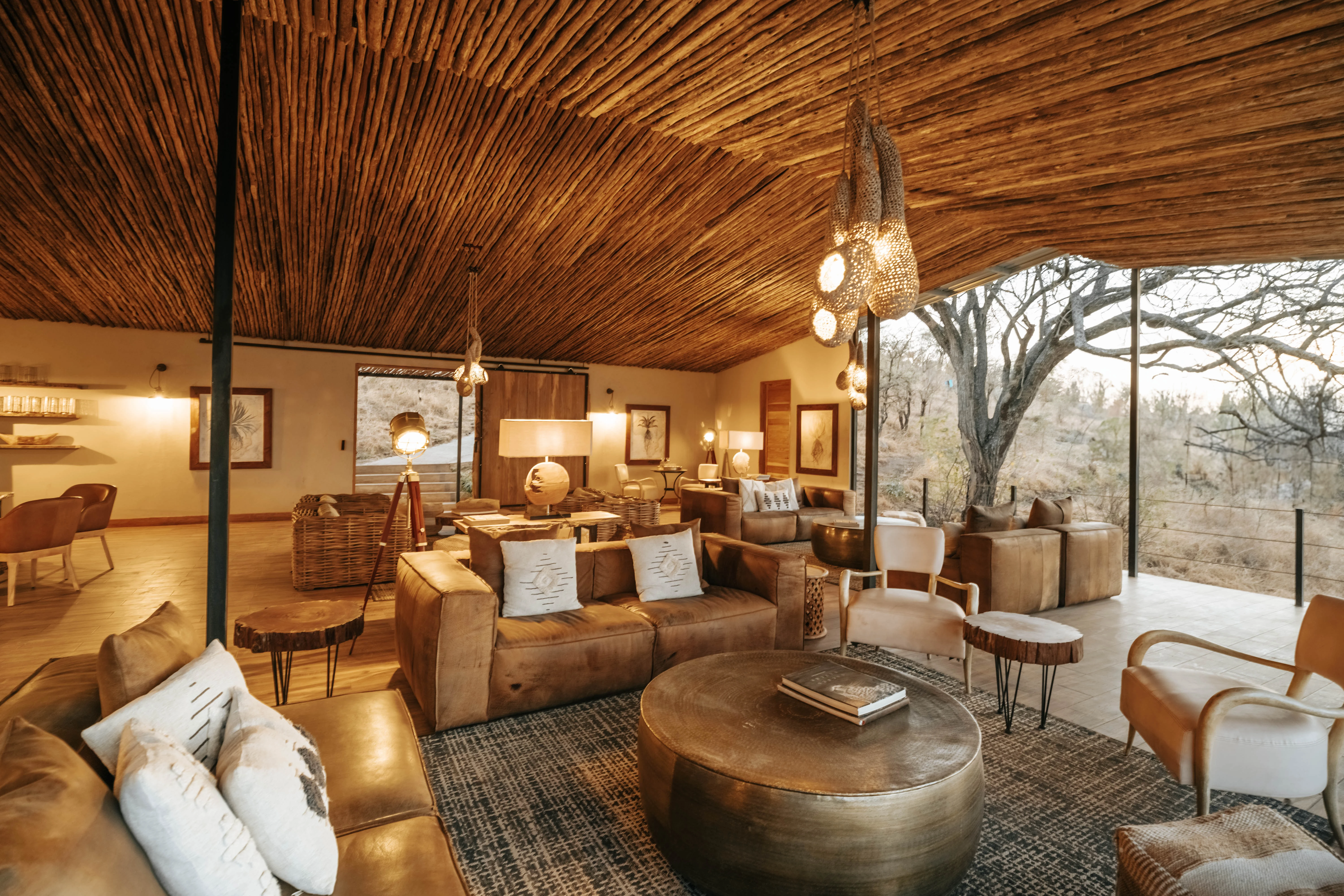
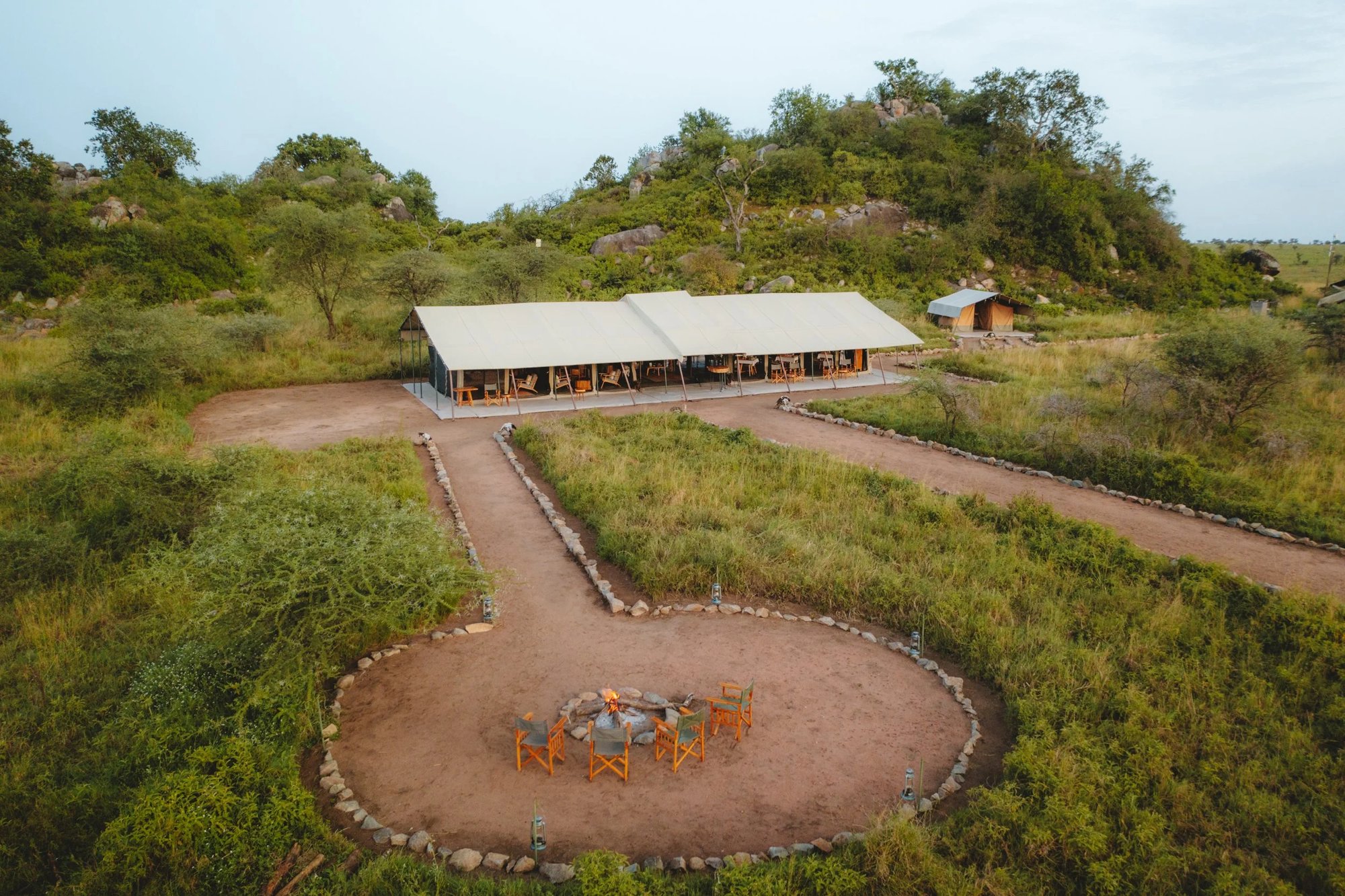
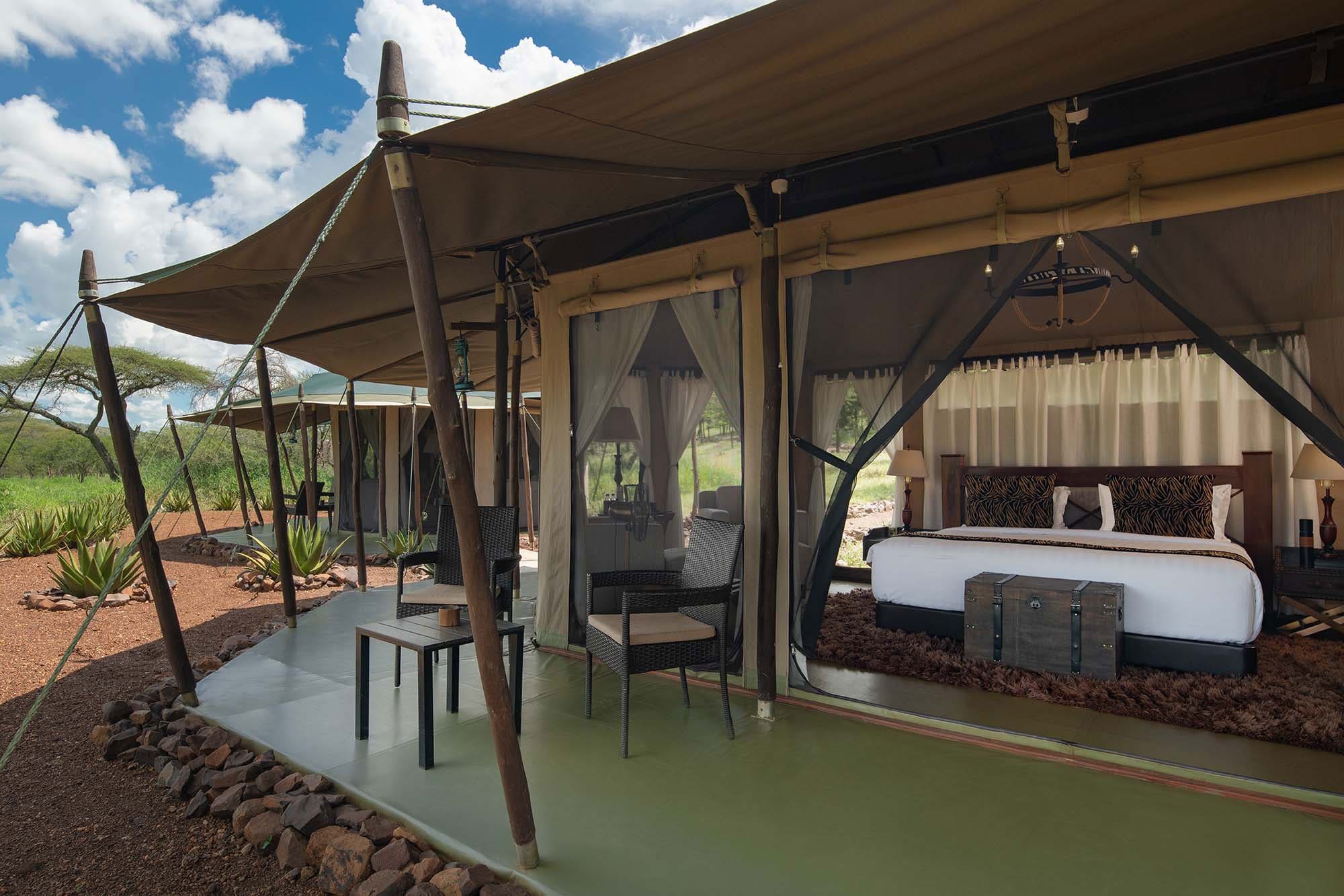
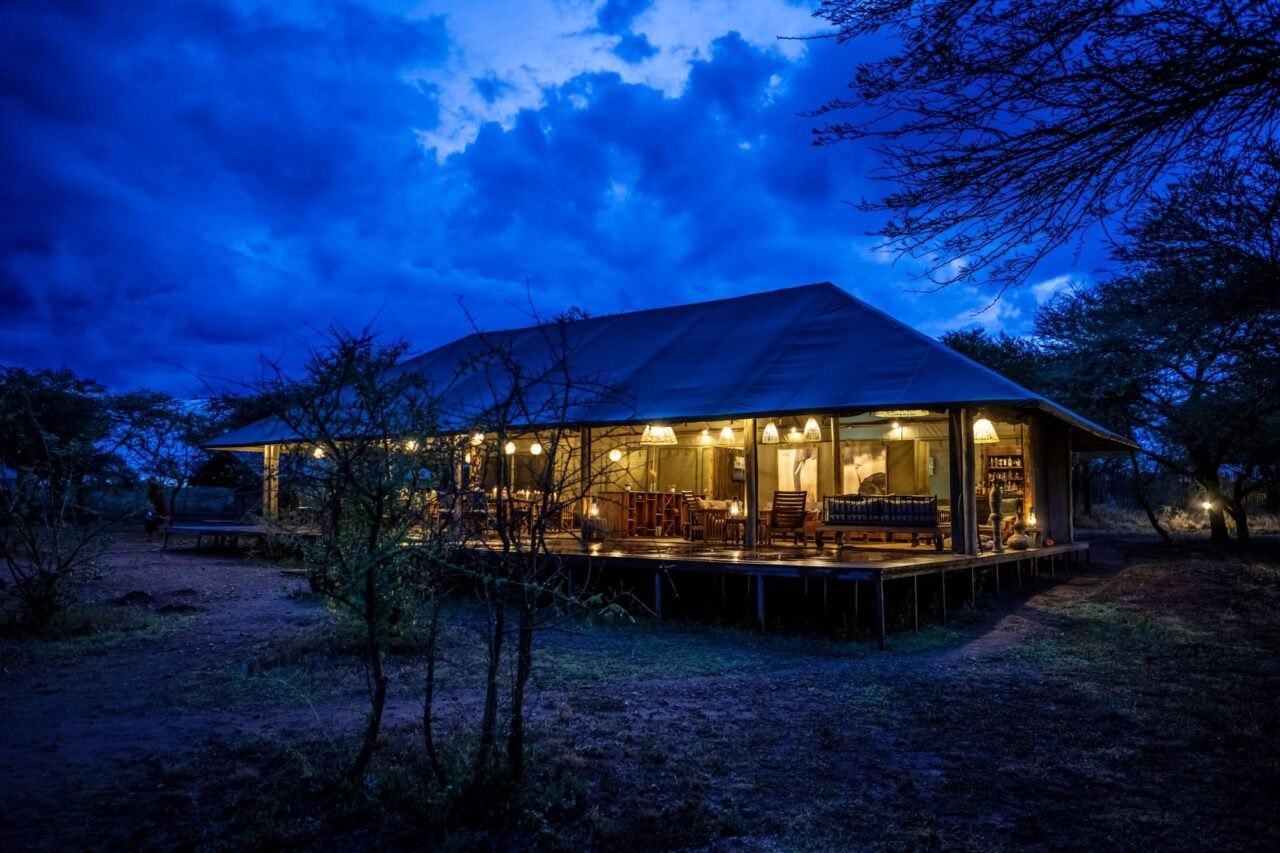
The tents sit on raised wooden decks, each with a private veranda and chairs facing out. Inside there is a king size bed or two singles under a mosquito net, mesh windows on three sides, and lamps either side of the bed. Two of the ten tents interconnect through a door, which is the arrangement families use and the reason the camp works with children. Meals are full board and taken in an open sided mess tent, and the camp will carry breakfast, lunch or dinner out into the bush for you if you book it. There is a fire pit laid out in front of camp where most people end up between coming in from the afternoon drive and sitting down to eat.

It suits travellers who want a small camp rather than a lodge, families who need two rooms that connect, and anyone who would rather spend the money on where they are than on a swimming pool. The camp also runs guided walking safaris for guests who want an hour out of the vehicle, which is still an unusual thing to be able to do in this part of the park. It will not suit a guest who wants a spa, a pool, or a long list of facilities, and we would say so before you booked.

Most guests fly in to Seronera airstrip and drive the last stretch north to camp, which takes about three quarters of an hour. By road from Arusha it is a long day, roughly seven to eight hours through Lake Manyara and the Ngorongoro Conservation Area and into the park at Naabi Hill. Transfers between the airstrip and the camp are not part of the nightly rate.

Signature experiences

Why guests choose it.

  1. Walking in the central Serengeti

    A guided walk out from camp, on foot, which is still uncommon in this part of the park. You cover a fraction of the ground a vehicle does and notice ten times as much, from tracks and dung to the smaller things a drive goes straight past. Booked at the camp, minimum two guests.

  2. Breakfast carried out onto the plain

    The kitchen packs up and sets a table out in the bush, somewhere with a view and nothing else in it. It is the thing most guests remember, and it is booked rather than included.

  3. Dinner out under the sky

    The camp will lay dinner away from the mess tent, lanterns on the ground and the Serengeti going quiet around you. Booked in advance, minimum two guests.

  4. The fire pit before dinner

    Director chairs set in a ring in front of the mess tent, facing the plain, lit as the light goes. No charge, and it is where the day gets talked through.

  5. Mornings in the Seronera valley

    The valley south of camp has permanent water and is known for its big cats. Leaving camp at first light puts you among the kopjes while the lion are still moving and before the day vehicles arrive from Seronera.

Room types

Where you will sleep.

Luxury Tent

A tent on a raised wooden deck with a private veranda, a king size bed or two singles under netting, and mesh windows on three sides. The camp allows two adults, or one adult and one child, or two adults and one child, or one adult and two children.

Up to 6 guests

Family Tent

Two luxury tents joined by an interconnecting door, so a family has its own pair of rooms. Two of the ten tents in camp are built this way and the camp takes up to six guests in them.

At a glance

The essentials, in brief.

Amenities

  • Ten luxury tents, including two interconnecting family tents
  • Tents raised on wooden decks with a private veranda
  • King size or twin beds under mosquito netting
  • Mesh windows on three sides of each tent
  • Open sided mess tent for meals
  • Fire pit set out in front of camp
  • Bush breakfasts, lunches and dinners bookable
  • Guided Walking Safaris Bookable
  • Unfenced camp on the central Serengeti plains

Best for

  • Families
  • Small Camp Character
  • Photography
  • Walking Safari
  • Second Time Safari

Wildlife and nature

  • Resident lion, leopard and cheetah in the Seronera valley through the year
  • Elephant, buffalo, giraffe, topi and hyena around camp in every month
  • Migration herds moving through the central Serengeti in roughly May and June and again later in the year
  • Birding on the plains and along the watercourses, strongest in the green months

Best time to visit

When to go.

  • January: best
  • February: best
  • March: not a best month
  • April: not a best month
  • May: not a best month
  • June: best
  • July: best
  • August: best
  • September: best
  • October: best
  • November: not a best month
  • December: best
Best months

Best months: June to October and December to February.

Location & access

Getting there.

Location

Seronera Central Serengeti

Arriving by air

About 3 hours in total. Roughly 45 minutes by road from Kilimanjaro International Airport to Arusha Airport, about 1 hour in a light aircraft to Seronera airstrip, then about 45 minutes by road north to camp. Bush flights carry a soft bag limit of around 15 kg. The nightly rate does not include the airstrip transfer.

By road

About 8 to 9 hours in total from Kilimanjaro International Airport. Roughly 1 hour from the airport to Arusha, about 1 hour 45 minutes on to Mto wa Mbu and Lake Manyara, about 1 hour 45 minutes up through Karatu to the Lodoare gate, around 2 hours 30 minutes across the Ngorongoro Conservation Area to the Naabi Hill gate, then 1 hour to 1 hour 30 minutes north to Seronera, and a final 45 minutes north to camp.

On the map

Where it sits.

2.209° S, 34.810° E

What's included

What the rate covers.

Included

  • Accommodation on a full board basis, meaning breakfast, lunch and dinner
  • Soft Drinks

Not included

  • An additional lunch, whether a picnic or taken in camp
  • Transfers to and from the nearest airstrip
  • Flights And Airport Taxes
  • Medical Evacuation Cover
  • Tourism Development Levy, camping fees and park fees
  • Laundry
  • Gratuities and items of a personal nature
  • The bush meals, the walking safari and the extra packed lunch listed as extras
  • A local guide staying in the regular guide tent, 20,000 TZS per night collected at the camp
  • Compulsory Tanzania inbound travel insurance at 44 USD per adult, in force since 1 October 2026

Frequently asked

Questions, answered.

Where exactly is Manya Luxury Camp?

On the plain of the central Serengeti, about twenty six kilometres north of Seronera. The camp gives its own coordinates as 2 degrees 12 minutes south and 34 degrees 48 minutes east. It is unfenced, so wildlife moves through it.

How many tents are there?

Ten in all. Eight are standard luxury tents and two interconnect through a door as a family tent. That makes it one of the smaller camps in the central Serengeti.

When is the camp open?

All year. Rates are published for every month and there is no closed season, so you can stay in the long rains as well as in the dry months.

How do guests reach the camp?

Most people fly to Seronera airstrip and drive about forty five minutes north to camp. By road it is seven to eight hours from Arusha and eight to nine from Kilimanjaro International Airport, going through Lake Manyara and the Ngorongoro Conservation Area. The airstrip transfer is charged by the camp and is not in the nightly rate.

Are families with children welcome?

Yes. Children under five stay free when sharing with one or two adults, and children of five to fifteen pay a flat published child rate per night. From sixteen the adult rate applies. A standard tent takes two adults and one child, or one adult and two children, and the two interconnecting tents give a family its own pair of rooms. A child cannot have a tent to themselves, because the camp has not published a price for that.

What is included in the rate?

Full board, so breakfast, lunch and dinner, and soft drinks. Everything else is charged separately.

What is not included?

Park entry and concession fees, camping fees and the Tourism Development Levy, airstrip transfers, flights and airport taxes, laundry, medical evacuation cover, gratuities, personal items, and the bush meals, walking safari and extra packed lunch listed as extras. A local guide staying in the guide tent is charged 20,000 Tanzanian shillings a night at the camp. Tanzania also requires every visitor to hold inbound travel insurance, currently 44 US dollars per adult.

What wildlife will we see?

The central Serengeti holds resident big cats rather than seasonal ones, so lion are typically seen on most days and leopard and cheetah are a realistic chance rather than a certainty. Elephant, buffalo, giraffe, topi and hyena are around through the year. Migration herds move through this part of the park in roughly May and June and again later in the year, which nobody can guarantee for a given week.

Can we walk, rather than drive?

Yes. The camp runs guided walking safaris with a minimum of two guests, and you add the walk to your trip in the trip builder. Walking is still unusual in this part of the Serengeti, and an hour on foot shows you a different set of things from a morning in the vehicle.

Is there a pool or a spa?

No. Manya is a small camp built around game viewing, meals in the open and the fire pit, not around facilities. If a pool matters to you, a larger lodge in the Seronera area will suit you better.

What is the best time of year to visit?

Any month works, because the predators here are resident rather than seasonal. July and August are the busiest and the dearest. March, April, May, November and early December are the quietest and cheapest, and also the greenest.

Can a solo traveller stay?

Yes. The camp publishes its own single occupancy rate, so a solo guest sees a real price. The camp allows a maximum of two single occupancy tents to be booked at one time.
What's nearby

Worth the short trip.

  • Seronera valley

    About 26 km south, under an hour

    Permanent water, kopjes and long grass, where lion, leopard and cheetah are resident rather than seasonal. The first drive of most stays goes here.

  • Moru Kopjes

    South west of Seronera, a full day

    Granite outcrops with Maasai rock paintings and a gong rock, and some of the better rhino country in the Serengeti.

  • Retina hippo pool

    Near Seronera, about an hour

    A bend in the Seronera river where hippo pack in close together, and one of the few marked points in the park where you can get out of the vehicle.

  • Hot air balloon over the central Serengeti

    Launch sites near Seronera, very early start

    About an hour aloft at first light with the licensed balloon operators in the park. Not run by the camp; you add it to your trip in the trip builder.

Nearby

Other places to stay nearby.

Plan this stay

Build a northern circuit around Manya Luxury Camp

Build your bespoke Tanzania safari with our team. Real lodge rates and itemised pricing throughout.

Build & price your trip