Lodges & partnersSeronera Central Serengeti

Serengeti Wild Camp

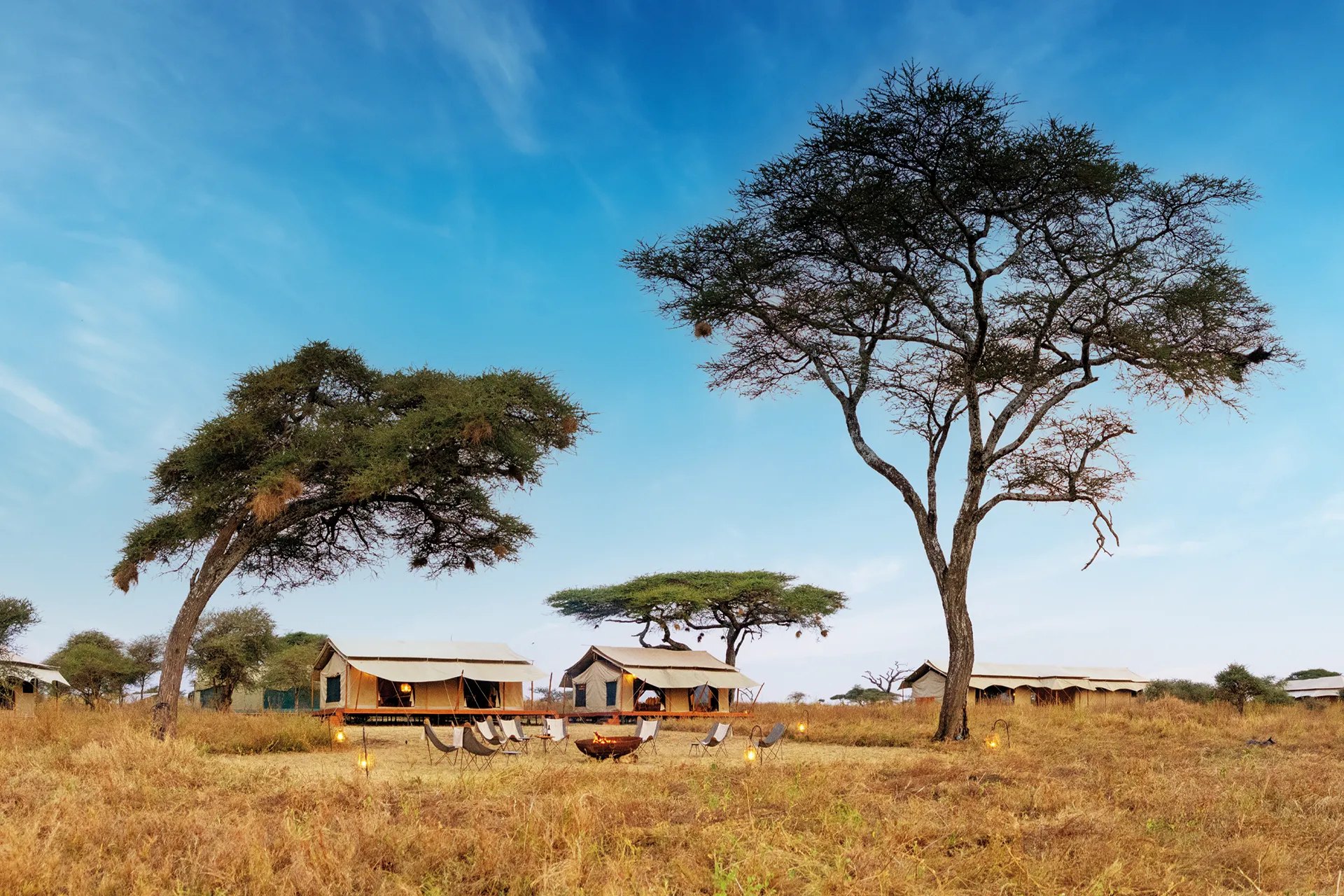
Twenty plain canvas tents on the Seronera grass, twenty minutes from the airstrip, where the lion stay all year.

01 / 06
Tier
Comfort
Location
Seronera Central Serengeti

About

About Serengeti Wild Camp.

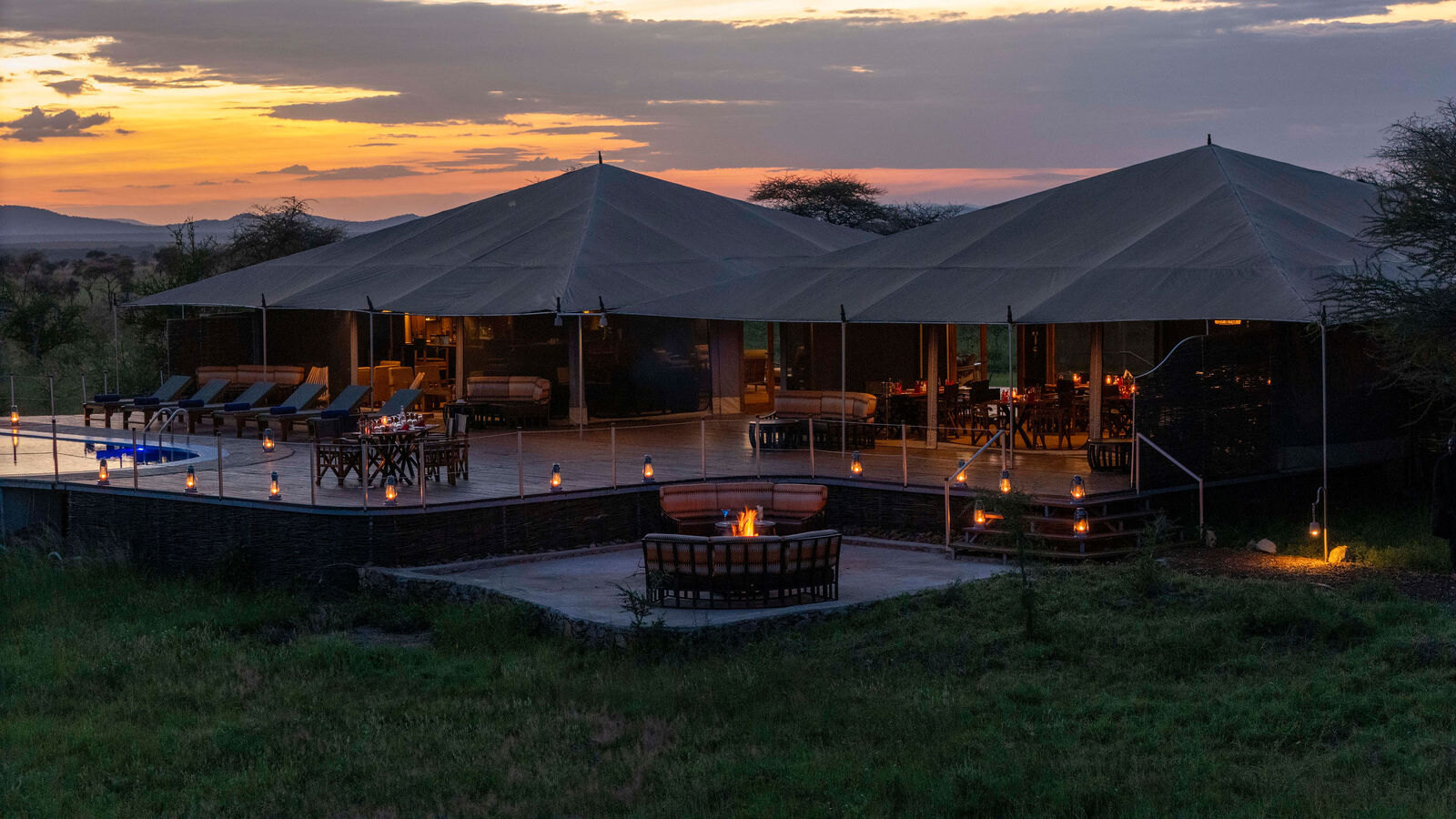
Serengeti Wild Camp sits in the Seronera area, in the geographic middle of the Serengeti, on open grassland a short drive northeast of the airstrip. Seronera is the part of the park most people picture when they think of the Serengeti: long grass plains broken by granite kopjes and the river courses that hold game all through the year. The camp is unfenced and the plains run away from the front of the tents, so what you see from the veranda in the morning is whatever walked in overnight.

The reason to stay in the central Serengeti rather than chase the herds is that the resident game does not leave. Lion live around the kopjes and the Seronera valley year round, leopard use the big trees along the water, and cheetah hunt the shorter grass out on the open ground. The migration passes through on its way north, typically from around May into June, and again coming south later in the year, but the camp does not depend on it. For a first safari that matters, because a week here is unlikely to be a quiet week.

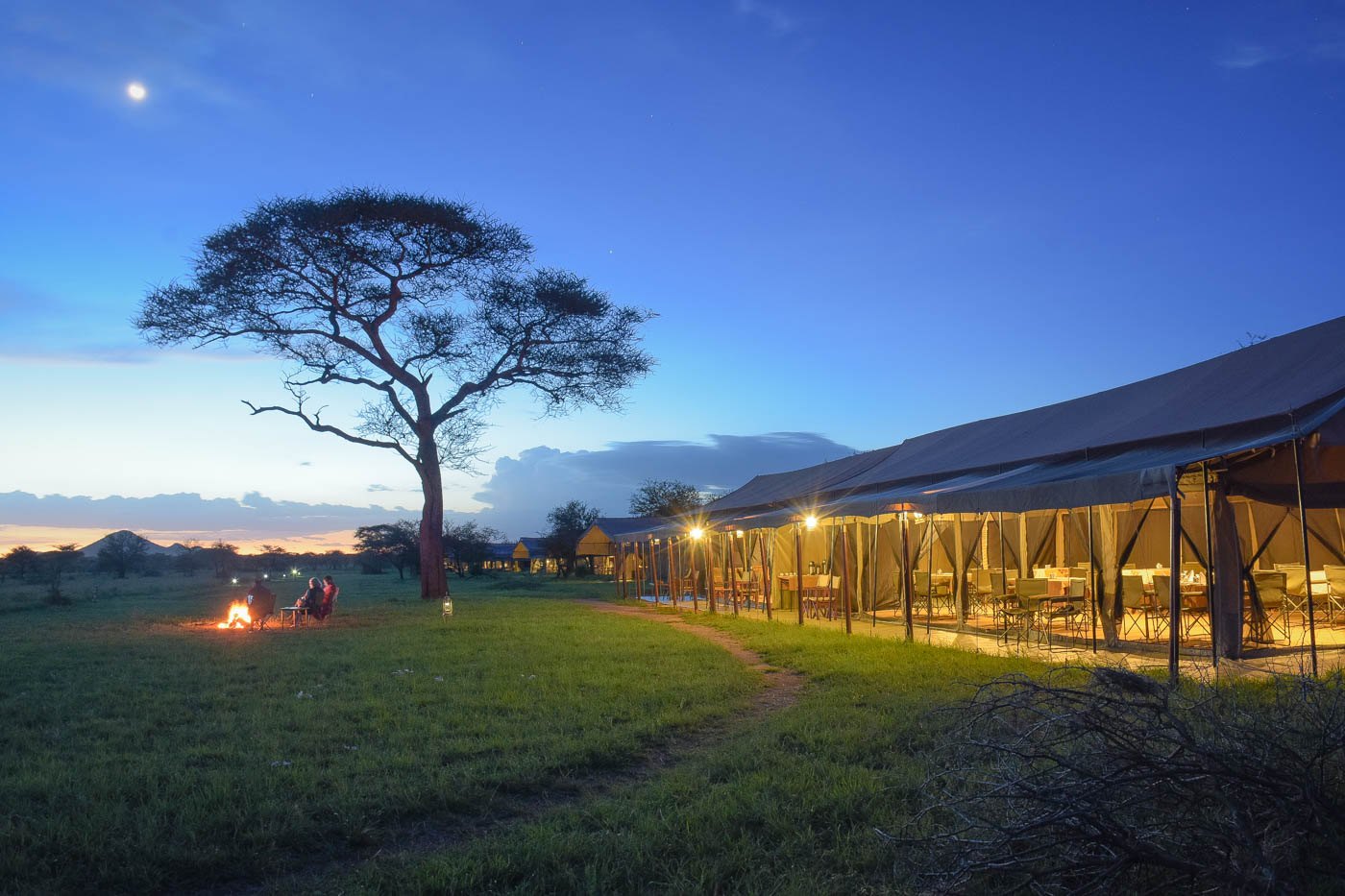
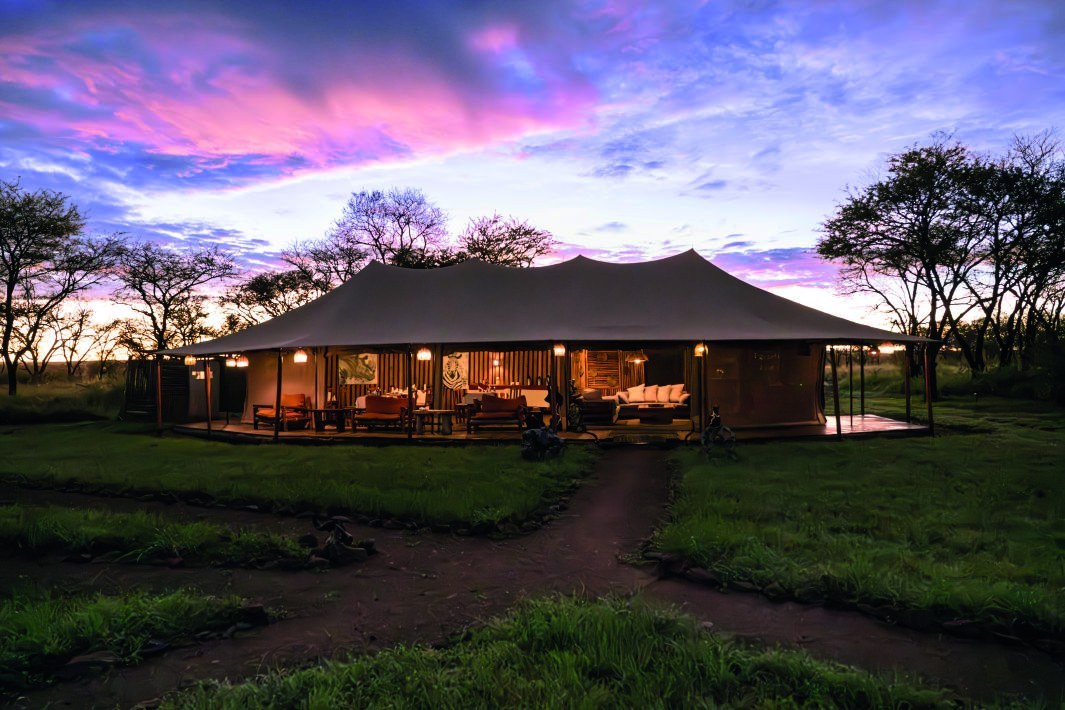
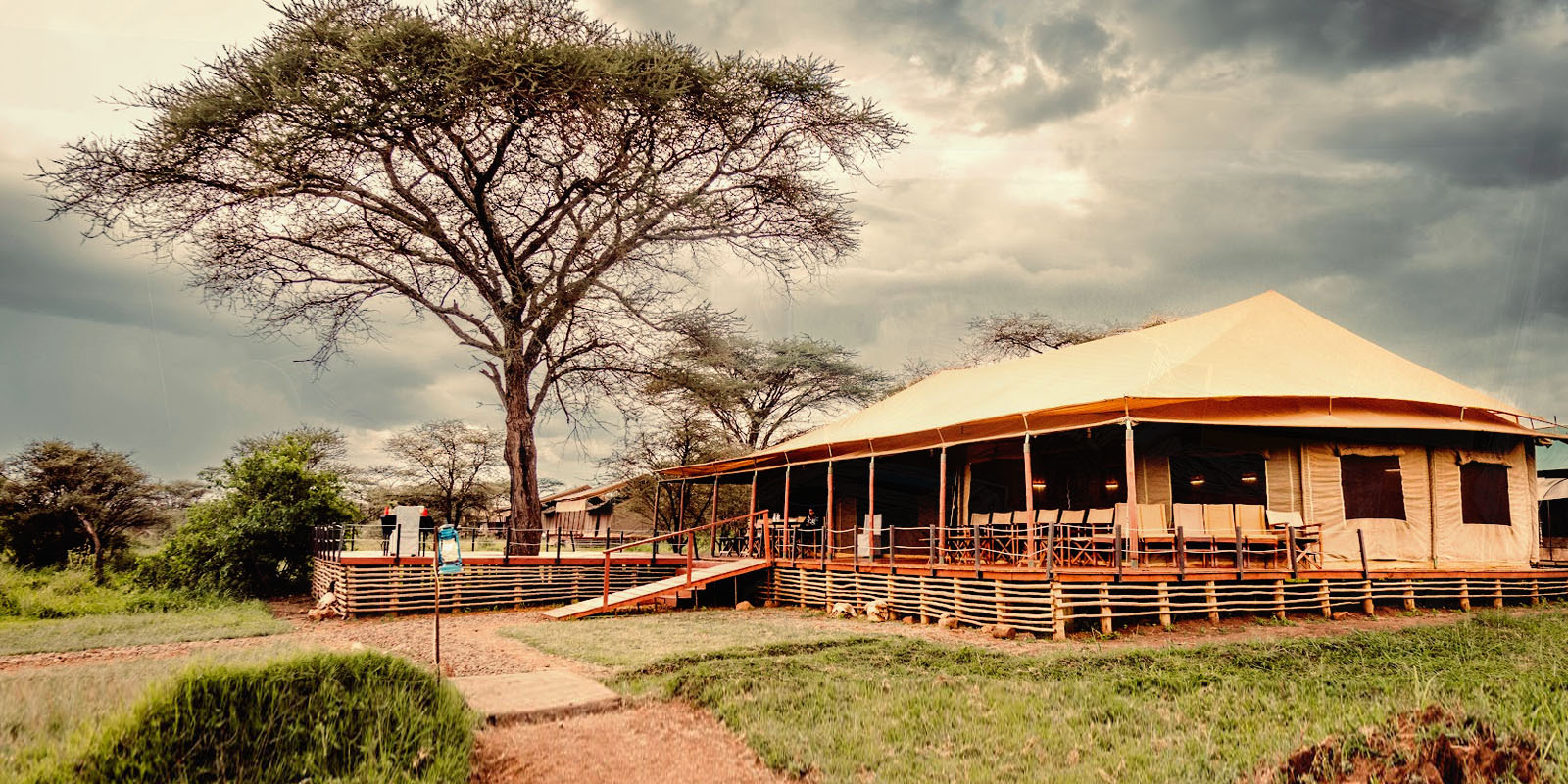
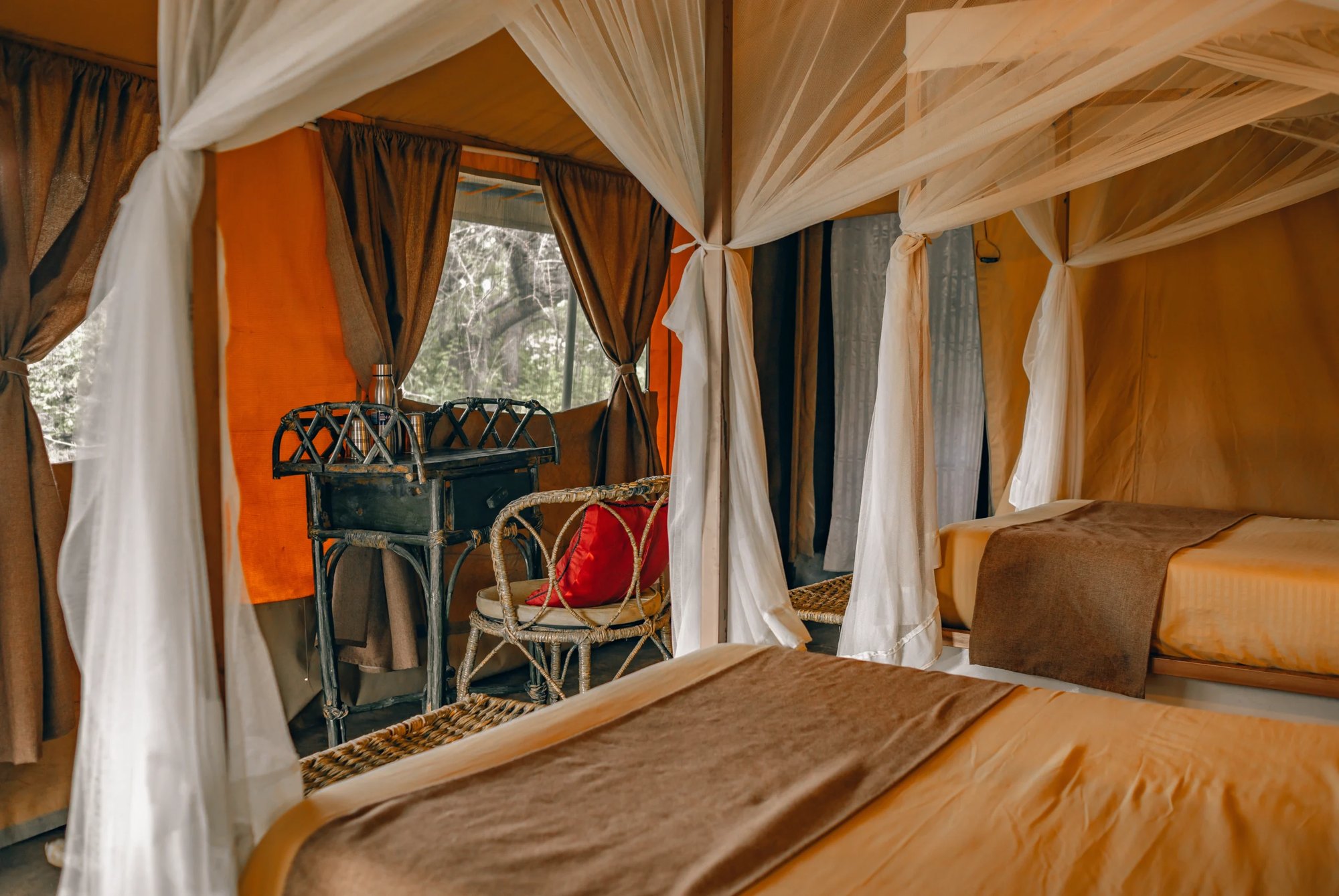
There are twenty tents, all of them the same standard and all en suite, with a shower, running hot water and a flushing toilet. The tents stand on screed floors with canvas walls and a mesh front, and they are furnished simply: an iron bedstead with a bent branch headboard, ochre linen, a box mosquito net, a small writing table, and folding chairs and a table on the veranda. Meals are taken in a central dining tent, and when the weather allows the camp lays a long table outside and serves dinner under the trees. There is a lounge area and an outdoor fire, and that is close to the whole list. This is a comfortable camp, not a lavish one.

It suits a traveller who would rather put the money into days in the park than into the building they sleep in, and it suits families, since one child may share a tent with two adults and children from three to sixteen are charged at half the adult rate. It is less suited to anyone who wants a pool, a spa or a long list of facilities, and there are lodges in the same park that offer those. Guests consistently single out two things here: the staff, and how close the game comes.

Most guests reach the camp by air, flying into Seronera airstrip and driving about twenty minutes to camp, which is the sensible way to arrive if your time is short. The drive up from Arusha takes most of a day through Lake Manyara, Karatu and the Ngorongoro Conservation Area, and it is a fine journey in its own right if you have the days to give it.

Signature experiences

Why guests choose it.

  1. Morning in the Seronera valley

    An early start into the river courses where the resident cats hunt. This is the reason to stay in the central Serengeti rather than chase the herds.

  2. Dinner under the trees

    When the weather allows the camp lays a long table outside and serves dinner in the open. It is the thing most guests remember about the evenings.

  3. Game from your own veranda

    The camp is unfenced and the plains run away from the front of the tents. Sitting in a folding chair with a pair of binoculars is a real part of the day.

Room types

Where you will sleep.

Standard Tent

Canvas on a screed floor with a mesh front that opens onto open grass, an iron bedstead under a box mosquito net, and two folding chairs and a small table on the veranda. The bathroom is en suite, with a shower, running hot water and a flushing toilet. Made up as a double or a twin, and the camp publishes its own rate for one guest in a tent.

At a glance

The essentials, in brief.

Amenities

  • Central Dining Tent
  • Lounge Area
  • Outdoor Fire
  • Bush dining when the weather allows
  • En suite bathroom in every tent
  • Running Hot Water And Shower
  • Flushing Toilet
  • Private veranda with chairs and a table
  • Mosquito Net Over Every Bed
  • Electric light and charging in the tents
  • Laundry Service
  • Special Diets On Request
  • Meals For Children On Request

Best for

  • First Time Safari
  • Big Cats
  • Families
  • Value
  • Photography

Wildlife and nature

  • Resident lion around the kopjes and the Seronera valley, seen throughout the year
  • Leopard in the big trees along the river courses
  • Cheetah out on the shorter open grass
  • Elephant, buffalo and giraffe moving through the grassland near camp
  • Wildebeest and zebra passing on the migration, typically around May and June heading north
  • Hyena, jackal, topi and Thomson gazelle close to the tents

Best time to visit

When to go.

  • January: best
  • February: best
  • March: best
  • April: best
  • May: best
  • June: best
  • July: best
  • August: best
  • September: best
  • October: best
  • November: best
  • December: best
Best months

Best months: All year.

Location & access

Getting there.

Location

Seronera Central Serengeti

Arriving by air

About 3 hours in total. Roughly 45 minutes by road from Kilimanjaro International Airport to Arusha Airport, about 1 hour 30 minutes in a light aircraft to Seronera airstrip, then about 20 minutes by road to camp. Bush flights carry a soft bag limit of around 15 kg.

By road

About 8 to 9 hours in total from Kilimanjaro International Airport. Roughly 1 hour from the airport to Arusha, about 2 hours on to Mto wa Mbu below the Lake Manyara escarpment, about 1 hour 45 minutes up through Karatu to the Lodoare gate, around 2 hours 30 minutes across the Ngorongoro Conservation Area to the Naabi Hill gate, about 1 hour 20 minutes north to Seronera, then a last 20 minutes northeast to camp.

On the map

Where it sits.

2.425° S, 34.881° E

What's included

What the rate covers.

Included

  • Full board, which is breakfast, lunch and dinner
  • All applicable taxes, as stated on the supplier contract
  • Accommodation in an en suite tent

Not included

  • Camping and concession fee, 59 USD per person per night, not included in the rate
  • Park Entry Fees
  • Transport, transfers to and from the camp, airport and flight taxes
  • Game drives and excursions from the camp
  • Drinks and anything charged at the camp
  • Laundry, tips and items of a personal nature
  • Evacuation insurance and Flying Doctors cover
  • Compulsory Tanzania inbound travel insurance, 44 USD per adult

Frequently asked

Questions, answered.

How many tents does Serengeti Wild Camp have?

Twenty tents, all to the same standard and all en suite with a shower, running hot water and a flushing toilet. They are made up as a double or as a twin.

Where exactly in the Serengeti is the camp?

In the Seronera area, the central part of Serengeti National Park, on open grassland northeast of Seronera airstrip. It is inside the national park, not in a conservation area outside it.

How do guests reach the camp?

Most fly to Seronera airstrip and drive about twenty minutes to camp. By road from Arusha it is most of a day, roughly seven and a half to eight hours through Lake Manyara, Karatu and the Ngorongoro Conservation Area, so plan it as a travelling day.

When is the camp open?

The camp sells one rate for the whole contract year with no closed period printed on its rate sheet, so it is open all year. Seasons here change what you see rather than whether you can come.

What is the best time to visit the central Serengeti?

The resident lion, leopard and cheetah are here all year, which is the main reason to pick Seronera. The migration usually passes through heading north around May and June. The long rains fall in April and May, when the park is green and much quieter.

Are families with children welcome?

Yes. Children from three to sixteen pay half the adult rate when they share a tent with an adult, and seventy percent of the adult rate in a tent of their own. One child may share a tent with two adults.

What is included in the rate?

Full board, which is breakfast, lunch and dinner, and all applicable taxes. Park entry fees, the camping and concession fee of 59 USD per person per night, game drives, transport and drinks are not included and are itemised separately in your trip price.

Is there power and a connection at the camp?

There is electric light and charging in the tents. Connectivity in this part of the park is poor and should not be relied on, so tell anyone at home that you may be out of touch for a few days.

What is the camp like at night?

Unfenced, and game comes into camp. Guests regularly report zebra, buffalo and hyena near the tents after dark and lion audible from bed. A member of staff walks you between your tent and the dining tent once it is dark.

Can three adults share a tent?

Not at present. The camp rate sheet prices a tent for one guest and for two sharing, and one child may share with two adults, but it prints no rate for a third adult, so we do not sell that shape rather than guess at a price.
What's nearby

Worth the short trip.

  • Seronera river circuit

    Under an hour from camp. The year round water draws game and holds the densest cat population in the park.

  • Moru Kopjes

    About two hours south. Granite outcrops with Maasai rock paintings and a resident rhino population.

  • Olduvai Gorge

    On the drive to or from Ngorongoro. The site where the Leakeys uncovered some of the earliest human remains, with a small museum.

Nearby

Other places to stay nearby.

Plan this stay

Add Serengeti Wild Camp to your trip

Build your bespoke Tanzania safari with our team. Real lodge rates and itemised pricing throughout.

Opens for stays from 1 Jan 2027