Single Room
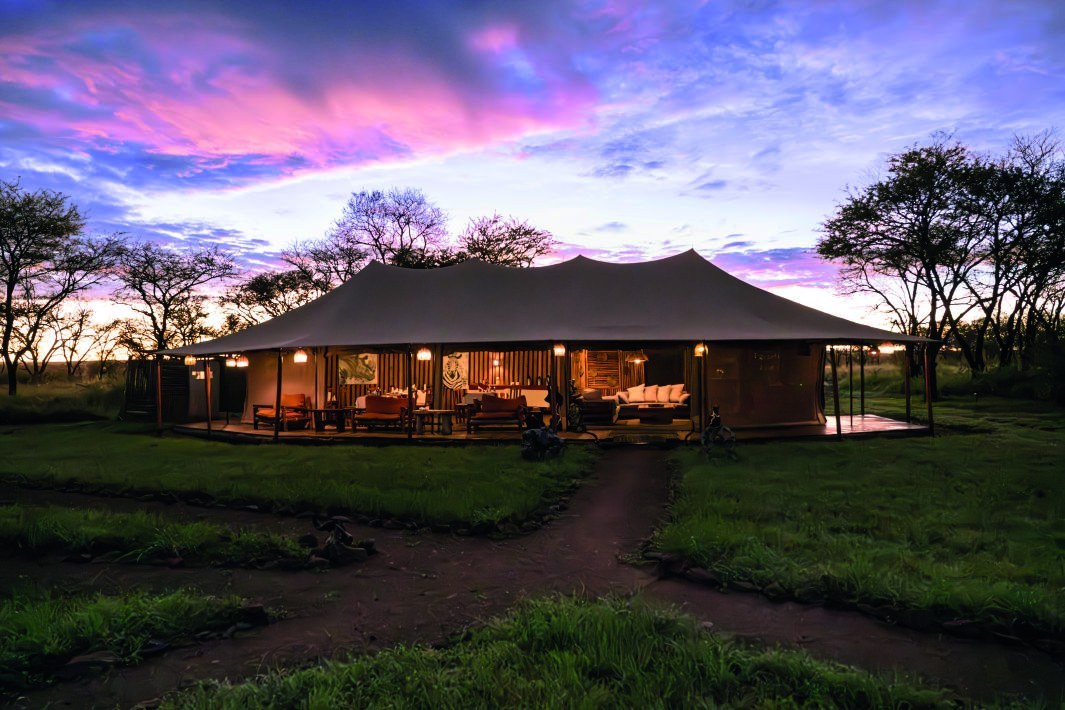
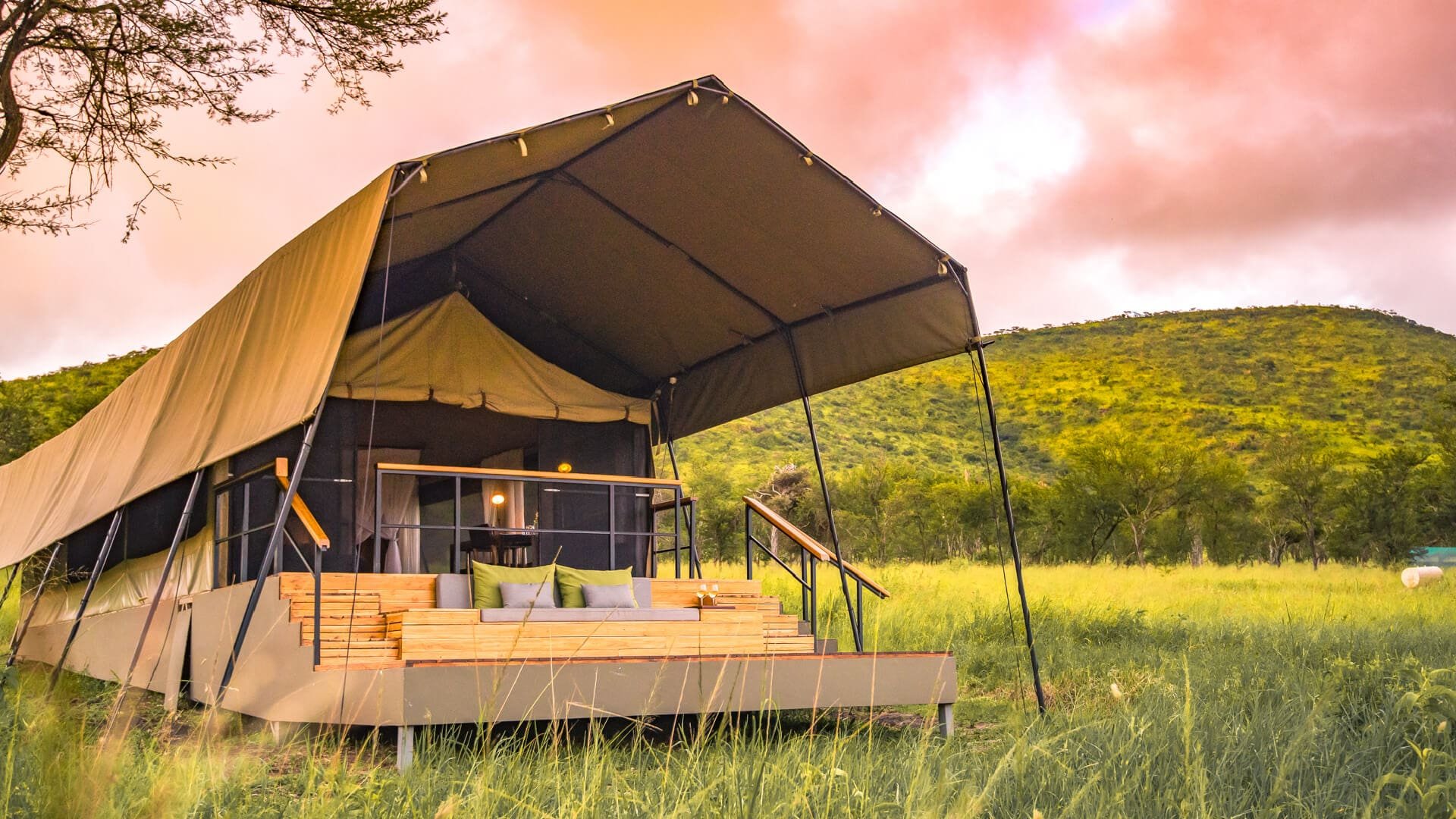
A canvas tent on a raised platform for one guest, with a private veranda, two basins, an indoor shower and an outdoor shower.
Lodges & partnersSeronera Central Serengeti
Canvas tents on raised platforms in the Orangi river country of the central Serengeti, about forty five minutes from the Seronera airstrip.
About
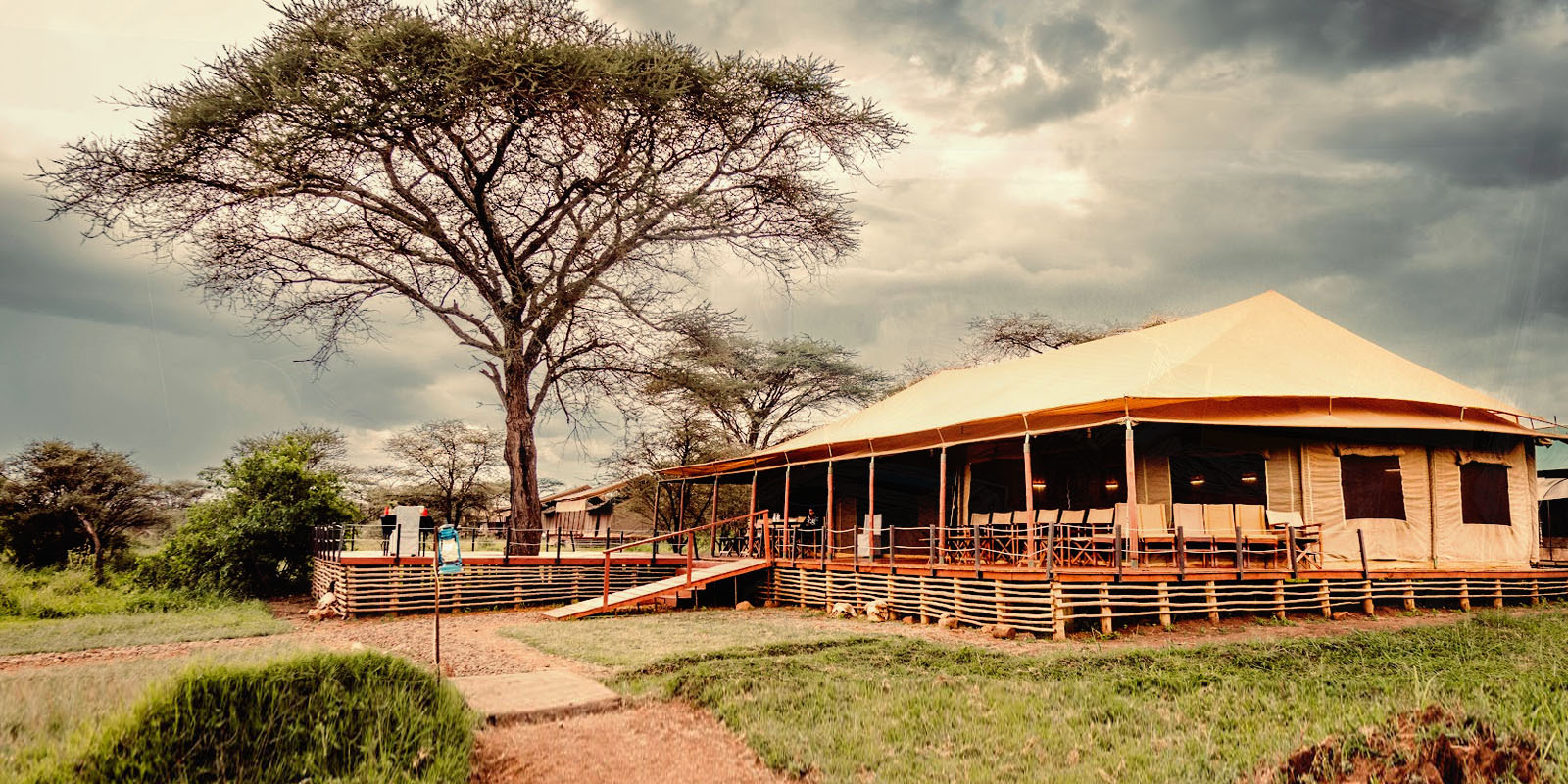
Tamu Tamu stands inside Serengeti National Park on the road that runs north west from Seronera towards the Ikoma gate, in the open grass and acacia country drained by the Orangi river. It is far enough from the Seronera junction to keep the early morning quiet, and close enough that a vehicle can be among the resident prides within the hour. The ground falls away from the mess tent into long grass, and at six in the morning the loudest thing is usually a francolin.
This is resident game country rather than migration country. Lion hold the kopjes and the river line, leopard use the watercourses around Seronera, and cheetah work the open plains. The migration passes through the wider region twice a year, moving north through roughly May and June and back south through roughly October and November, so a stay in those weeks can catch the herds in transit. The calving grounds at Ndutu and the river crossings in the far north are both a long day away, and the camp is honest about being a base for everyday Serengeti rather than for one event.
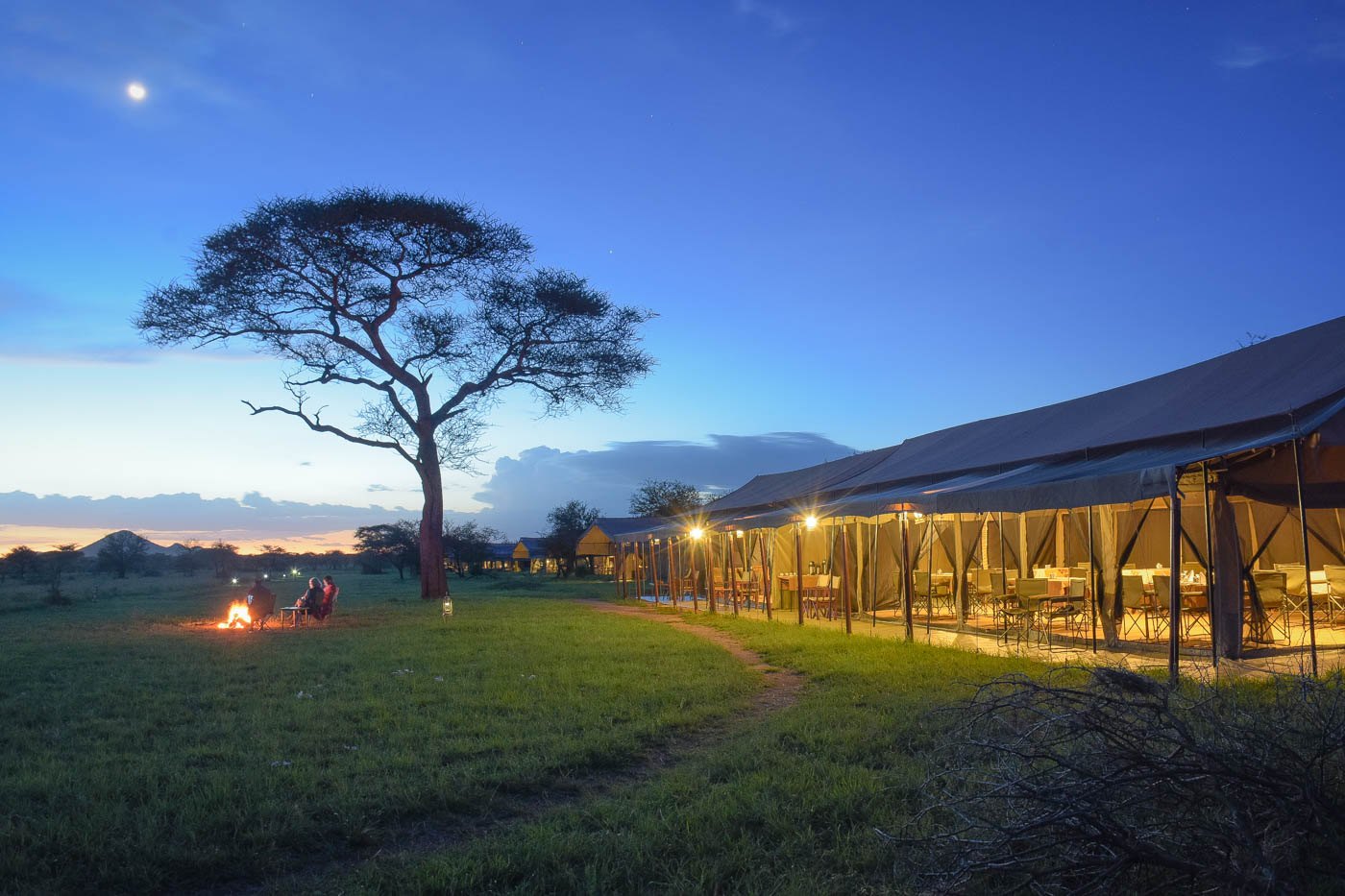
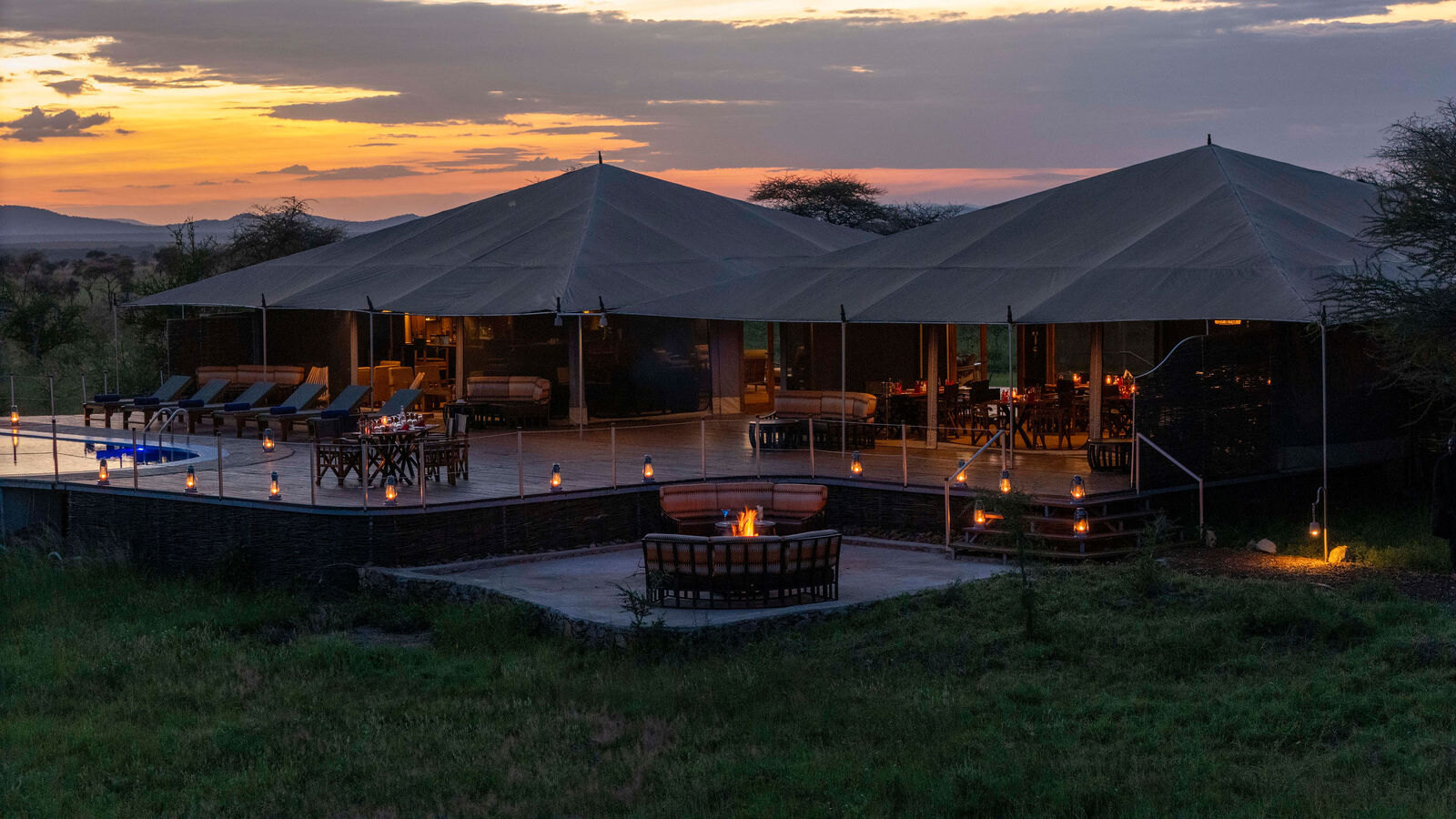
The tents are canvas on raised platforms, each with a private veranda facing the plains and a bathroom that runs to two basins, a shower inside and a second shower outdoors. Solar power runs through the night and the hot water is solar heated. There is a raised lounge with a fireplace, an open air dining tent, a fire pit for the evening, laundry on request and a small shop. Much of what hangs on the canvas was made by hand for the camp.
It suits travellers who would rather spend their money on time in the park than on a swimming pool, and it reads well for families. The camp prices single, double and triple occupancy separately, children under five stay free of charge, and children from five to fifteen pay half the adult rate when they share with two adults. Couples use it as a quiet base of two or three nights for the Seronera circuit. There is no swimming pool.
Seronera is the working airstrip, about forty five minutes away by road, and Ikoma is closer again when a flight can be routed there. By road it is two days from Kilimanjaro International Airport through the Ngorongoro highlands, with a night in Karatu or on the crater rim on the way.
Signature experiences
The camp sits about forty five minutes from the Seronera valley, so a vehicle leaving at first light is in the cat country before the day warms. Lion and leopard are the draw here and the sightings tend to be quieter than they are mid morning.
The camp arranges a short guided walk for two guests or more, on foot with an armed guide. It is booked and paid at the camp and is not part of the full board rate.
A table set out away from camp for a bush breakfast or a bush lunch, for two guests or more. Both are ordered at the camp and charged there.
The camp books the hot air balloon flight that lifts off near Seronera before dawn and lands out on the grass for breakfast. It is paid at the camp and the flight is run by the balloon company rather than the camp.
A guided visit to a Maasai homestead, arranged by the camp and charged there. It is not part of the full board rate.
Room types
A canvas tent on a raised platform for one guest, with a private veranda, two basins, an indoor shower and an outdoor shower.
A canvas tent for two with a large bed or two beds, a private veranda onto the grass and a bathroom with two basins and two showers.
The same tent set for three, for a family or three people travelling together, priced from the camp's own triple rate.
At a glance
Best time to visit
Best months: June to October.
Location & access
Seronera Central Serengeti
About four hours door to door: roughly an hour by road to Arusha Airport, an hour and a half to two hours by light aircraft to Seronera, then about forty five minutes by road to the camp.
About nine to eleven hours of pure driving from Kilimanjaro International Airport, normally split over two days with a night in Karatu or on the Ngorongoro crater rim.
On the map
2.226° S, 34.703° E
What's included
Frequently asked
Inside Serengeti National Park, on the road running north west from Seronera towards the Ikoma gate, in the Orangi river country of the central Serengeti. The published position is 2 degrees 13 minutes south, 34 degrees 42 minutes east. It is about forty five minutes by road from the Seronera airstrip.
Most fly. A road transfer takes you from Kilimanjaro International Airport to Arusha Airport in about an hour, then a light aircraft reaches Seronera in about an hour and a half, sometimes longer with a stop, and the camp is about forty five minutes further by road. Driving the whole way takes two days through the Ngorongoro highlands, with a night in Karatu or on the crater rim.
All year. The camp prices two seasons: high season from the first of January to the end of March, the first of June to the end of October and the sixteenth to the thirty first of December, and low season from the first of April to the end of May and the first of November to the fifteenth of December.
Your tent, full board with breakfast, lunch and dinner, and drinking water, tea and coffee. Game drives, the vehicle, the airstrip transfer, park entry and the Serengeti special camping fee are all separate, and each one is itemised in your trip price.
Yes. Children under five stay free of charge. Children from five to fifteen pay half the adult rate when they share a tent with two adults, and a tent takes up to two adults and two children. A child sharing with one adult is charged as the second guest at the double rate, and a child in their own tent pays three quarters of the adult rate.
Canvas on raised platforms with a private veranda looking into the grass. Each has its own bathroom with two basins, a shower inside and a second shower outdoors, a safe, mosquito nets and a seating area. The camp sells single, double and triple occupancy.
Solar power runs day and night, including charging in the tents, and the hot water is solar heated. There is wifi, which reaches the shared areas reliably and the tents less so. Mobile signal in this part of the Serengeti is patchy.
No. The camp has a raised lounge with a fireplace, an open air dining tent and an evening fire, but no pool. Guests who want one usually stay nearer Seronera or in the Ngorongoro highlands on another night of the trip.
Serengeti National Park sets a special camping fee of 71 USD per adult per night and 12 USD per child aged two to fifteen per night, and park entry is charged separately on top. Tanzania also requires inbound travel insurance at 44 USD per adult, bought online before you travel. All of these are itemised in your trip price rather than hidden in the room rate.
April and May are the long rains and the camp's low season, when the country is green, the roads are soft and the camp is quiet. The resident lion, leopard and cheetah of the central Serengeti do not leave, so the game viewing holds up even when the herds are elsewhere.
The camp is remote and the nearest clinic is hours away, so medical evacuation cover is essential and is not included in the rate. Serengeti airstrips are served by the flying doctor services that most travel policies work with.
Three nights suits most trips, giving two full days on the Seronera circuit without a long drive at either end. Two nights works if the Serengeti is one stop among several.
What's nearby
About forty five minutes by road
The central Serengeti's best known game country, where the river line and the kopjes hold lion and leopard through the year.
About two and a half hours by road
Granite outcrops on the southern side of the central Serengeti, with Maasai rock paintings and a small resident black rhino population that is rarely seen.
About twenty five minutes by road
The north western gate of the park, with the community land beyond it where activities that are not permitted inside the park boundary are run.
Nearby
The Seronera Central Serengeti guide: where to stay, when to go and how to get there.
View : Every lodge we work with in Seronera Central SerengetiPlan this stay
Build your bespoke Tanzania safari with our team. Real lodge rates and itemised pricing throughout.
Build & price your trip