Migration Tent Single Room
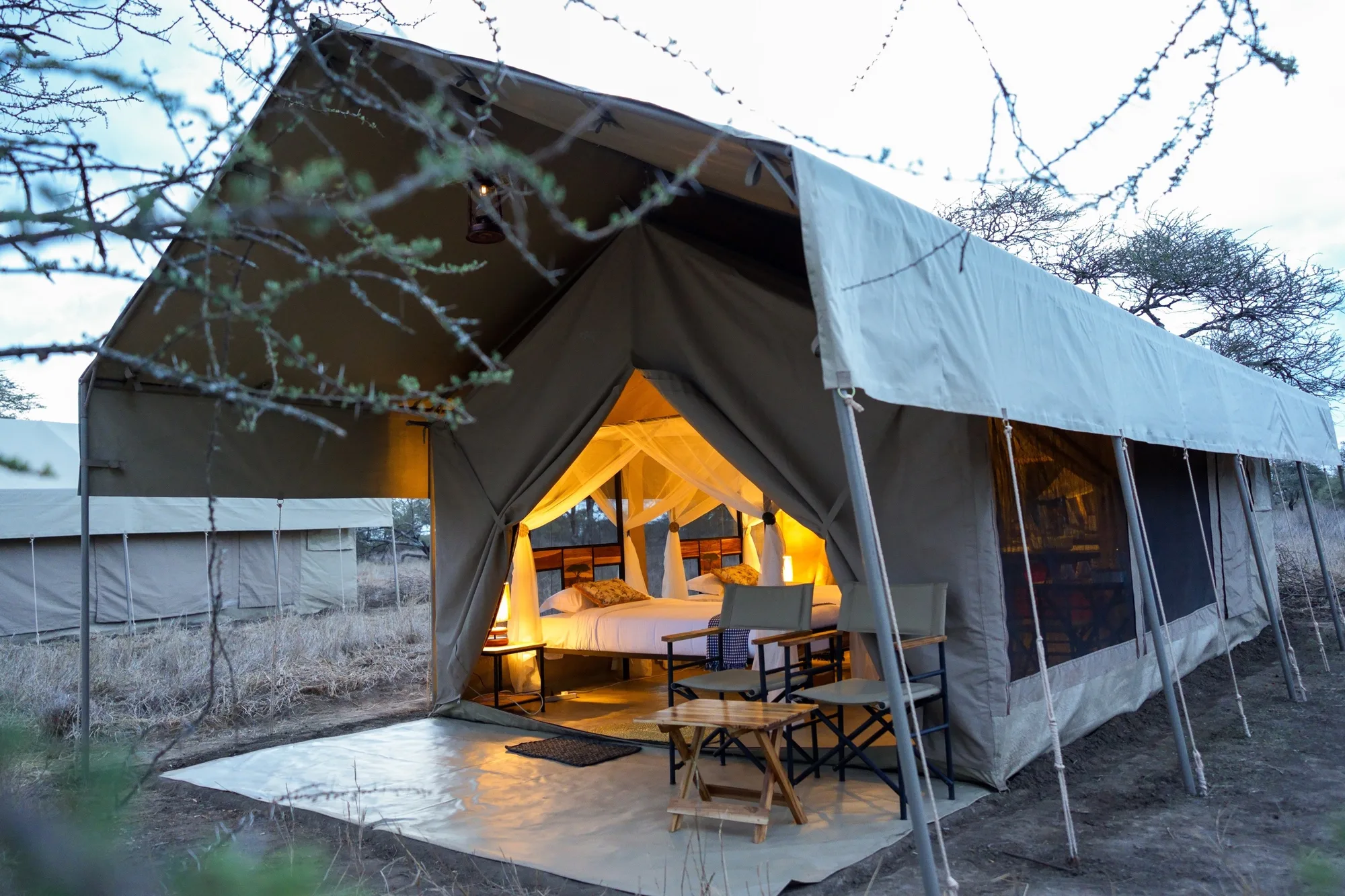
A bell tent for one guest, with a proper bed, mosquito net and an en suite bathroom with a flush toilet and a shower.
Lodges & partnersNdutu Ngorongoro Conservation
A seasonal camp on the short grass plains at Ndutu, open mid December to the end of March, pitched on the ground where the wildebeest drop their calves.
About
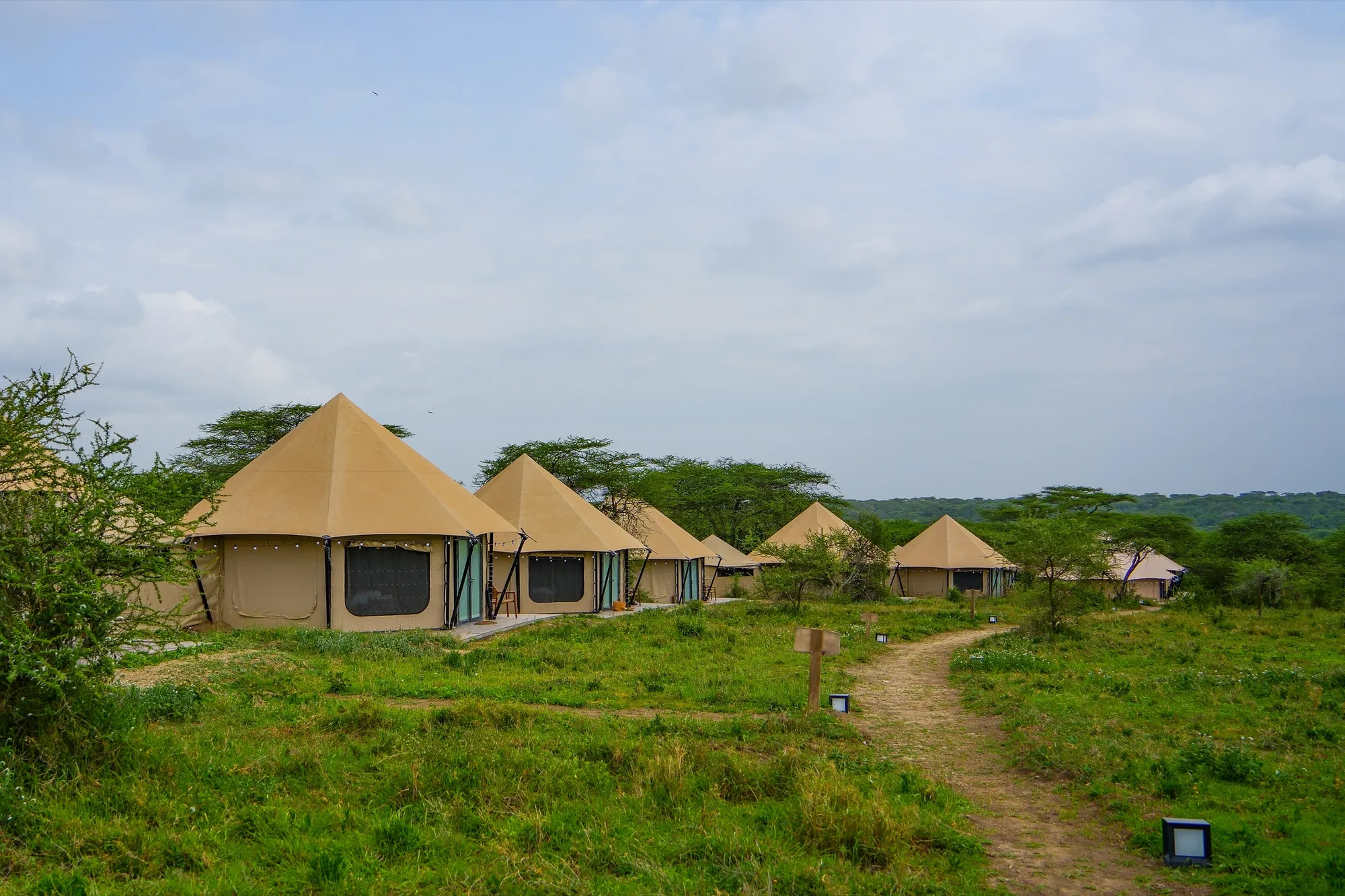
Heritage Ndutu Migration Camp is a seasonal camp on the short grass plains at Ndutu, in the southern corner of the Ngorongoro Conservation Area where it runs into the Serengeti. It opens in mid December and closes at the end of March, which is the one window in the year when these plains carry the whole southern migration. Lake Ndutu and the Big Marsh woodland are both within a short drive, and the camp is unfenced, so the plains simply run up to the tents.
The reason to be here is the calving. From January into March the wildebeest drop their young on this short grass, several thousand a day through the middle of February, and every predator on the southern Serengeti moves in behind them. Lion, cheetah and hyena all work the edges of the herds, and the driving distances are short because the animals are on the doorstep rather than an hour away. Guests regularly describe zebra and giraffe walking through camp in daylight and lion calling close by at night, which is the trade for being on the ground the herds want.
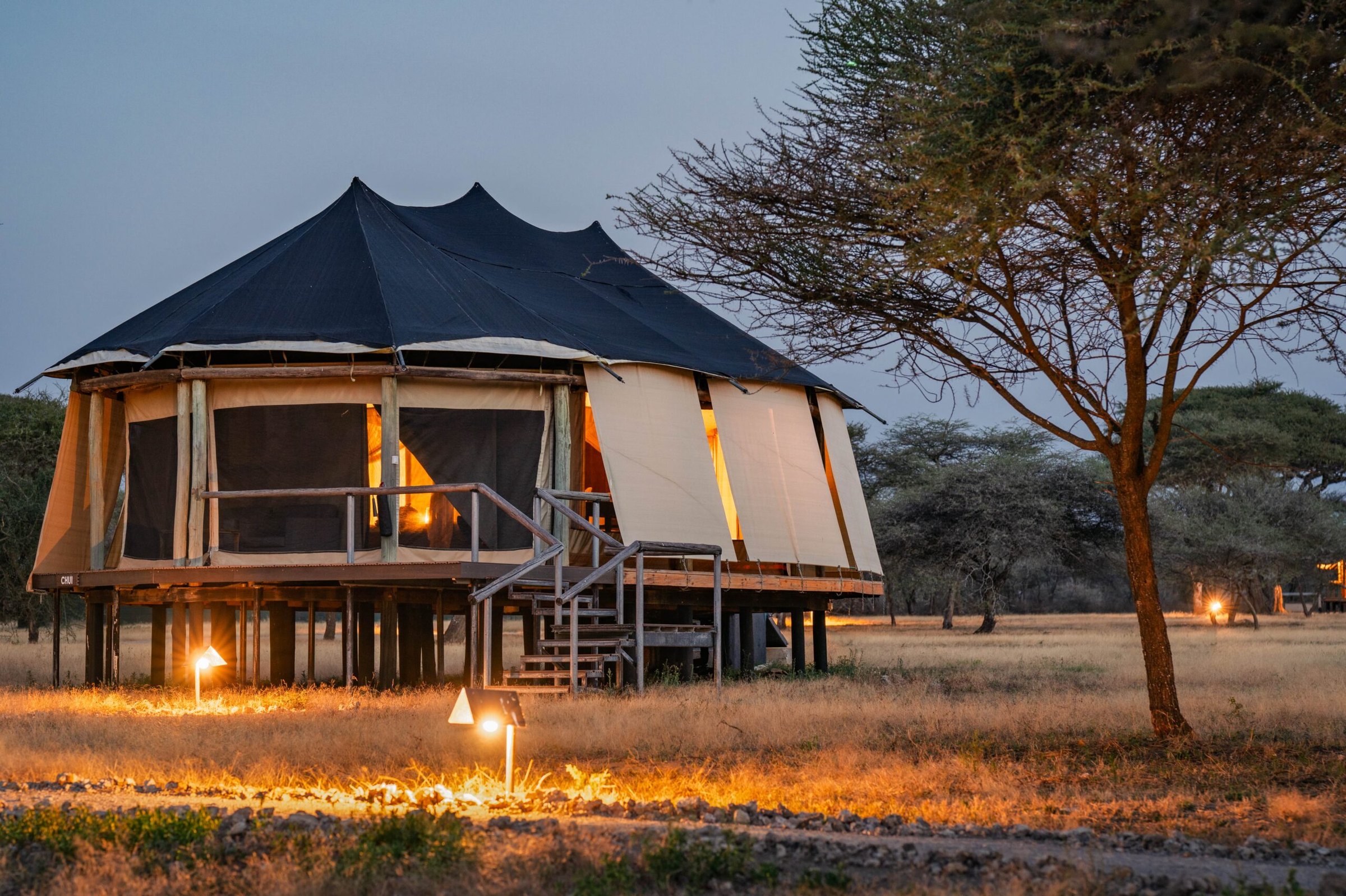
Tents are bell tents under canvas with proper beds, linens and mosquito nets, and each has an en suite bathroom with a flush toilet and a shower. Hot water is heated when you ask for it rather than standing ready all day, so it helps to mention your preferred shower time. There are electrical outlets in the tents, but the camp runs its power in set hours rather than continuously, with a break overnight, so a spare camera battery earns its place in the bag. Wi Fi reaches the mess and lounge tent and does not reach the tents. Meals are full board and taken together in the mess, and there is a fire in the evening.
It suits travellers whose whole reason for coming is the calving season, photographers who want predator and prey in the same frame, and families, who usually take the quad tent. It is a comfortable camp rather than a polished one, and guests who arrive expecting a lodge tend to say so, so we are plain about that before anyone books. Access is by light aircraft to Ndutu airstrip, the closest strip, about thirty minutes from camp by game drive vehicle, or by road from Arusha in six to seven hours over the crater rim and down past Olduvai Gorge.
Signature experiences
Half and full day drives across the Ndutu plains in pursuit of the herds and the predators that follow them.
Drives along the shorelines for flamingo, water birds, and the predator activity drawn to the water.
Roughly 1 hour drive. Paleontological site where the Leakeys uncovered some of the earliest human fossils. Booked direct at the site.
Gallery
Room types
A bell tent for one guest, with a proper bed, mosquito net and an en suite bathroom with a flush toilet and a shower.
A bell tent for two guests sharing, with proper beds, mosquito nets and an en suite bathroom with a flush toilet and a shower.
A bell tent for three guests sharing, with proper beds, mosquito nets and an en suite bathroom with a flush toilet and a shower.
A bell tent for four guests sharing, the family option here, with proper beds, mosquito nets and an en suite bathroom with a flush toilet and a shower.
At a glance
Best time to visit
Best months: January to March. Closed in April to November.
Location & access
Ndutu Ngorongoro Conservation
Roughly 2 hours total. 45 minute road transfer Kilimanjaro to Arusha airport, then a 1 hour scheduled flight on a Cessna Caravan to Ndutu airstrip, then a 30 minute game drive transfer to the camp.
Approximately 6 to 7 hours total. 1 hour Kilimanjaro to Arusha, then 3 hours to the Ngorongoro Conservation gate, then 2.5 to 3 hours descending across the conservation area to the Ndutu plains.
On the map
2.993° S, 34.991° E
What's included
Frequently asked
It is a seasonal camp. It opens in mid December and closes at the end of March, which is the calving window on these plains, and the site is not occupied for the rest of the year. Heritage does not publish a tent count, so we do not state one.
The camp trades from 15 December to 31 March each year and is closed from April to November. If your dates fall outside that window we will put another camp in the same area in front of you.
By light aircraft to Ndutu airstrip, which is about two hours in total from Kilimanjaro including the road transfer to Arusha Airport, then roughly thirty minutes to camp by game drive vehicle. By road it is six to seven hours from Arusha over the crater rim and down past Olduvai Gorge.
Yes. Children are accepted and families usually take the quad tent, which sleeps four. Children are charged on an age scale and the trip builder shows the exact figures for your dates and party. The camp is unfenced, so children are escorted to and from the tents after dark.
Full board dining, mineral water with meals, daily housekeeping and VAT. Park entry fees, the conservation area concession fee, the Tourism Development Levy, game drive vehicle hire, transfers, flights, tips and any beverages beyond the water served at meals are not included. The entry and concession fees are set by the Ngorongoro Conservation Area Authority and are added to your trip price at the figures current for your dates.
Mid January to mid March for the peak of the calving. February is the busiest month and carries the highest predator activity, with several thousand calves commonly cited as being born each day at the peak. Late December and early January are quieter and the herds are still gathering.
There are electrical outlets in the tents, but the camp runs its power in set hours rather than continuously, with a break overnight. If you charge camera batteries or a laptop, plan around that and bring a spare battery.
Wi Fi reaches the mess and lounge tent. It does not reach the tents, and it is best treated as enough for a short message home rather than for working. The camp does not publish mobile network coverage for the site, so do not count on a signal.
Each tent has its own en suite bathroom with a flush toilet and a shower. Hot water is heated when you ask for it rather than being available all day, so mention your preferred shower time to the staff when you arrive.
Treat the tap water as water for washing. Drinking water is provided and mineral water is served with meals. Heritage does not publish a statement that the tap water is safe to drink, so we do not make that claim for them.
Nights at Ndutu during the calving months usually fall to around fourteen to sixteen degrees, and dawn on the open plains in an open vehicle feels colder than that. A fleece and something windproof are worth packing even though the days are warm.
Close. The camp is unfenced and sits on open ground, and guests routinely describe zebra, giraffe and antelope walking through in daylight and lion calling nearby at night. Staff escort guests between the mess and the tents after dark, and that escort is not a formality.
Yes. From 1 October 2026 visitors entering mainland Tanzania must hold the government inbound travel insurance, 44 USD per adult and valid for up to 92 days, covering emergency medical care, evacuation, repatriation and lost luggage. Children aged 3 to 17 pay half and infants under 3 are free. It is bought online before you fly or on arrival, and residents of Tanzania and of East African and SADC countries are exempt. If you land in Zanzibar first, the Zanzibar policy covers you instead. It is paid by you directly and is not part of your trip price.
What's nearby
Roughly 1 hour drive north east. Paleontological site of the Leakey discoveries and a Maasai cultural visit option.
1.5 hours drive. A wind blown crescent of black volcanic sand that moves a few metres each year across the plain.
Adjacent to the camp area. Soda lake with seasonal flamingo and water bird activity.
Nearby
The Ndutu Plains guide: where to stay, when to go and how to get there.
View : Every lodge we work with in Ndutu Plains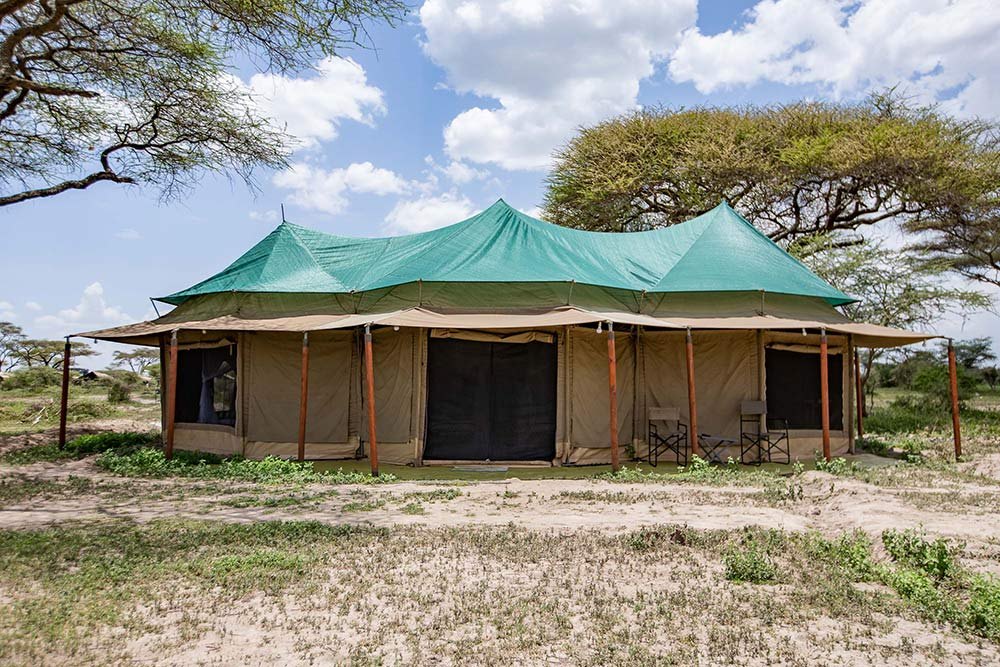
Plan this stay
Build your bespoke Tanzania safari with our team. Real lodge rates and itemised pricing throughout.
Build & price your trip