Standard Tent
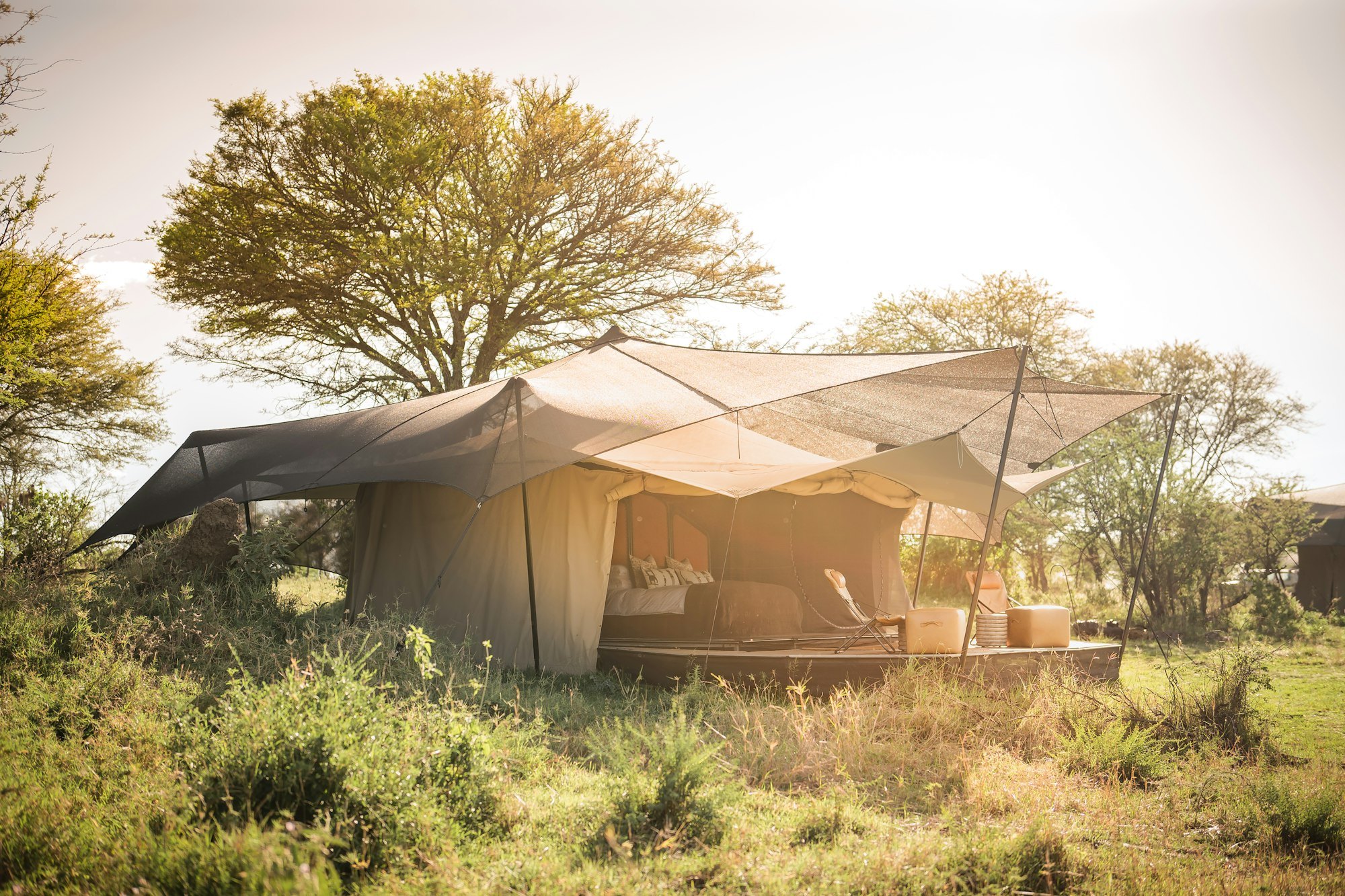
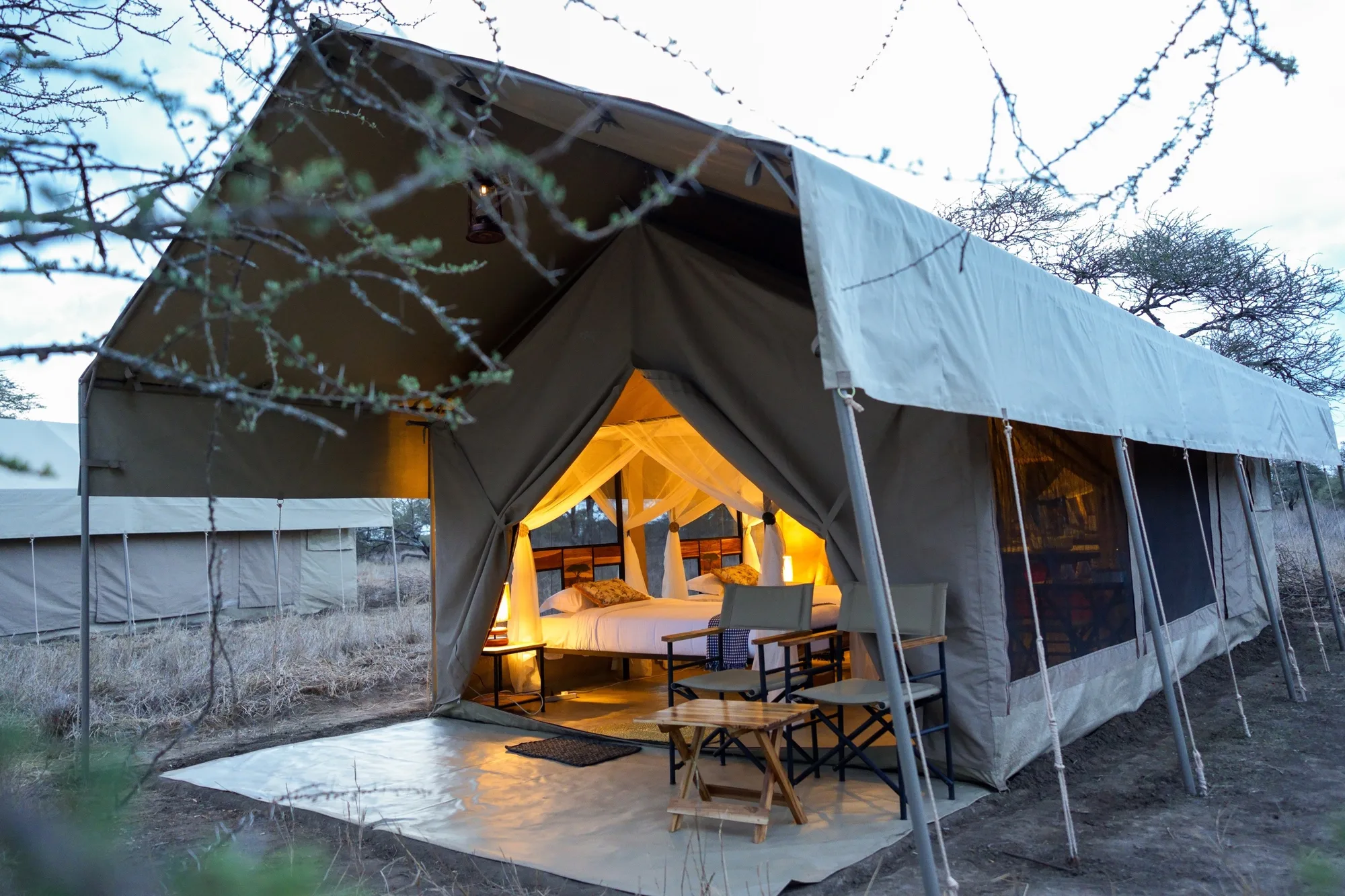
A canvas tent on the plains with a proper bed, solar lighting, a verandah and an en suite bathroom with a safari shower. Sold as a single, double, twin or triple room.
Lodges & partnersNdutu Plains
A seasonal camp on the short grass plains at Ndutu, open for the calving months from December through April.
About
Pure Migration Ndutu Camp sits on the open country at Ndutu, in the southern corner of the Ngorongoro Conservation Area where the conservation area runs into the Serengeti. This is short grass country broken by acacia woodland and two alkaline lakes, Lake Ndutu and Lake Masek. The soils here are volcanic and mineral rich, which is the reason the wildebeest walk hundreds of kilometres to drop their calves on exactly this grass rather than anywhere else.
The camp is in place for the calving months. Herds can arrive from December, and through January to March the plains around camp fill with wildebeest, zebra and gazelle. February is usually the heart of it, when the great majority of calves are born inside a narrow window of two or three weeks. That concentration pulls in the predators, and Ndutu is known for open ground hunting by lion, cheetah and spotted hyena, with leopard in the acacia along the lake edges. By late March the herds begin drifting north and the plains empty out again.
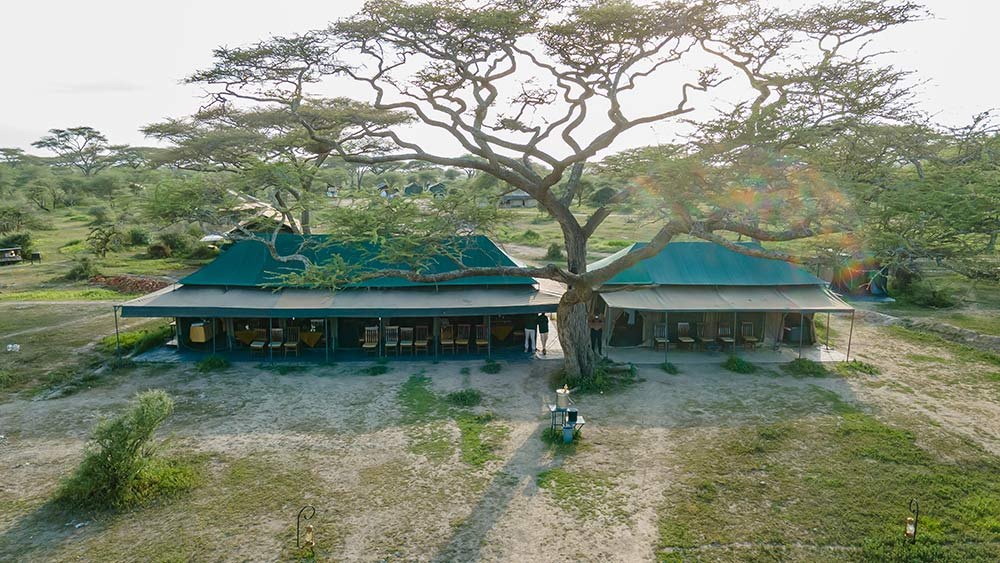
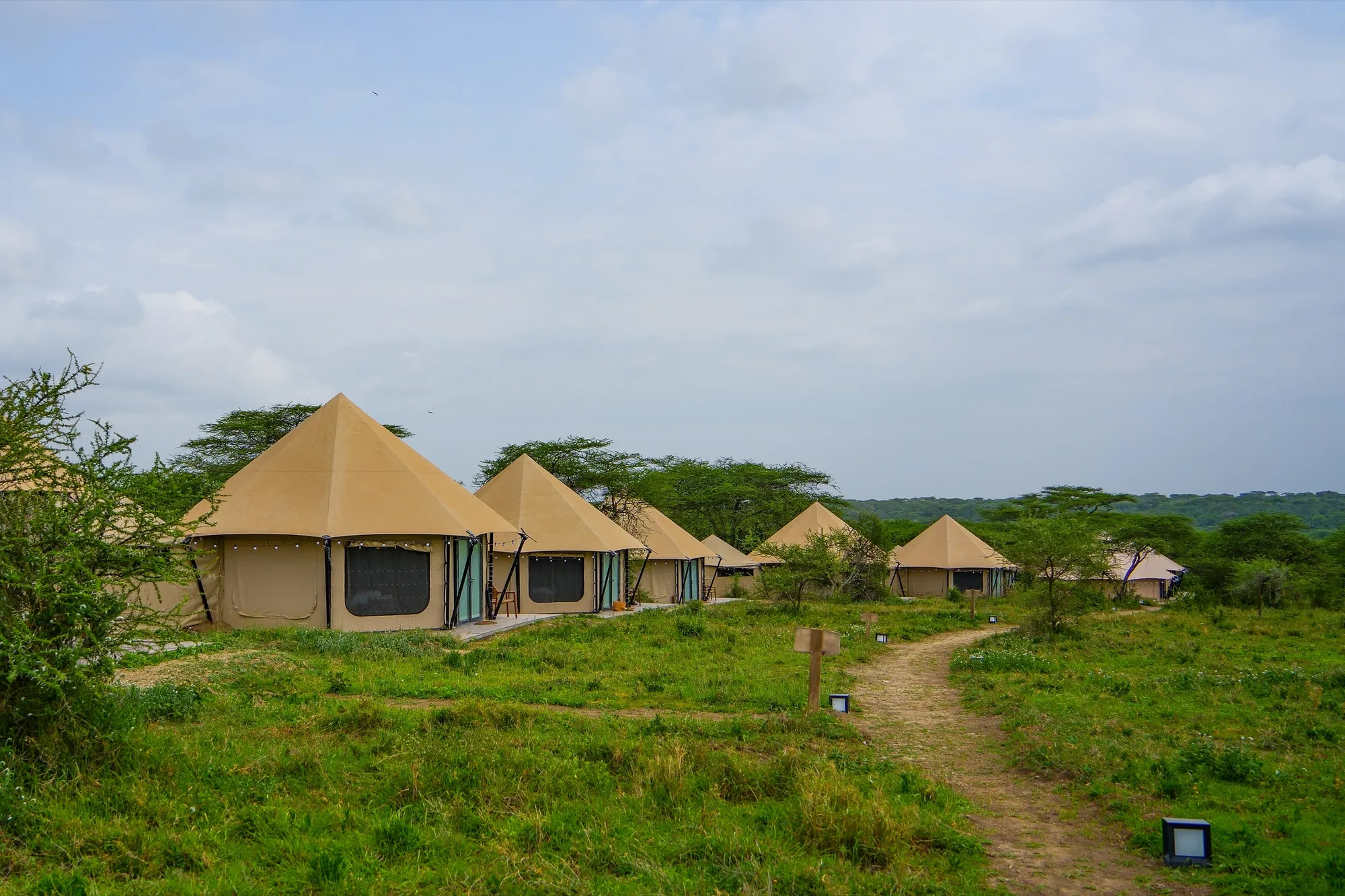
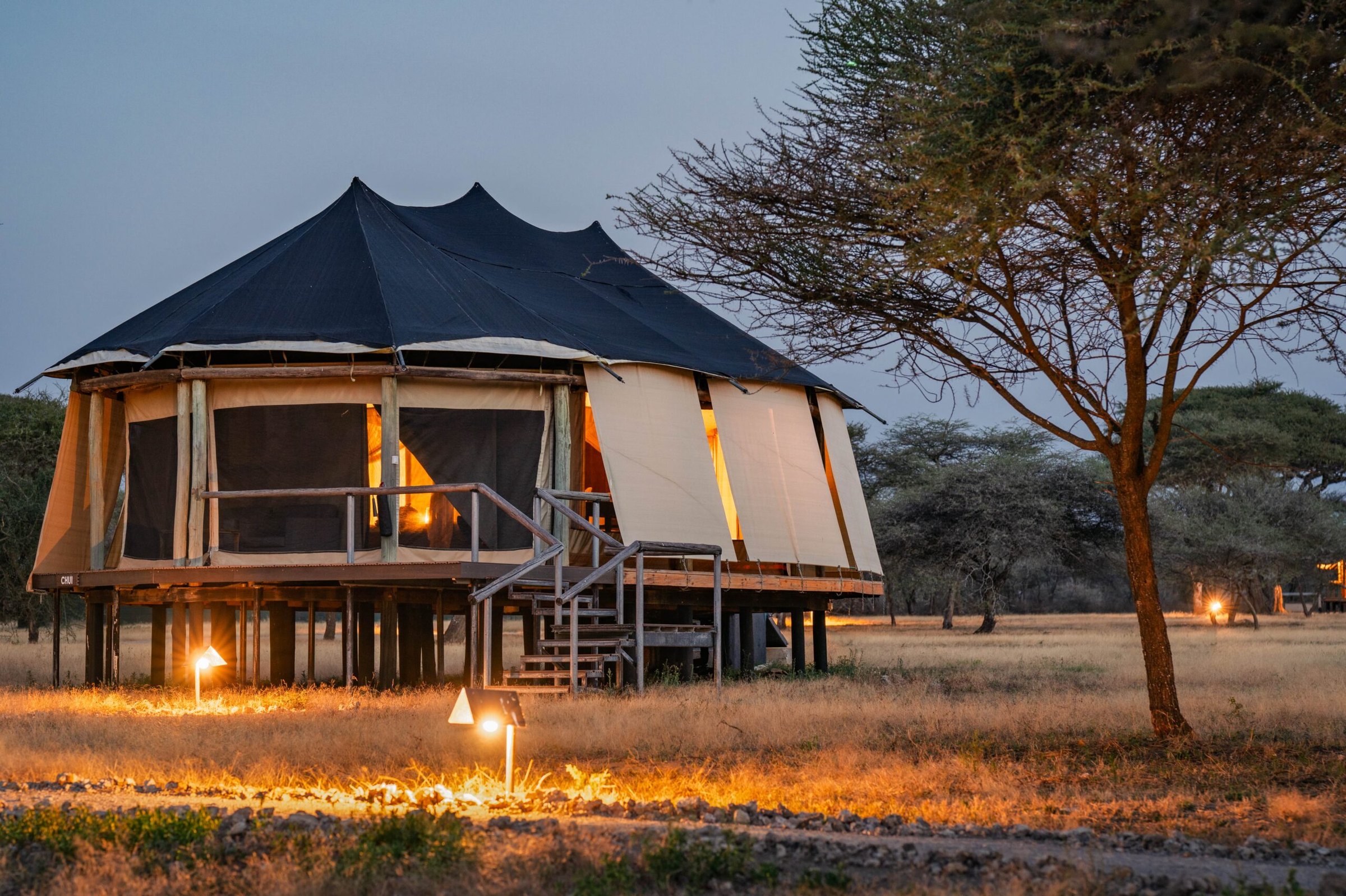
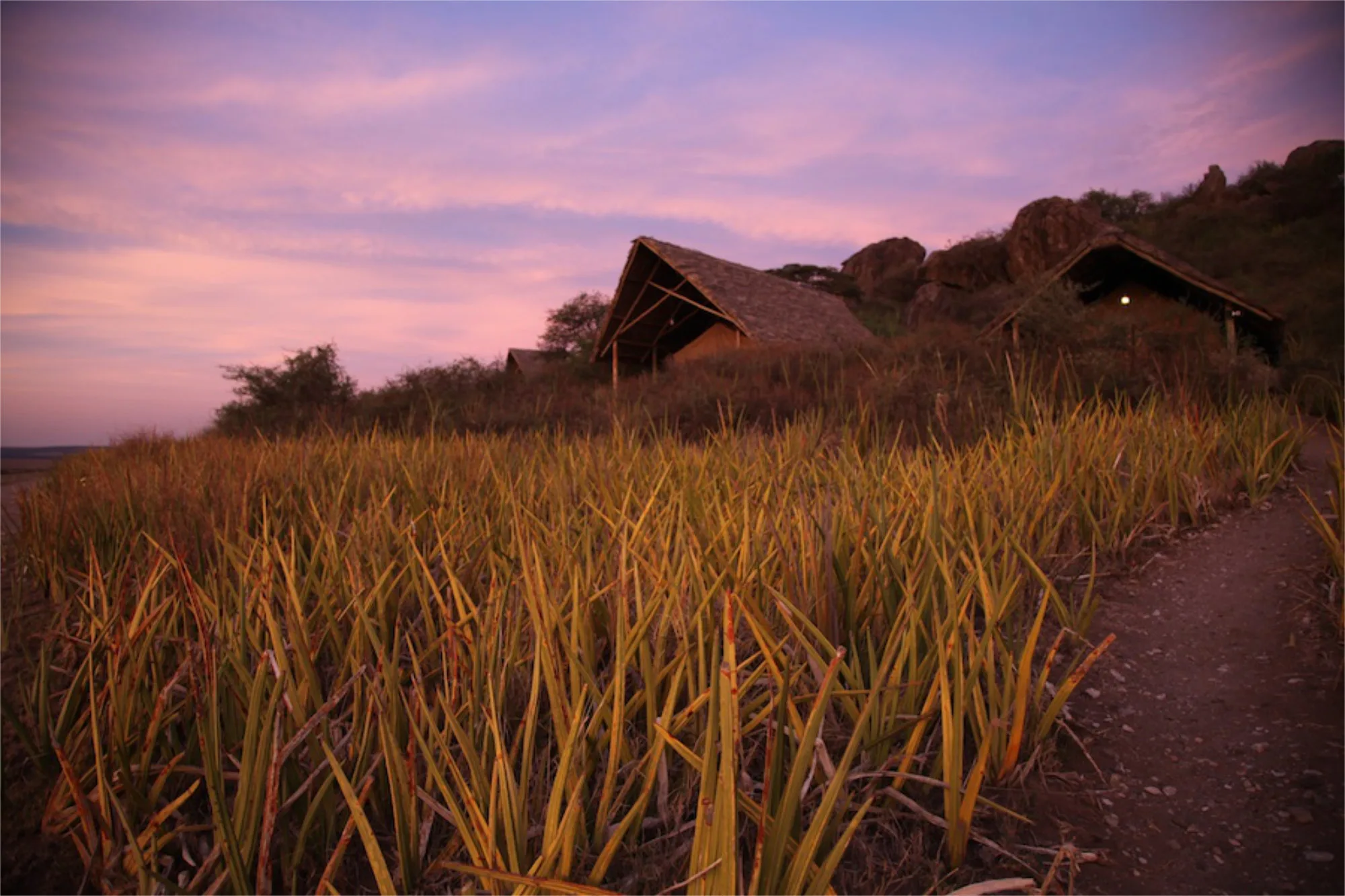
The camp itself is deliberately plain. Fourteen standard tents stand on the grass with canvas walls, proper beds, solar lighting and an en suite bathroom with a safari shower, and there is one interconnecting family tent. Meals are full board and taken in the mess tent or outside when the weather allows. There is no pool and no spa. What you get instead is a camp that stands where the animals are, for the weeks they are there.
It suits travellers who care more about being in the middle of the calving than about the fittings, and photographers who want to be on the plains at first light rather than driving two hours to reach them. Game drives, the vehicle and the conservation area fees are not in the rate, so they are itemised separately in your trip price.
Most guests reach Ndutu by road from Arusha, roughly six hours through Karatu and the Ngorongoro highlands, or fly in to the Ndutu airstrip when the seasonal service is running, which is usually from the middle of December to March.
Signature experiences
Through February the plains around camp carry thousands of wildebeest with newborn calves. Calves are on their feet within minutes of being born, and the whole business of birth, defence and predation plays out in the open.
Short grass suits cheetah, and lion and spotted hyena work the edges of the herds. Sightings here are often in clear light with nothing in the way, which is why photographers choose Ndutu in these months.
Two shallow alkaline lakes close to camp, with flamingo in good years and game coming down to the margins. The acacia woodland between them holds leopard and a long list of smaller animals.
Guided walks can be arranged in the conservation area with a ranger, where the regulations allow it. A slower way to read tracks and birds after days spent in the vehicle.
Room types
A canvas tent on the plains with a proper bed, solar lighting, a verandah and an en suite bathroom with a safari shower. Sold as a single, double, twin or triple room.
At a glance
Best time to visit
Best months: January to March.
Location & access
Ndutu Plains
About an hour of flying from Arusha Airport to the Ndutu airstrip, although the scheduled light aircraft usually calls at other strips on the way, so allow one to two hours in the air. The airstrip is a short drive from camp, usually between ten and thirty minutes depending on where the camp stands that season. Scheduled flights into Ndutu are seasonal and generally run from the middle of December to March.
Roughly seven hours in total from Kilimanjaro International Airport, and about six from Arusha. About an hour from the airport to Arusha, then roughly three hours of tarmac west through Mto wa Mbu and past Lake Manyara to Karatu, about half an hour on to the Loduare gate of the conservation area, then up over the Ngorongoro highlands and down onto the plains to Ndutu. Gates close at six in the evening and night driving is not permitted, so the day is planned to arrive in daylight.
On the map
2.988° S, 34.952° E
What's included
Frequently asked
The camp is pitched for the calving season and sells from 1 December through 30 April. It is taken down and moved north for the rest of the year, so no nights are available from May to November.
On the Ndutu plains in the southern corner of the Ngorongoro Conservation Area, at the Ndutu 7 campsite, where the conservation area runs into the Serengeti. It is not inside Serengeti National Park, so conservation area rules and fees apply.
Fourteen standard tents and one interconnecting family tent, confirmed by Pure Camps in writing on 24 October 2026. The family tent carries no published rate, so we do not sell it.
Most drive from Arusha, roughly six hours through Karatu and the Ngorongoro highlands. There is also a seasonal light aircraft service into the Ndutu airstrip from Arusha, generally from the middle of December to March, with a short transfer to camp.
January to March for the calving, with February usually the peak when the great majority of calves are born inside two or three weeks. Herds can arrive from December, and by late March they start drifting north.
Full board with three meals a day, drinking water, tea and coffee, the Tourism Development Levy and VAT. Game drives, the vehicle, transfers, drinks, laundry and the conservation area and campsite fees are not included and are itemised separately in your trip price.
No. Pure Camps sells the camp on a full board basis only, so your game drives come from the operator you choose for the trip and appear as their own line in your price.
The camp does accept children, but we are not selling child places here yet because the supplier has printed three different child age bands across its documents and we will not guess at a price. We have asked them to confirm and will open child rates as soon as they do.
Every tent is en suite with a basin and a safari shower, where hot water is brought when you ask for it. Lighting is solar and charging is in the mess tent rather than in the tents.
No. This is a mobile camp on the plains with a mess tent, a campfire area and tents. Anything beyond that would have to be packed up and moved twice a year.
Yes. Tanzania requires inbound travel insurance at 44 USD per adult, which is collected separately from your lodge rate and shows in your trip price as its own line.
Not in the conservation area. Night driving is not permitted at Ndutu, and the gates close at six in the evening.
What's nearby
Two alkaline lakes within a short drive of camp, with woodland between them that holds leopard and good birding.
The Serengeti gate east of Ndutu, and a long view over the southern plains from the kopje above it.
On the road back towards the Ngorongoro highlands, the site where the Leakey family uncovered some of the earliest human remains, with a small museum.
Up on the highlands between Ndutu and Karatu, usually taken as a separate day with its own fees.
Nearby
The Ndutu Plains guide: where to stay, when to go and how to get there.
View : Every lodge we work with in Ndutu PlainsPlan this stay
Build your bespoke Tanzania safari with our team. Real lodge rates and itemised pricing throughout.
Opens for stays from 1 Dec 2026