Lodges & partnersNdutu Plains

Siringit Migration Camp, Ndutu

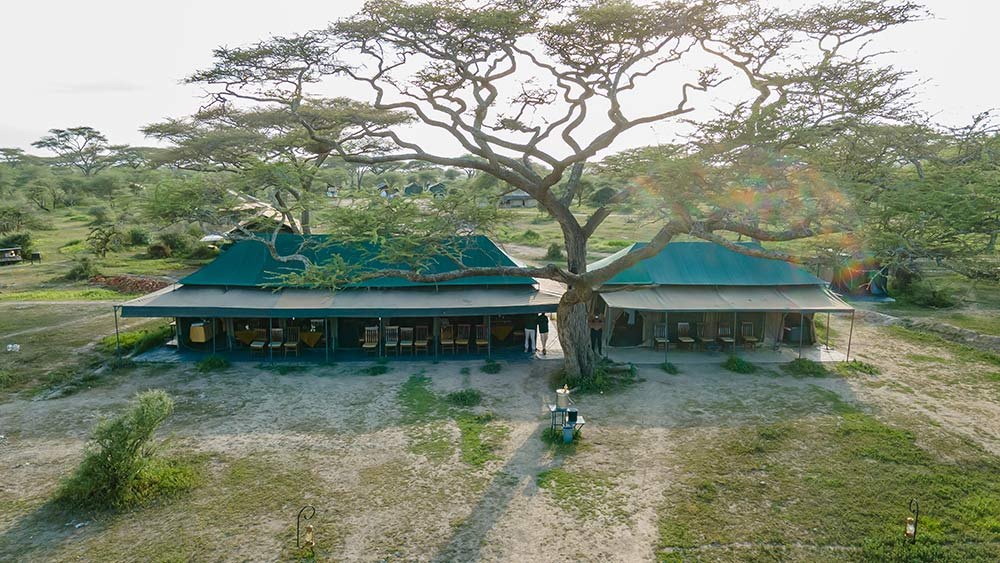
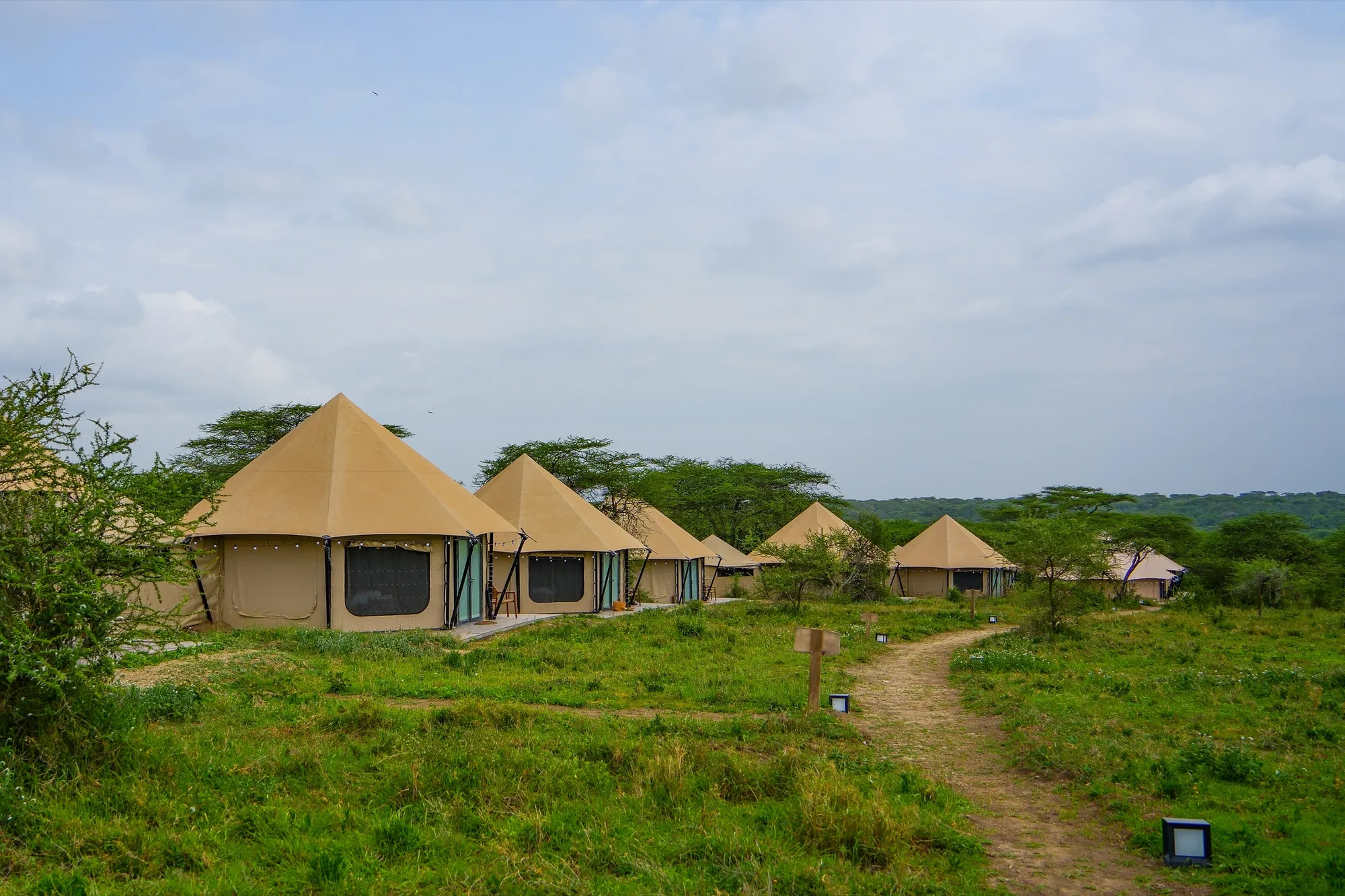
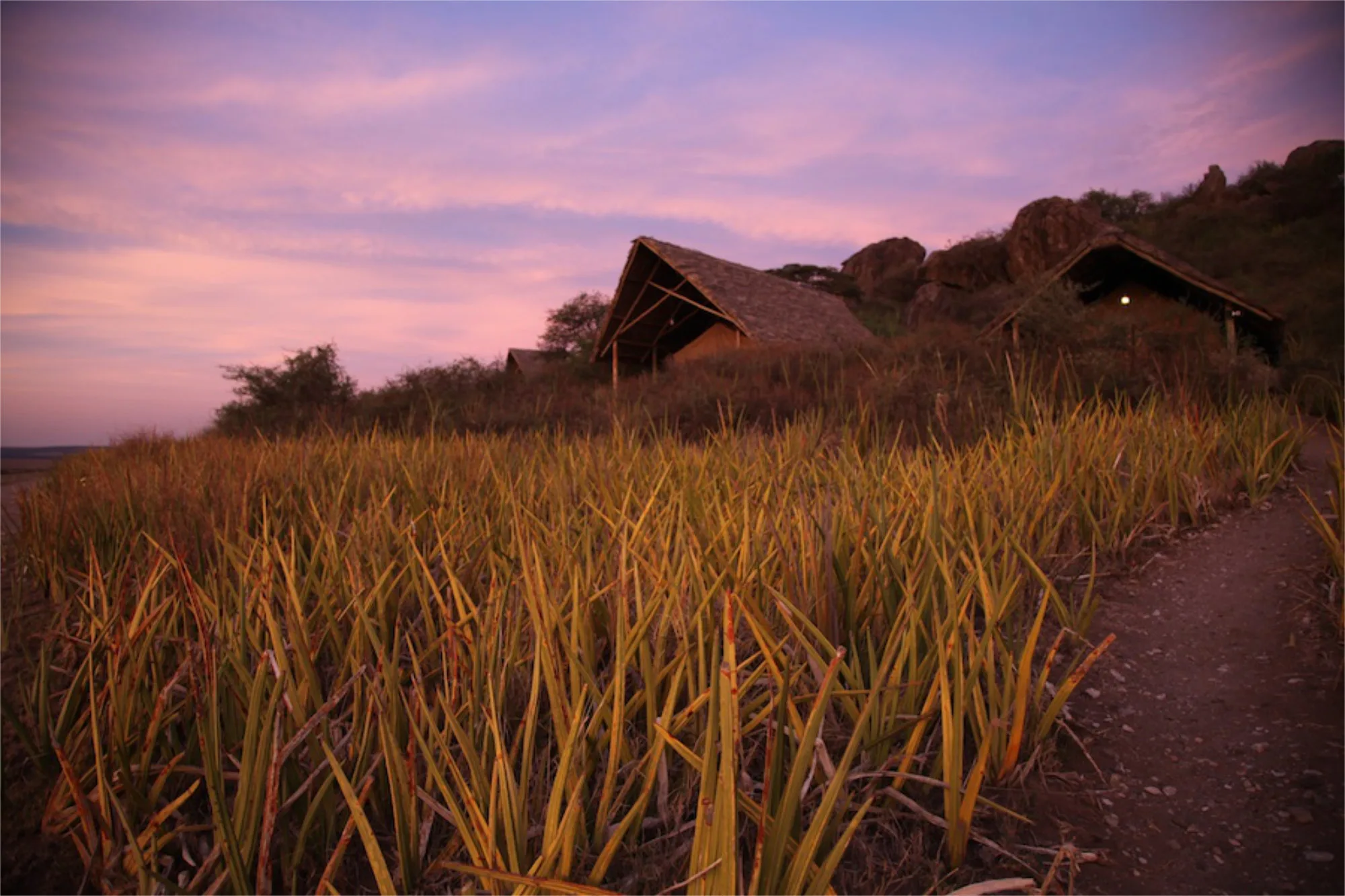
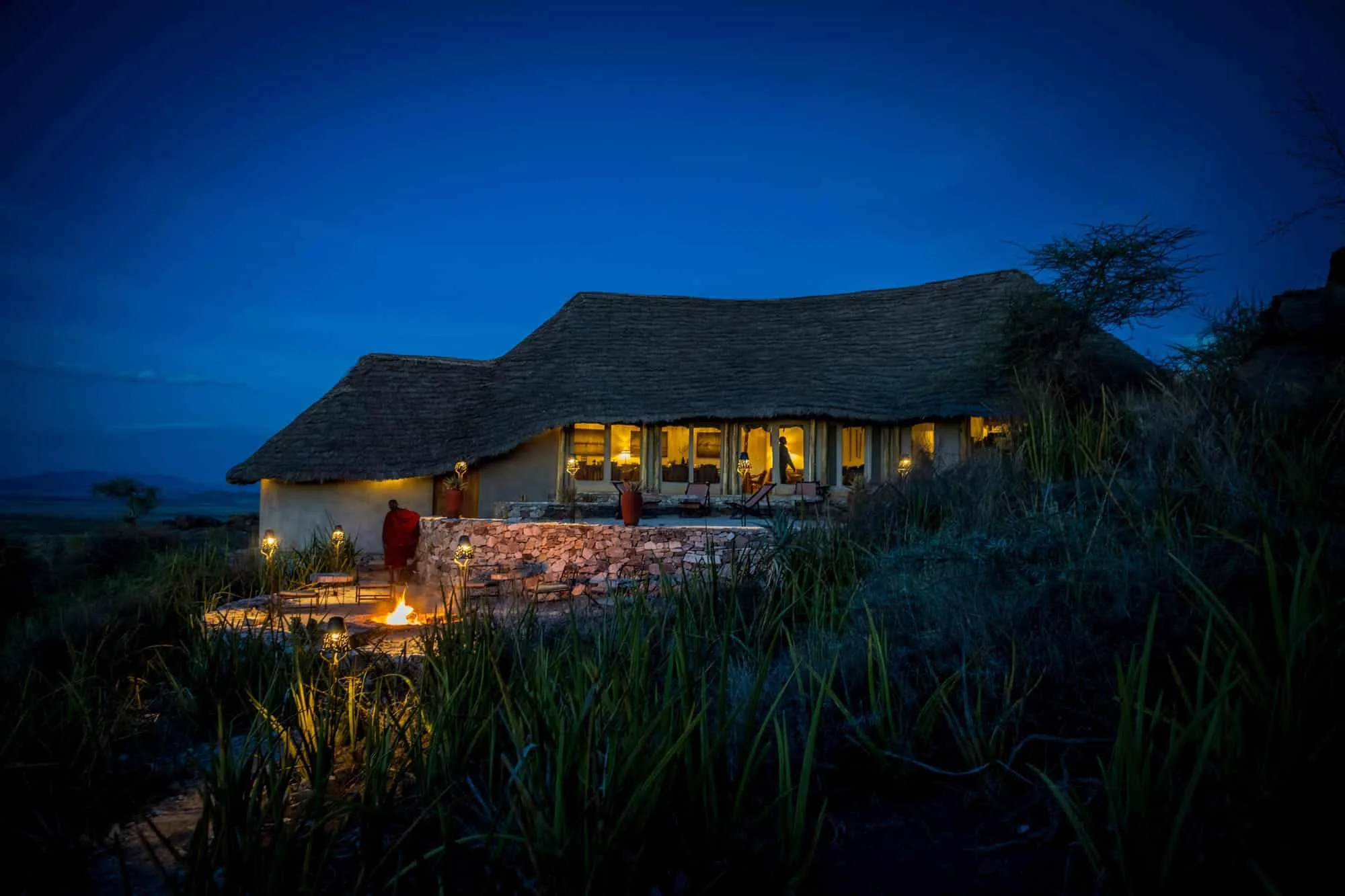
Eight canvas tents pitched on the Ndutu short grass for the calving months, five minutes from the airstrip and in the middle of the herds.

01 / 06
Tier
Luxury
Location
Ndutu Plains

About

About Siringit Migration Camp, Ndutu.

Siringit Migration Camp is a mobile camp, which means it is taken down and rebuilt twice a year to stay with the wildebeest. From the first of January to the end of March, and again over the second half of December, it stands on the short grass plains around Ndutu in the far south of the Serengeti ecosystem, on the edge of the Ngorongoro Conservation Area. This is open country with very little in it, which is the point. The herds spread across these plains in their tens of thousands and the camp sits inside that rather than looking at it from a distance.

Ndutu in these months is the calving ground. Something close to half a million wildebeest calves are born on the short grass in a few weeks around February, and the plains fill with everything that follows newborn animals. Lion work the margins, cheetah hunt the open ground where they can see and run, and hyena are never far. It is the one time of year when the Serengeti gives you concentrated predator activity in open daylight on flat ground, which is why photographers book these weeks a year ahead.

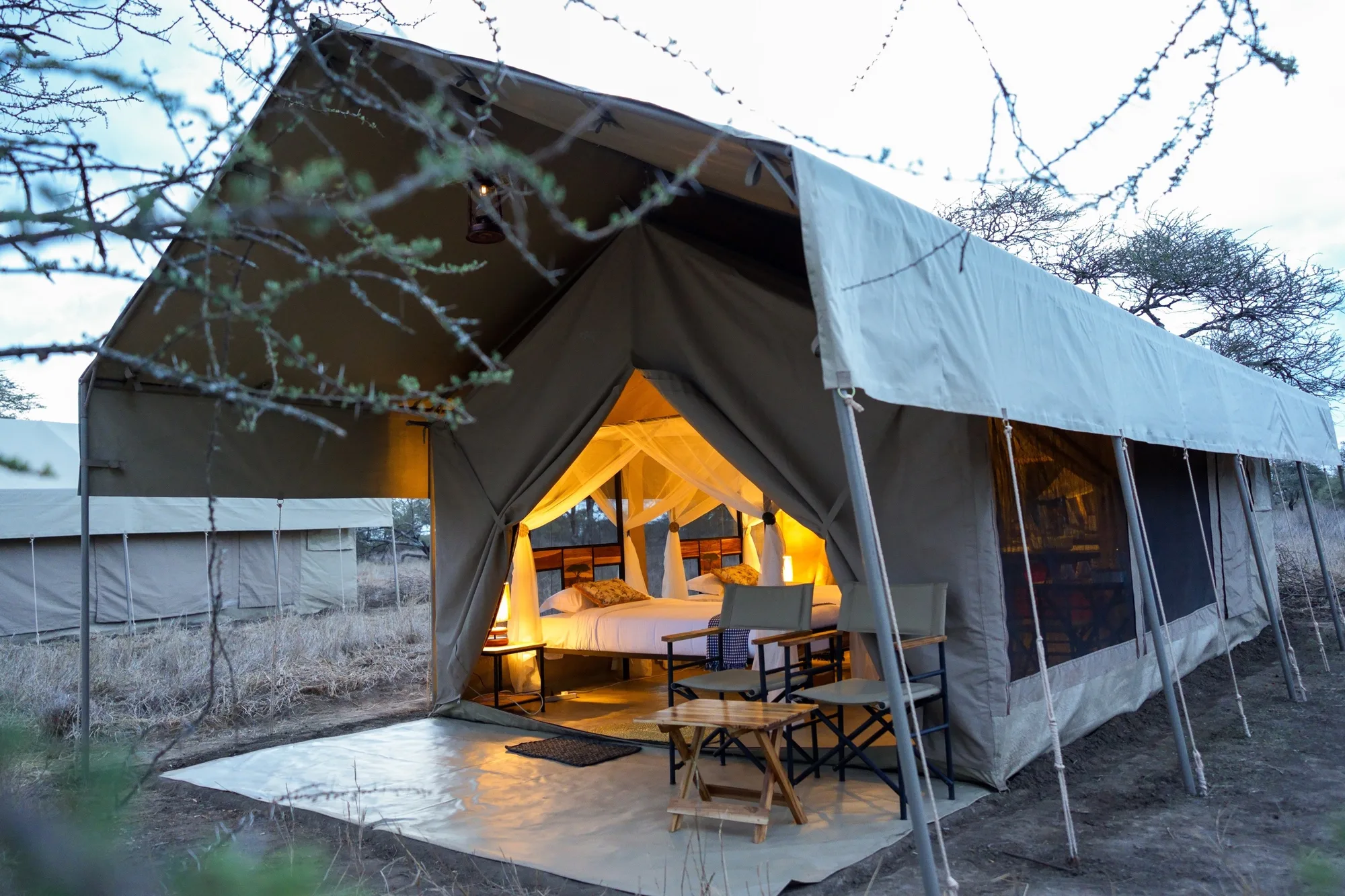
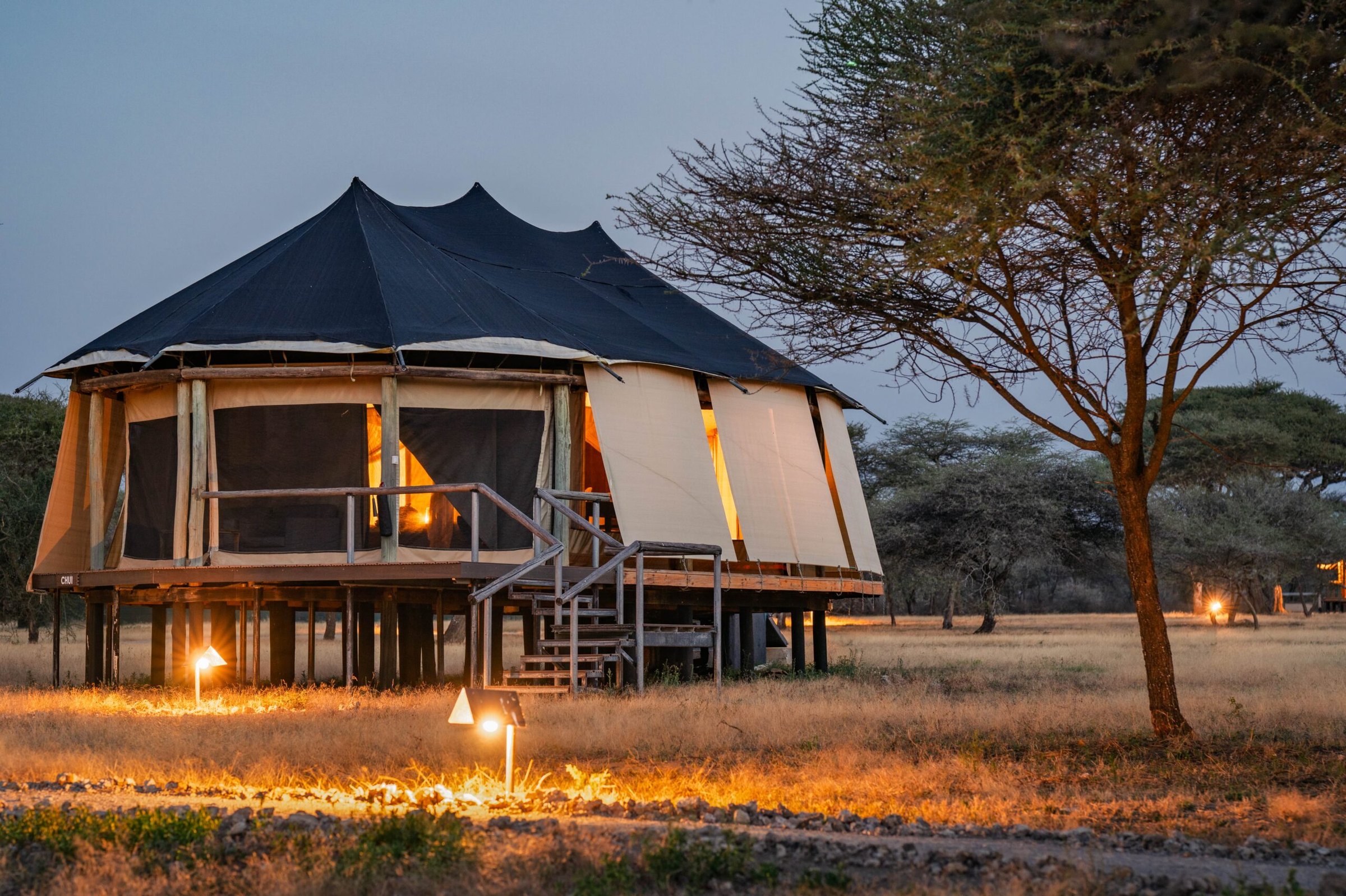
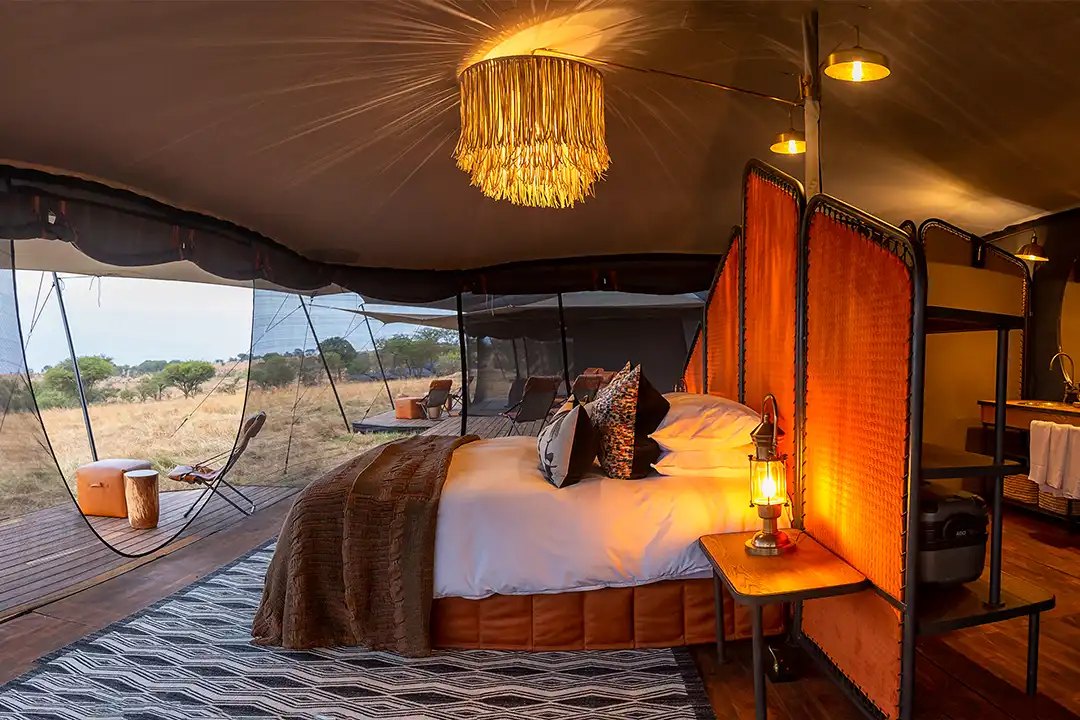
There are eight tents at the Ndutu site. They are hand stitched in Tanzania, raised on wooden platforms, and furnished with brass lanterns, folding campaign furniture and deep fabrics, with a sitting area inside and a private veranda outside. The bathroom is en suite, with a double vanity, hot water on demand and a proper flush toilet. Power and hot water are solar. There is a dining tent, a lounge tent with books and board games, and a fire outside. Two tents interlink to make a family unit. The kitchen works from menus built for the collection by a chef with a Michelin background, and lunch is as often as not laid out under a tree somewhere on the plains.

It suits travellers who want the calving season rather than the river crossings, photographers, and couples who would rather be in a small camp than a permanent lodge. It suits families through the interlinked tents. It is less suited to anyone wanting a pool, a spa or a long list of facilities, because a camp that moves twice a year carries none of those.

Almost everyone flies in. Ndutu has its own airstrip and the camp is about five minutes from it, so the day you arrive is a game viewing day rather than a travelling day. The road from Arusha takes most of a day through Karatu, the Ngorongoro Conservation Area and Olduvai.

Signature experiences

Why guests choose it.

  1. The calving plains in February

    Mornings out on the short grass while the herds are dropping calves. The predator activity that follows is the reason to be at Ndutu in these weeks rather than anywhere else in the Serengeti.

  2. Lunch under a tree on the plains

    The camp packs a full table out into the open rather than sending a lunch box. It is a long middle of the day in the shade with the herds still in view.

  3. A camp that moves with the animals

    Everything here folds and travels, from the furniture to the tents, so the camp can stand wherever the herds are that season rather than where a building happens to be.

Room types

Where you will sleep.

Luxury Tented Suite

A hand stitched canvas tent on a raised platform, with a sitting area, a private veranda over the plains and an en suite bathroom with a double vanity, hot water on demand and a flush toilet. Made up as a double or a twin, and the camp publishes its own rate for one guest in a tent. Two tents interlink to make a family unit.

At a glance

The essentials, in brief.

Amenities

  • Dining Tent
  • Lounge tent with books and board games
  • Outdoor Fireplace
  • En suite bathroom in every tent
  • Double vanity and hot water on demand
  • Flush Toilet
  • Private Veranda
  • Solar power and solar heated water
  • Wireless Internet In Camp
  • Laundry Service
  • Room Service
  • Doctor On Call
  • Security on site through the night
  • Special Diets On Request

Best for

  • Great Migration
  • Calving Season
  • Photography
  • Big Cats
  • Couples
  • Families

Wildlife and nature

  • Wildebeest calving on the short grass plains, typically from late January through February
  • Lion prides working the edges of the herds
  • Cheetah hunting the open ground, which suits them better here than almost anywhere
  • Hyena, jackal and vultures following the calving
  • Zebra and Thomson gazelle moving with the wildebeest
  • Serval in the longer grass around the marshes

Best time to visit

When to go.

  • January: best
  • February: best
  • March: best
  • April: not a best month
  • May: not a best month
  • June: not a best month
  • July: not a best month
  • August: not a best month
  • September: not a best month
  • October: not a best month
  • November: not a best month
  • December: best
Best months

Best months: December to March.

Location & access

Getting there.

Location

Ndutu Plains

Arriving by air

About 2 hours 15 minutes in total. Roughly 45 minutes by road from Kilimanjaro International Airport to Arusha Airport, about 50 minutes in a light aircraft to Ndutu airstrip, then about 5 minutes by road to camp. Bush flights carry a soft bag limit of around 15 kg.

By road

About 7 to 8 hours in total from Kilimanjaro International Airport. Roughly 1 hour from the airport to Arusha, about 2 hours on to Mto wa Mbu, about 1 hour 45 minutes up through Karatu to the Lodoare gate of the Ngorongoro Conservation Area, then around 2 hours 30 minutes across the conservation area past Olduvai to Ndutu.

What's included

What the rate covers.

Included

  • Accommodation in a luxury tented suite
  • Full board, which is breakfast, lunch and dinner
  • Laundry Service
  • Wireless Internet
  • Tourism Development Levy of 1 percent
  • VAT

Not included

  • Camping fees, paid at the point of entry into the park
  • Park entry fees, paid at the point of entry into the park
  • Game drives and the vehicle that runs them
  • Flights, Visas And Gratuities
  • Items of a personal nature and anything charged directly at the camp
  • Compulsory Tanzania inbound travel insurance, 44 USD per adult

Frequently asked

Questions, answered.

When is the camp at Ndutu?

The Ndutu site stands from the first of January to the end of March, and again from the fifteenth to the thirty first of December. For the rest of the year the camp is either packed down or standing at Kogatende in the north.

How many tents does the camp have at Ndutu?

Eight, all to the same standard and all en suite. Two of them interlink to make a family unit.

How do guests reach the camp?

Almost everyone flies to Ndutu airstrip, which is about five minutes from camp. By road from Arusha it is six to seven hours through Karatu, the Ngorongoro Conservation Area and Olduvai, so plan it as a travelling day.

What is the calving season and when does it happen?

Wildebeest give birth on the short grass plains around Ndutu over a few weeks in the first part of the year, with the peak usually in February. Predators follow the herds closely, so this is one of the strongest times of year for big cat sightings in the open.

Are families with children welcome?

Yes. Children of all ages are welcome under their parents supervision. Children from six to seventeen pay half the adult rate when they share a tent with an adult, and children under six sharing with adults are accommodated in a cot at no charge. Two tents interlink for a family.

What is included in the rate?

Full board, which is breakfast, lunch and dinner, along with laundry, wireless internet, the one percent Tourism Development Levy and VAT. Camping fees and park entry fees are paid at the gate, and game drives and transport are itemised separately in your trip price.

Is there power and a connection at camp?

Power and hot water are solar, and there is wireless internet in camp. A mobile camp on open plains is not the place to rely on a connection, so tell anyone at home that you may be hard to reach.

What is the camp like at night?

Unfenced, with security on site through the night and a member of staff to walk you between your tent and the dining tent after dark. Game moves through camp, and in calving season the sound of the herds carries all night.

Can three adults share a tent?

No. A tent takes two adults, and one child may share with them. The camp prints no rate for a third adult, so we do not sell that shape rather than guess at a price.

How does this compare with the Kogatende site?

It is the same camp in a different place. Ndutu is the calving season in the south from January to March. Kogatende is the Mara River crossing season in the north from June to October. Each site has its own rate.
What's nearby

Worth the short trip.

  • Lake Ndutu and Lake Masek

    Shallow soda lakes a short drive from camp. Game concentrates along the shores and the woodland between them holds leopard.

  • Olduvai Gorge

    On the drive in from Ngorongoro. The site where the Leakey family uncovered some of the earliest human remains, with a small museum.

  • Balloon flight over the plains

    Balloons fly from the Ndutu area in season, drifting low over the calving grounds at first light.

Nearby

Other places to stay nearby.

Plan this stay

Add Siringit Migration Camp at Ndutu to your trip

Build your bespoke Tanzania safari with our team. Real lodge rates and itemised pricing throughout.

Opens for stays from 1 Jan 2027