Single Tent
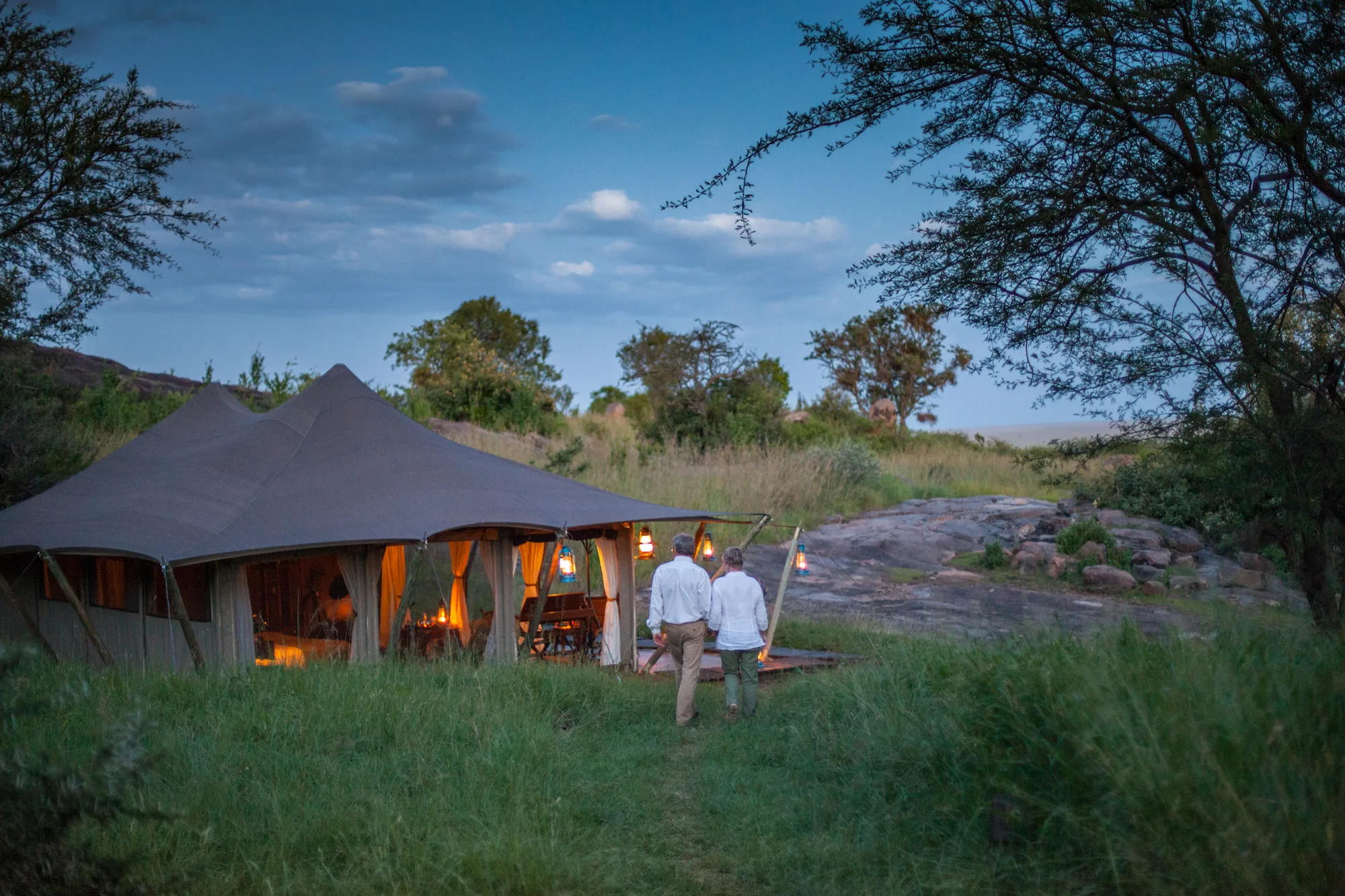
Ensuite tent for one on the river line, with hardwood floors, a private veranda and its own firepit.
Lodges & partnersSeronera Central Serengeti
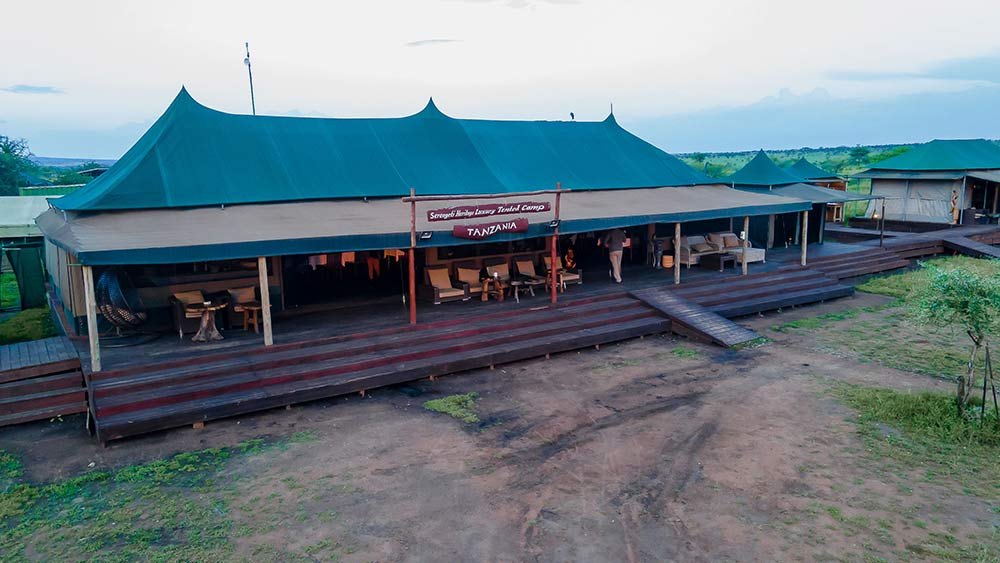
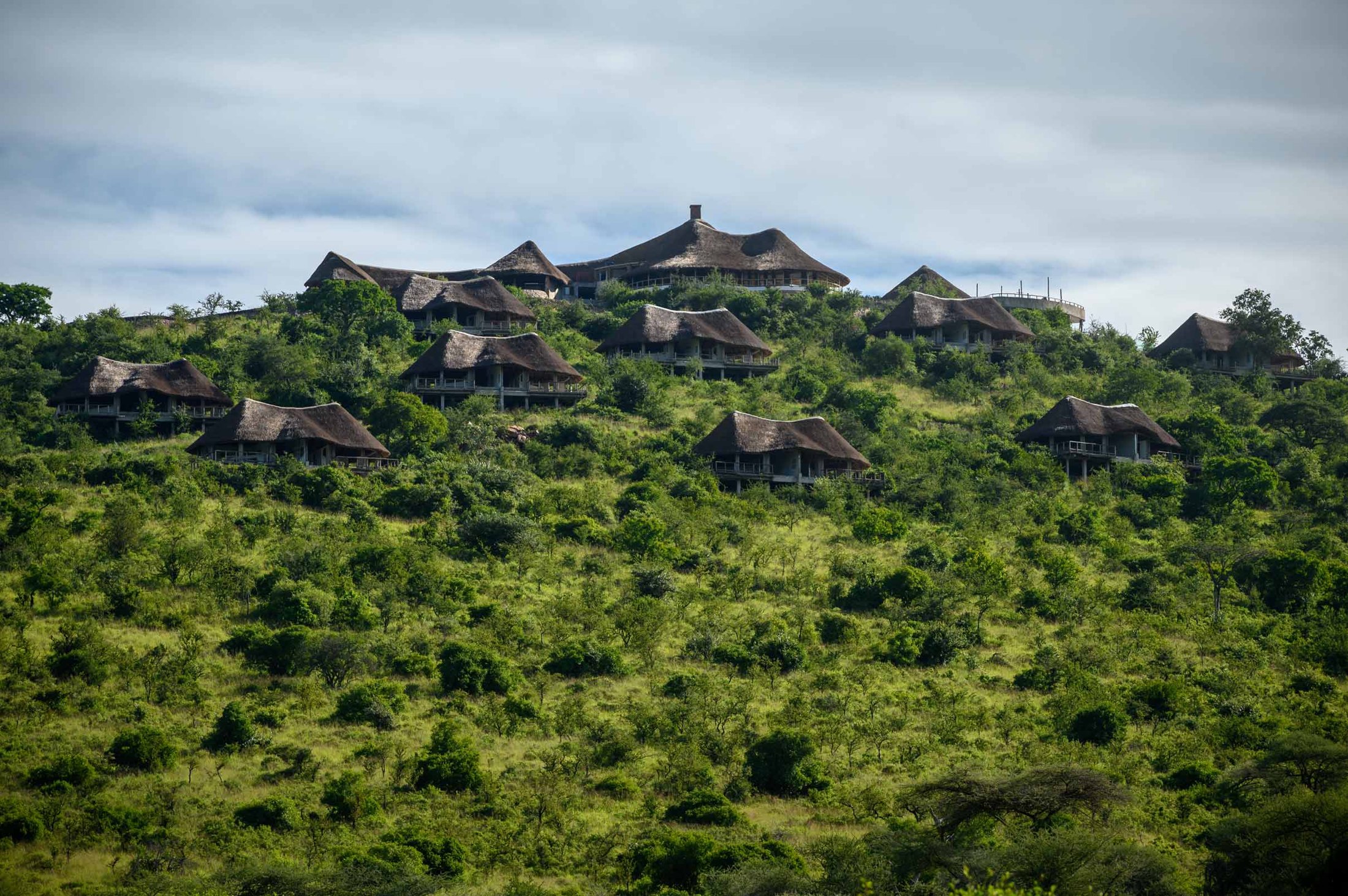
Sixteen tented suites on the eastern edge of the central Serengeti, set back from the Seronera road traffic and anchored on big cat country.
About
Sametu Camp sits in a quiet corner on the eastern edge of the central Serengeti, alongside the Ngarenanyuki River and within sight of the Sametu and Barafu kopjes. Karibu put it here deliberately, away from the roads that run through Seronera, so the vehicle traffic which gathers at the main sightings is something you drive to rather than something you wake up in. What you get instead is space. Open savannah in every direction, granite outcrops catching the first light, and a river the plains game keeps coming back to.
The water is the reason the wildlife stays. It draws zebra, wildebeest, waterbuck and impala through the year, and that steady prey base holds the predators in place. Karibu describes resident lion prides, leopards working the acacias along the river and cheetah hunting the open grass and the kopjes, and it is the big cats that most guests come home talking about. The migration is a visitor here rather than a resident: the herds move north through the central Serengeti in May and June, and swing back south towards the calving grounds in November and December. Outside those windows the game viewing does not depend on them, which is the whole point of the place.
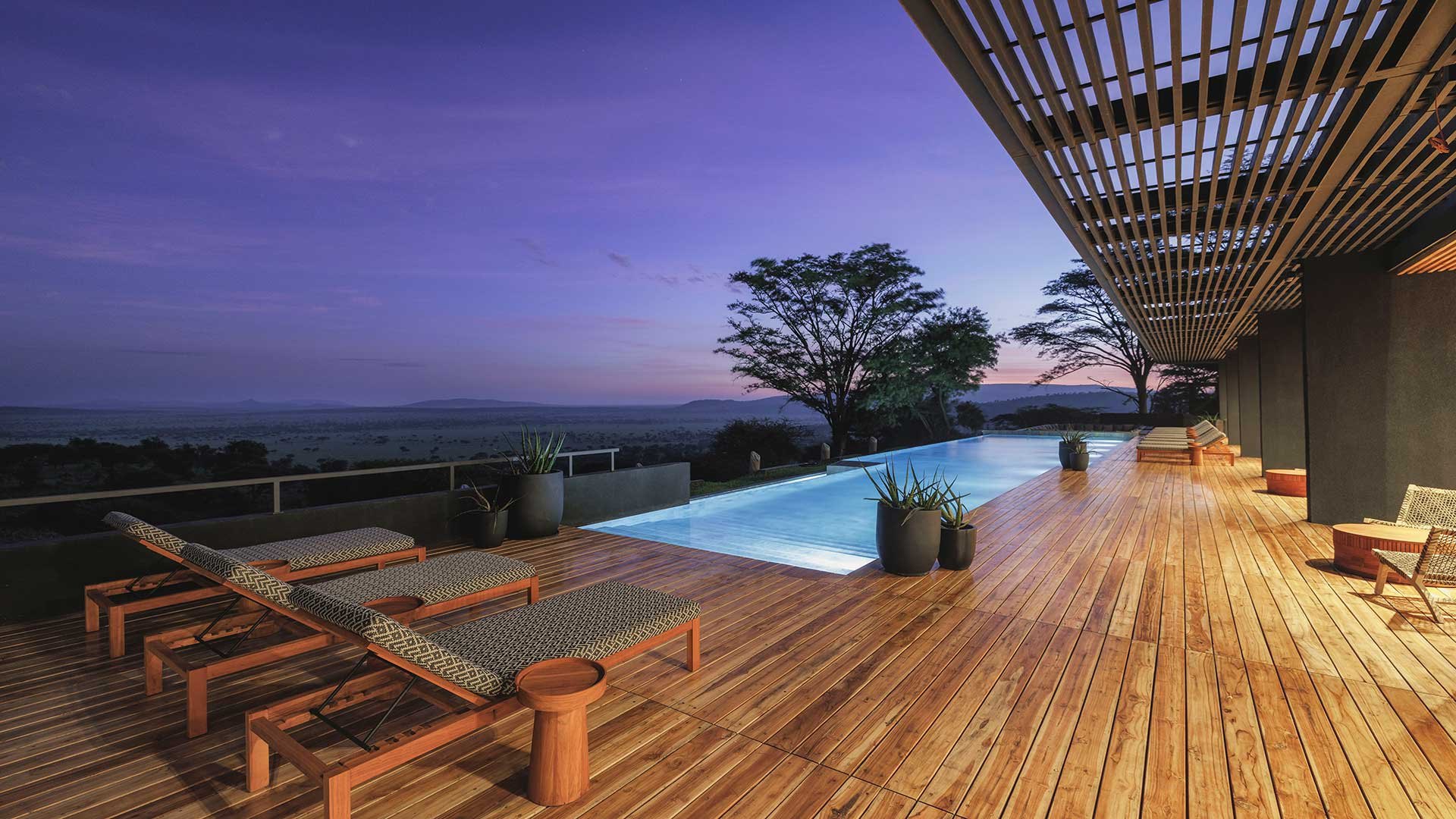
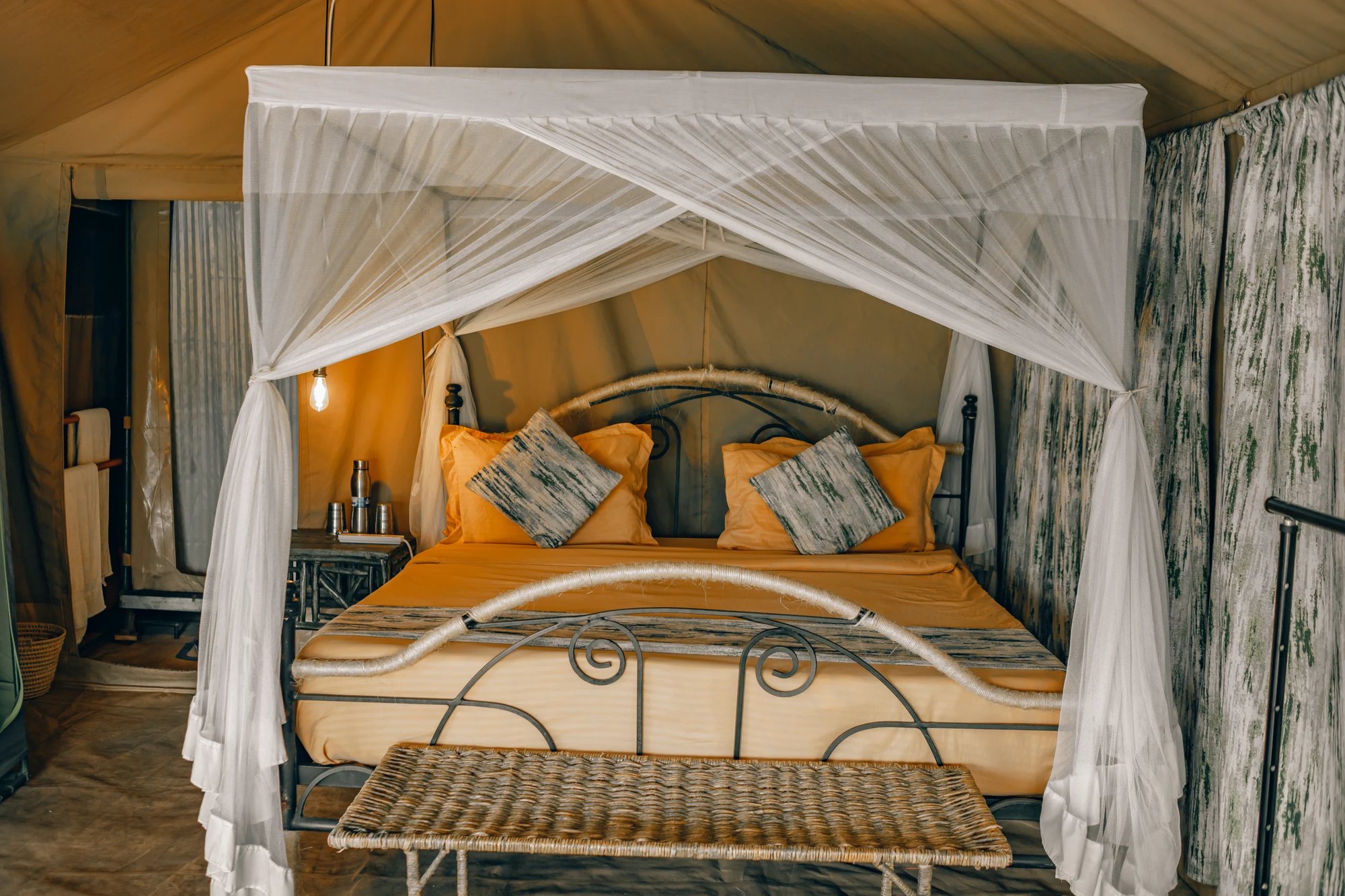
Sixteen tented suites are laid out along the line of the river, eleven twin or double, three executive honeymoon suites and two family suites that interconnect through a shared lounge. Each has a proper ensuite bathroom with a flush toilet and a hot shower, hardwood floors, a private veranda and its own firepit. Power is solar and runs around the clock at 220 volts, with charging points in the suites as well as the main areas, and the satellite connection reaches the tents and not only the public spaces. There is a swimming pool beside the main pavilion. Meals are full board and change through the week, built around Tanzanian and international cooking, with bush breakfasts, lunches and dinners set out along the river on request.
It suits guests who want the Serengeti to feel like the Serengeti. Families are welcome at any age and the two interconnecting suites take four or five between them. Photographers do well because the cats are resident and the light on the kopjes rewards the early start. First time visitors get the reliability of central Serengeti game viewing without the queues that come with staying on the Seronera road. Three nights is the sensible minimum and most people wish they had booked four.
Getting here is a short flight and a long game drive. From Kilimanjaro International it is about an hour by road to Arusha Airport, about an hour by light aircraft to Seronera airstrip, then forty five minutes across the plains to camp. By road from Arusha the operator allows six to seven hours over roughly three hundred kilometres, through the Ngorongoro highlands and out across the southern plains, which most people split with a night on the way.
Signature experiences
The river keeps zebra, wildebeest, waterbuck and impala in the area all year and the predators stay with them. Karibu names resident lion prides, leopards in the riverine acacias and cheetah working the open grass and the kopjes.
A dawn flight over the plains, landing to a bush breakfast set out on the grass. Booked through the camp as an extra and worth fixing to a date early, because the flights fill.
Breakfast, lunch or dinner laid out in a private spot along the river, arranged by the camp on request.
A visit to a nearby boma with a traditional dance demonstration, a look at how the village runs day to day, and jewellery made on site.
The granite outcrops the camp takes its name from. Lions use them as lookouts and the light on them at either end of the day is why photographers book the early start.
Gallery
Room types
Ensuite tent for one on the river line, with hardwood floors, a private veranda and its own firepit.
Ensuite tent for two, twin or double bedded, with hardwood floors, a private veranda looking over the plains and a firepit outside the door.
The same canvas and hardwood as the doubles with a third bed, suited to a family of three or friends travelling together.
Two full suites joined by a shared central lounge, the largest accommodation in camp at around 147 square metres. Sleeps four, five on request.
At a glance
Best time to visit
Best months: January to February and June to October.
Location & access
Seronera Central Serengeti
Approximately 3 hours in total: about 1 hour JRO to Arusha Airport (ARK) by road, then about 1 hour by light aircraft to Seronera airstrip, then a 45 minute game drive transfer to camp. Karibu's vehicle meets guests at the airstrip. Light aircraft baggage is limited to 15 kg per person in soft bags.
Approximately 7 to 8 hours in total: about 1 hour JRO to Arusha by road, then 6 to 7 hours Arusha to camp over roughly 300 km through the Ngorongoro highlands and the southern Serengeti plains. Most guests split this with a night on the way.
On the map
2.476° S, 34.993° E
What's included
Frequently asked
Sixteen. Karibu publishes them as eleven twin or double suites, three executive honeymoon suites and two family suites that interconnect through a shared lounge. The two family suites are the largest in camp at around 147 square metres. The operator does not publish a maximum guest number and we do not estimate one.
All year. Karibu publishes no closed months for Sametu and the contract we hold carries none either. It is a permanent camp rather than a seasonal mobile one, so it stays in place when the herds move on.
On the eastern edge of the central Serengeti, beside the Ngarenanyuki River and close to the Sametu and Barafu kopjes. Karibu chose the spot to sit away from the vehicle traffic that builds on the main Seronera roads. Seronera airstrip is a forty five minute game drive away.
Most people fly. About an hour by road from Kilimanjaro International to Arusha Airport, then about an hour by light aircraft to Seronera airstrip, then a forty five minute game drive to camp which most guests treat as the first drive of the trip. By road from Arusha the operator allows six to seven hours over roughly three hundred kilometres through the Ngorongoro highlands. Light aircraft baggage is capped at fifteen kilogrammes per person in soft bags.
Yes, at any age. Karibu asks that children under fifteen share a suite with an adult, so our booking engine will not price a child into a room of their own here. The two family suites interconnect through a shared lounge and take four guests, five on request. Cots and high chairs can be arranged if you ask in advance.
Full board, three meals a day. soft drinks, meaning tea, coffee, water, juices and soft drinks. Daily laundry. The Tourism Development Levy. Park fees, concession fees, the game drive vehicle and driver guide, bush flights, medical evacuation cover, travel insurance, tips and personal items are all charged separately.
June to October is the driest stretch and the easiest for tracking. January and February are green, quiet and still strong for resident game. Karibu puts the long rains from March to May and the short rains from October to December. If the migration is what you want from this part of the park, the herds move north through the central Serengeti in May and June and swing back south in November and December.
Karibu states complimentary satellite Wi Fi in the public areas and in the guest suites. Mobile coverage at this particular camp is not something the operator publishes, so plan on the camp connection rather than your own phone and tell people at home you may be slow to reply.
Solar, running around the clock at 220 volts, with charging points in the suites as well as the main pavilion. Karibu describes them as universal ports but does not publish a socket type, so bring an adaptor. There is no fridge or mini fridge in the suites. If you travel with medication that needs to stay cold the camp kitchen will keep it for you.
Every Karibu camp has staff trained in first aid and stays in constant two way radio contact with camp management, and every suite has a two way radio or landline. Serious cases are flown out by air ambulance through the Flying Doctors, AMREF, to a hospital in Arusha or Nairobi. Karibu asks every guest to travel with insurance that covers emergency evacuation. There is no clinic on site and the operator does not name a nearest hospital.
It is unfenced by design, so wildlife moves through. At night guests are taken between their suite and the main areas by golf cart with an askari, the paths and the perimeter are patrolled around the clock, and there is a safety briefing when you arrive. Do not walk to dinner on your own.
No to both. Serengeti National Park does not permit driving after dark, and Karibu offers night drives only at its Tarangire property where the park rules allow them. Walking safaris are not among the activities Karibu lists here. What is on offer is game drives in open vehicles, a sunrise balloon flight over the plains, bush breakfasts, lunches and dinners set out along the river, a Maasai village visit, and bird watching with more than five hundred species recorded in the central Serengeti.
Yes. From 1 October 2026 visitors entering mainland Tanzania must hold the government inbound travel insurance, 44 USD per adult and valid for up to 92 days, covering emergency medical care, evacuation, repatriation and lost luggage. Children aged 3 to 17 pay half and infants under 3 are free. It is bought online before you fly or on arrival, and residents of Tanzania and of East African and SADC countries are exempt. If you land in Zanzibar first, the Zanzibar policy covers you instead. It is paid by you directly and is not part of your trip price.
What's nearby
The main valley of the central Serengeti, taken as a full day drive from camp. Dense leopard and lion country, and the reason most people come to this part of the park.
The outcrops beside camp. Rock hyrax on the stone, lions taking the high ground, and long views over the plains on every side.
The site where the Leakeys uncovered some of the earliest human fossils. Karibu lists it among the places of interest for this camp and it is usually taken on the way in or out through the Ngorongoro highlands.
The dawn flights over the central plains lift from a site near the camp and land to a full breakfast served on the grass.
Nearby
The Seronera Central Serengeti guide: where to stay, when to go and how to get there.
View : Every lodge we work with in Seronera Central Serengeti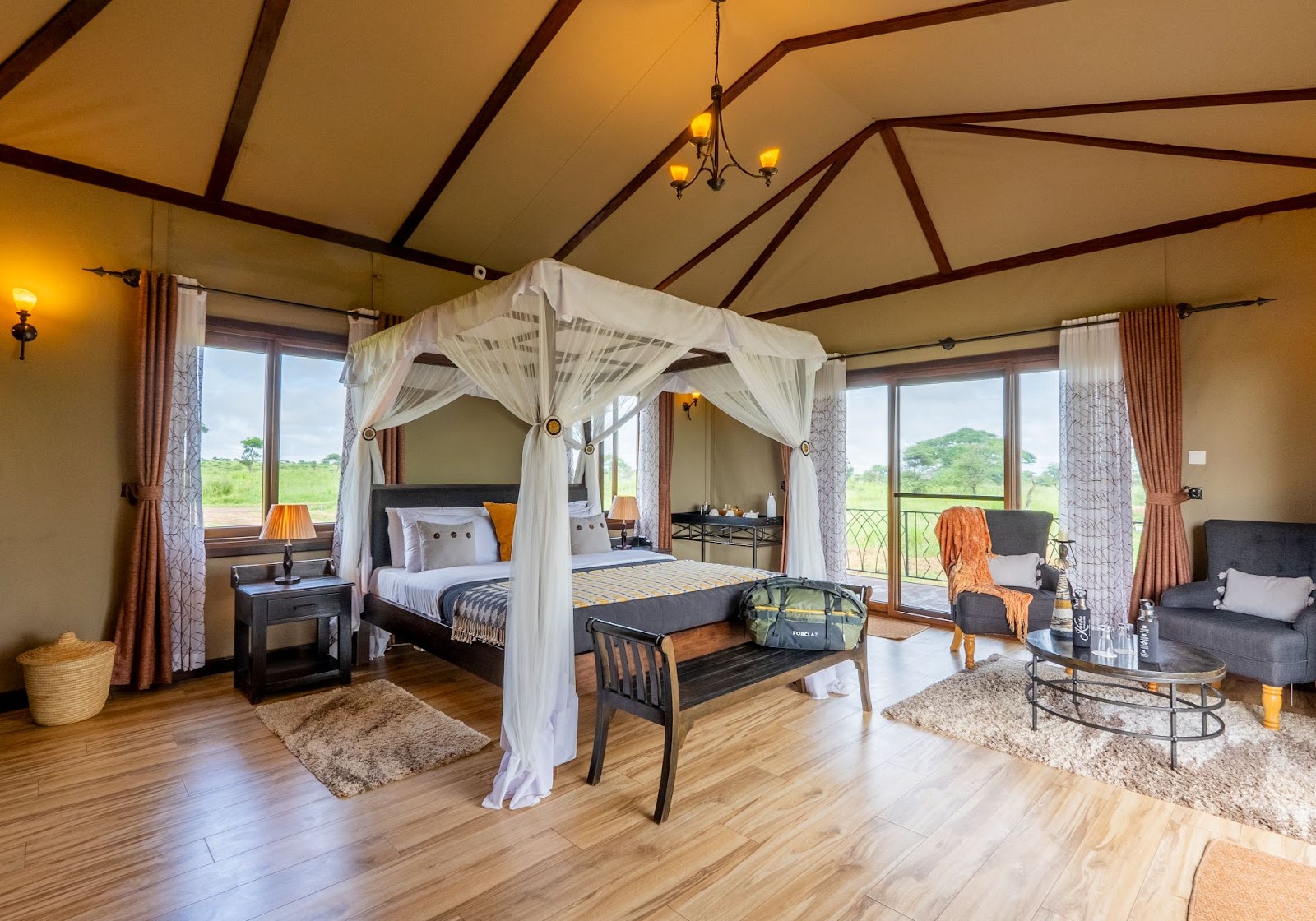
Plan this stay
Build your bespoke Tanzania safari with our team. Real lodge rates and itemised pricing throughout.
Build & price your trip